
Quick Guide in 1 Minute
Linehaul transport is the long-distance leg of a freight journey that runs between two depots, terminals or distribution centres, usually city to city or state to state. It is the part of the trip where a vehicle covers hundreds or thousands of kilometres in one continuous movement, with no pickups or deliveries in between.
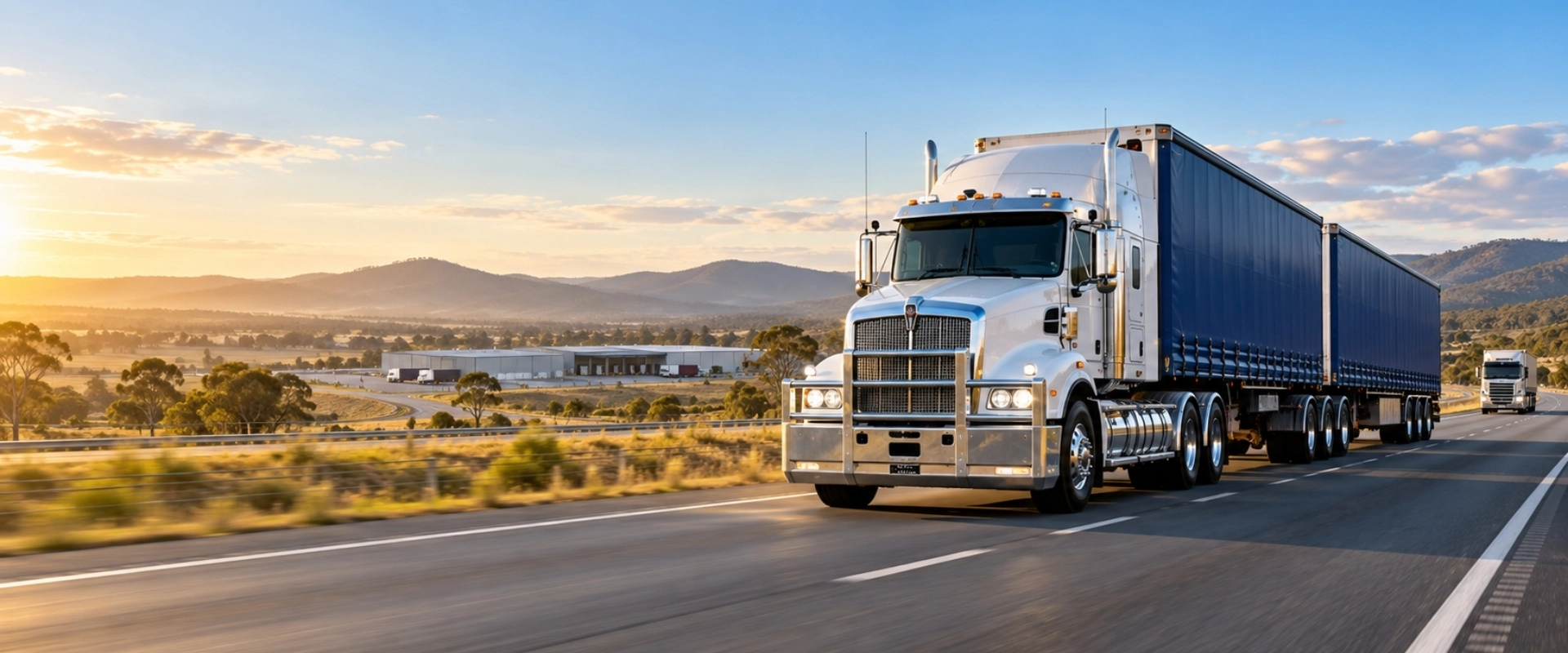
In Australia it typically runs on the Hume, Pacific, Newell, Eyre and Stuart highways, moving freight between Sydney, Melbourne, Brisbane, Adelaide, Perth and Darwin. B-doubles do most of the interstate work, with road trains beyond the regulated line and rail carrying a large share of the east-west task. Linehaul sits in the middle of a freight journey: first mile collects, linehaul covers the distance, last mile delivers. It suits palletised, scheduled, non-urgent freight moving in volume on a consistent corridor.
Introduction
Articulated trucks do the heavy lifting in Australian freight. The ABS Survey of Motor Vehicle Use consistently shows that articulated vehicles account for the overwhelming majority of road freight tonne-kilometres, despite making up only a small fraction of the vehicles on the road. That gap exists for one reason: distance.
Australia is a country where the two largest cities sit nearly 900 kilometres apart, and where Perth is further from Sydney than London is from Moscow. Almost every domestic supply chain here involves a long middle section that has to be crossed efficiently, or the economics stop working.
That middle section is linehaul transport. It is the least visible part of the freight journey no customer ever sees, but it is where most of the cost, most of the transit time and most of the compliance risk sits. This guide explains what it is, how it works, the vehicles and types involved, and how to tell whether your business should be buying it directly.
What Is Linehaul Transport?
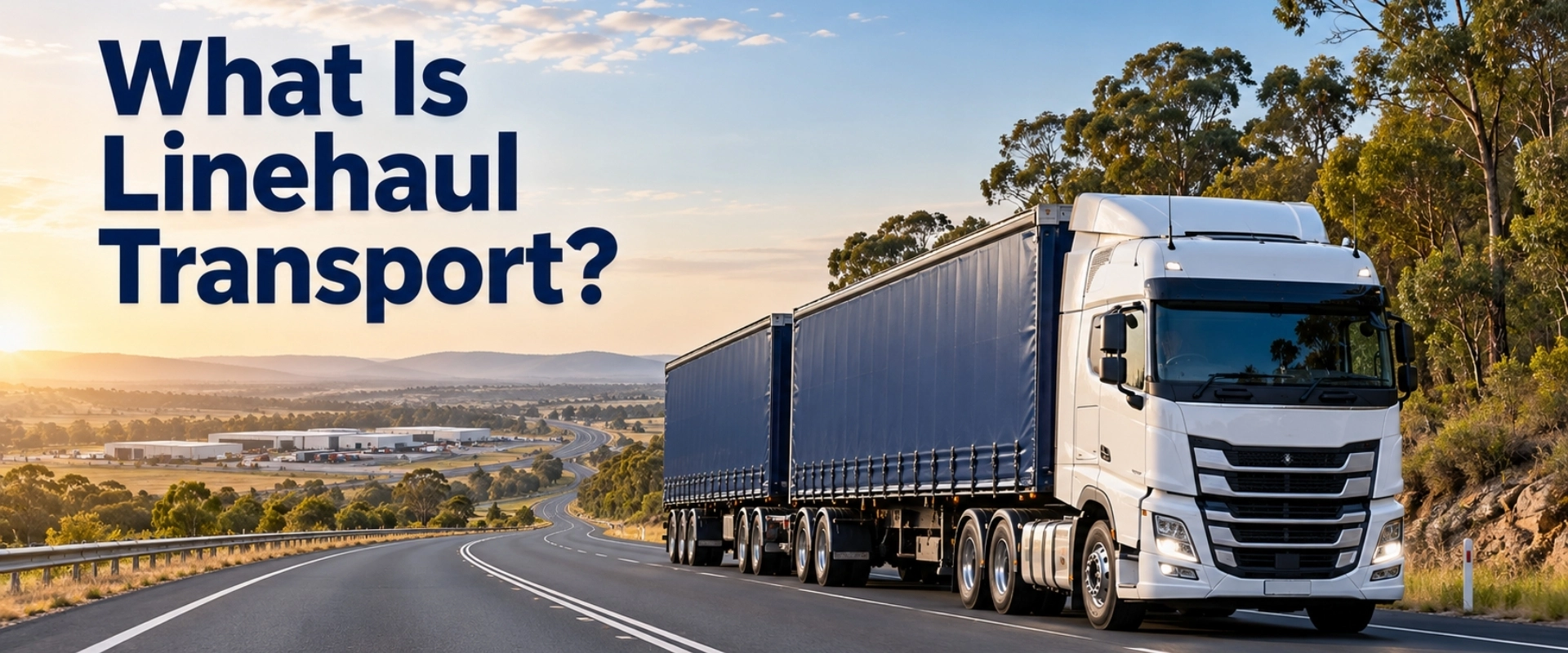
Linehaul transport is the scheduled movement of freight between two fixed points, depot to depot, terminal to terminal, or distribution centre to distribution centre over a long distance, in a single continuous run.
The defining characteristics are that it is point-to-point with nothing in between, it runs to a schedule rather than on demand, and the vehicle is loaded to capacity before it departs. A B-double leaving a Sydney depot at 6pm and arriving in Melbourne the following morning is doing linehaul. The same vehicle dropping pallets at four customers around Dandenong is not.
How Does Linehaul Transport Work?
A linehaul run works to a timetable, not to a single customer’s order. Freight from dozens of senders is pooled so one vehicle can depart full at a set hour, every night or every week, whether or not any individual consignment is ready. Here is how a consignment actually moves.
1. Consolidation at the origin depot:
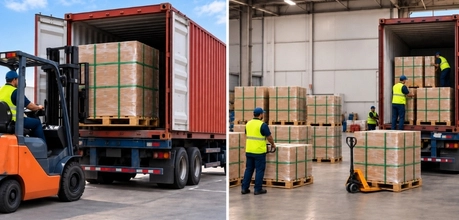
Pickup vehicles bring freight in from across the metro area through the afternoon. Every consignment is scanned, weighed and cubed, then sorted by destination depot rather than by customer.
2. Load planning and manifesting:
A planner builds the load so mass sits within axle limits, heavy freight goes low, and the first drop comes off first. The manifest lists everything on board and is what the receiving depot scans against.
3. Pre-departure compliance checks:
Mass, load restraint, dangerous goods segregation and driver fatigue records are checked before the vehicle leaves. Under the Heavy Vehicle National Law, everyone in the chain of responsibility shares that duty, including the business sending the freight.
4. The run itself:
Most east coast services depart between mid-afternoon and early evening and arrive before the receiving depot opens. On longer lanes, carriers use a changeover point where a fresh driver takes the same trailer onward, or a two-up team where one driver rests in the sleeper while the other drives.
5. Arrival, unload and sort:
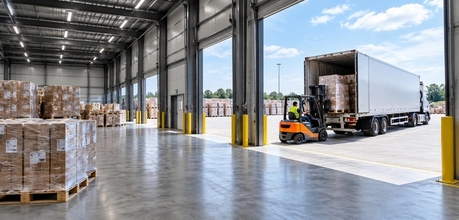
Freight is unloaded, scanned against the manifest and broken down into local delivery runs, usually between midnight and 5am so delivery vehicles can load at first light.
6. Last-mile handover:
Consignments move onto delivery vehicles for the final leg. Exceptions such as damage, shortages or missing paperwork are raised here, which is why a clean manifest matters so much upstream.
7. The return leg:
An empty truck earns nothing. Carriers fill the return with backloads, which is exactly why a Melbourne to Sydney rate can differ from a Sydney to Melbourne rate on the same lane in the same week.
Linehaul vs First-Mile and Last-Mile Transport
A single consignment usually passes through all three. They are stages of one journey, not competing services.
Factors | First mile | Linehaul | Last mile |
What it does | Collects freight from the sender and brings it to a depot | Moves freight between depots over long distance | Delivers from the destination depot to the receiver |
Typical distance | 10–80 km | 300-3,400 km | 5-50 km |
Vehicle | Rigid, van or light semi | B-double, semi-trailer, road train, rail | Rigid, van or tautliner |
Stops | Multiple pickups | None, point to point | Multiple deliveries |
Timing | Business hours | Usually overnight | Business hours |
Share of total cost | Low to moderate | Highest on long corridors | Highest per kilometre |
Main risk | Missed collection windows | Weather, road closures, fatigue compliance | Failed delivery, access restrictions |
Different Types of Linehaul Transport
Two things vary between services. The mode that covers the distance, and the commercial arrangement behind it.
1. Road linehaul
The default for domestic freight. Line haul trucking covers almost every lane between Australian capitals and regional centres, with departures most nights on the busy east coast corridors. It wins on flexibility and door to depot speed, and it is the only mode that reaches most regional destinations without a second handling.
2. Rail linehaul (intermodal)
Containers and swap bodies travel by train between rail terminals, then by truck at each end. The Melbourne to Perth corridor is the textbook case, where a single service replaces dozens of trucks across more than 3,000 kilometres. Rail is cheaper per tonne over long distances and lower in emissions, but slower, less flexible on timing, and still dependent on line haul trucking at both ends.
3. Air linehaul
Overnight freighters and belly space between capital city airports. Reserved for time-critical freight such as pharmaceuticals, medical devices, aviation and mining spares, and perishables with a very short window. Fast and expensive, with tight limits on weight, size and dangerous goods transportation.
4. Coastal and sea linehaul
Bass Strait services to Tasmania and container movements around the coast. Slow but efficient for heavy, non-urgent volume, and often the only sensible option for very heavy single items.
5. Dedicated linehaul
A vehicle committed to one customer on a fixed schedule. It makes sense when you consistently fill a trailer and need absolute control of timing, sequencing or branding. You get certainty, but you also carry the cost of any empty space.
6. Shared or scheduled network linehaul
You buy space on a carrier’s existing run and pay per pallet, per kilogram or per cubic metre. This is how most small and medium businesses buy line haul transportation, because you get interstate capacity without committing to a whole vehicle.
7. Backload linehaul
Discounted space on a return leg that would otherwise run empty. Excellent value if your timing is flexible, frustrating if it is not, since backloads move to the carrier’s schedule rather than yours.
What Vehicles Are Used for Linehaul Transport?
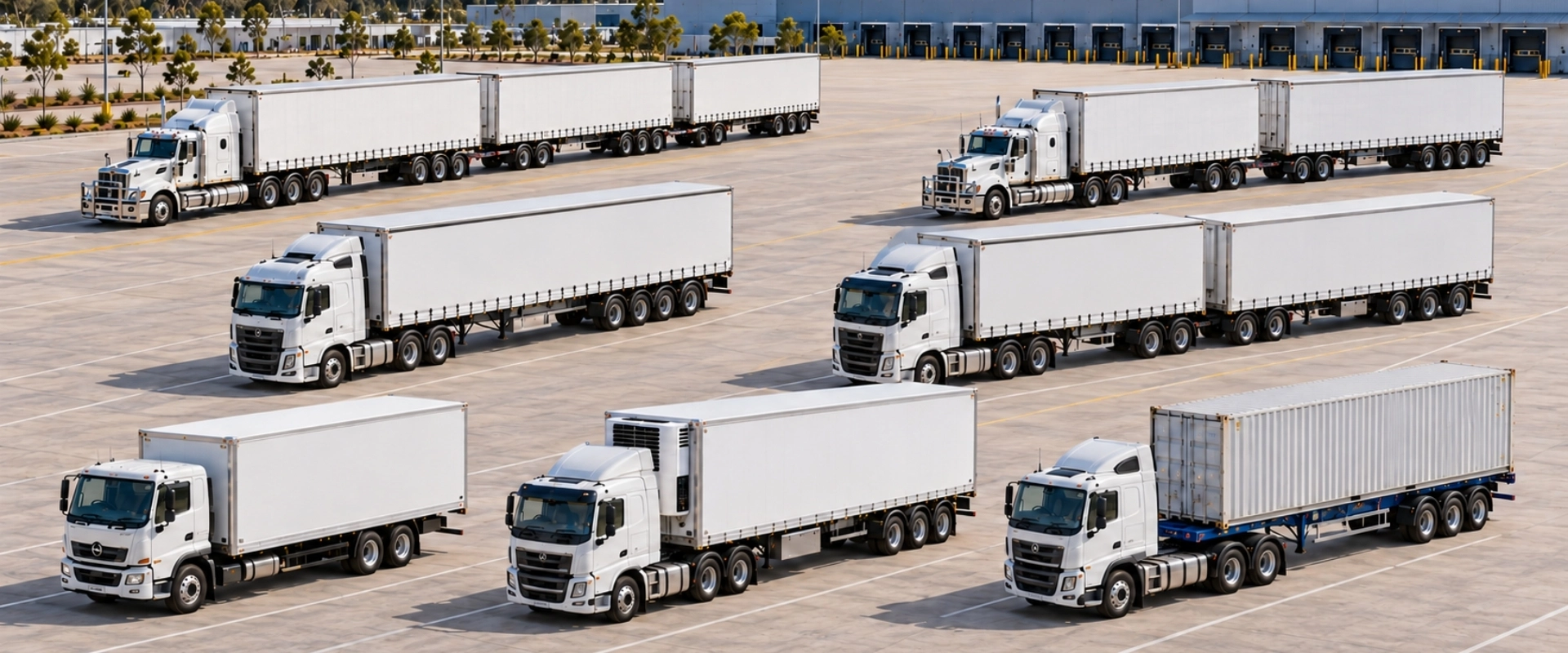
Vehicle choice is where the economics are won or lost. Route access, mass limits and the nature of the freight usually narrow the options before price is even discussed.
Vehicle | Typical configuration | Where it is used |
Rigid truck | 8-14 pallets, single chassis | Short shuttle runs between nearby depots and regional feeder work |
Semi-trailer | Around 19 m, 22-24 pallets, roughly 25 t payload | Lanes with tight access, lower volumes or urban delivery depots |
B-double | Around 26 m, up to 34 pallets, up to 62.5 t GCM | The workhorse of capital-city linehaul on approved B-double routes |
Road train (double) | Up to 36.5 m, around 40-44 pallets | Inland and remote corridors such as Adelaide to Darwin and regional WA and Qld |
Road train (triple) | Up to 53.5 m | Outback, pastoral and mining corridors only, on gazetted routes |
Refrigerated trailer | Insulated body with a diesel or electric unit | Chilled and frozen food, pharmaceuticals, floristry and other temperature-controlled freight |
Skel trailer | Skeletal frame for 20 ft and 40 ft containers | Port to distribution centre container movements and import/export lanes |
What Freight Is Suitable for Linehaul Transport?
The model suits anything that is predictable pallet transport solutions or container transport services and not desperately urgent.
- General palletised freight: cartons, drums, bagged goods and shrink-wrapped pallets are the bread and butter of interstate services.
- Retail and FMCG replenishment: store and distribution centre restocking on a weekly or nightly cycle, where volumes are known in advance.
- Building and construction materials: timber, fixtures, cladding, steel and fit-out packages heading to interstate projects or branches.
- Machinery, equipment and oversize items: moved on flat tops, drop decks or low loaders, with permits and pilots where dimensions require them.
- Temperature-controlled goods: chilled and frozen food, beverages, pharmaceuticals and horticulture, provided the cold chain is documented end to end.
- Import and export containers: port to distribution centre movements, often with tight terminal slots and detention windows.
- E-commerce parcels in bulk: ltl consolidated into cages or pallets and sorted for last-mile networks at the destination depot.
- Dangerous goods: permitted with correctly licensed vehicles, trained drivers, segregation and documentation under the Australian Dangerous Goods Code.
When Should a Business Use Linehaul Transport?
- You move freight between capital cities or from a capital into a regional hub on a repeating basis
- Your volumes are consistent enough to plan around a fixed departure schedule
- You are currently paying express or parcel rates for freight that is not actually urgent
- Your lead times are quoted in days rather than hours
- You are running your own vehicles interstate and returning them empty
- You supply customers with booked receiving windows that suit a scheduled arrival
- Your freight cost per pallet has risen while volumes have stayed flat
- You are consolidating suppliers in one state for delivery into another
Is Linehaul Transport Right for Your Business?
Work through these questions honestly before you sign anything.
- How consistent are your lanes? Two or three repeat lanes with steady volume is the profile that earns the best rates. Scattered one-off destinations rarely do.
- What is your real volume per lane, per week? Measure in pallet spaces and cubic metres, not cartons. Cubic weight is what carriers price on, and light bulky freight costs more than its weight suggests.
- How much timing tolerance do you have? If a day either way is survivable, you can use cheaper capacity such as backloads. If it is not, you need a committed schedule and should expect to pay for it.
- What does a delay actually cost you? Quantify it. That number tells you whether to buy the cheapest rate or the most reliable service.
- Can your site load and unload efficiently? Forklift access, dock height and available hours affect both the rate you are offered and the transit times you can actually achieve.
Conclusion: Choosing the Right Skid or Pallet for Your Freight
Linehaul transport is the least visible and most economically important leg of the freight journey. It is the part where distance is converted into cost, and where the difference between a well-planned network and an improvised one shows up plainly on the invoice. Get the vehicle configuration, the schedule and the consolidation right, and interstate freight transport becomes one of the more predictable line items in the business.
Start with your own numbers. Map your lanes, measure your weekly pallet spaces, work out the true cost of a late delivery, and take that to two or three carriers for comparison. Compare cost per pallet delivered on time, not cost per kilometre, because the cheapest rate on a lane is worth very little if the freight arrives a day after your customer needed it.