Quick Guide in 1 Minute
A flat rack container is an open-sided shipping platform with a strong deck and end structures, designed for heavy or oversized cargo that cannot be loaded into a standard enclosed box. Common uses include industrial machinery, vehicles, steel structures and large equipment. The main choices are 20 ft or 40 ft with fixed or collapsible ends. Your cargo’s dimensions, weight distribution, lifting points and route restrictions determine what is suitable.
Introduction
Australia relies on global trade to move everything from factory equipment to mining machinery. The Australian Bureau of Statistics reported goods and services exports of $665.2 billion and imports of $658.3 billion in calendar year 2025. Those figures cover all goods and services, not specifically oversized freight, but they show the scale of Australia’s international trading activity.
For a procurement or logistics manager, the difficulty is rarely finding a shipping box. It is deciding how to transport an awkward load without underestimating lifting arrangements, clearance, port handling and inland delivery. This guide explains the main equipment options, practical dimensions and safety questions to settle before you book.
What Is a Flat Rack Container?
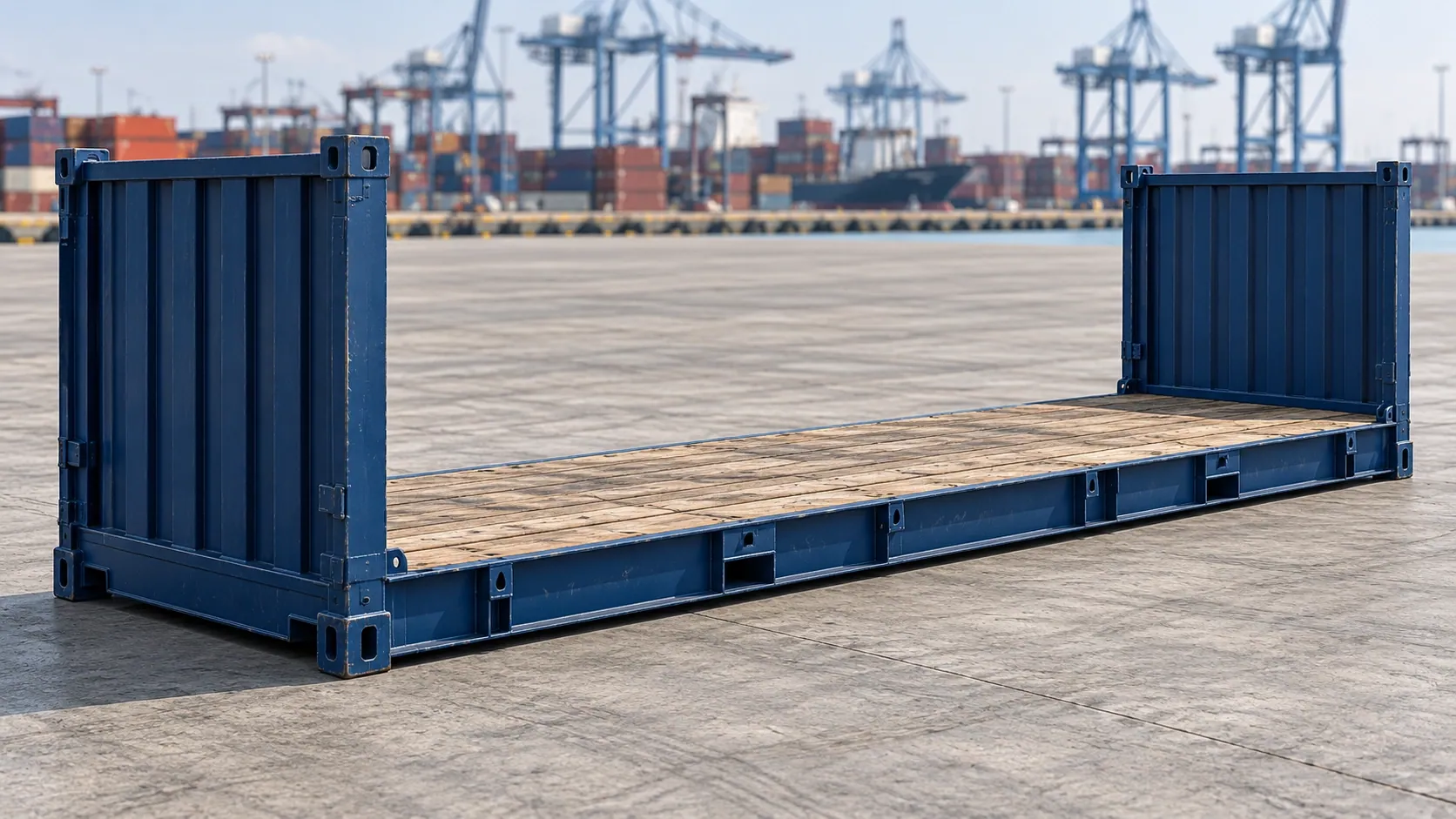
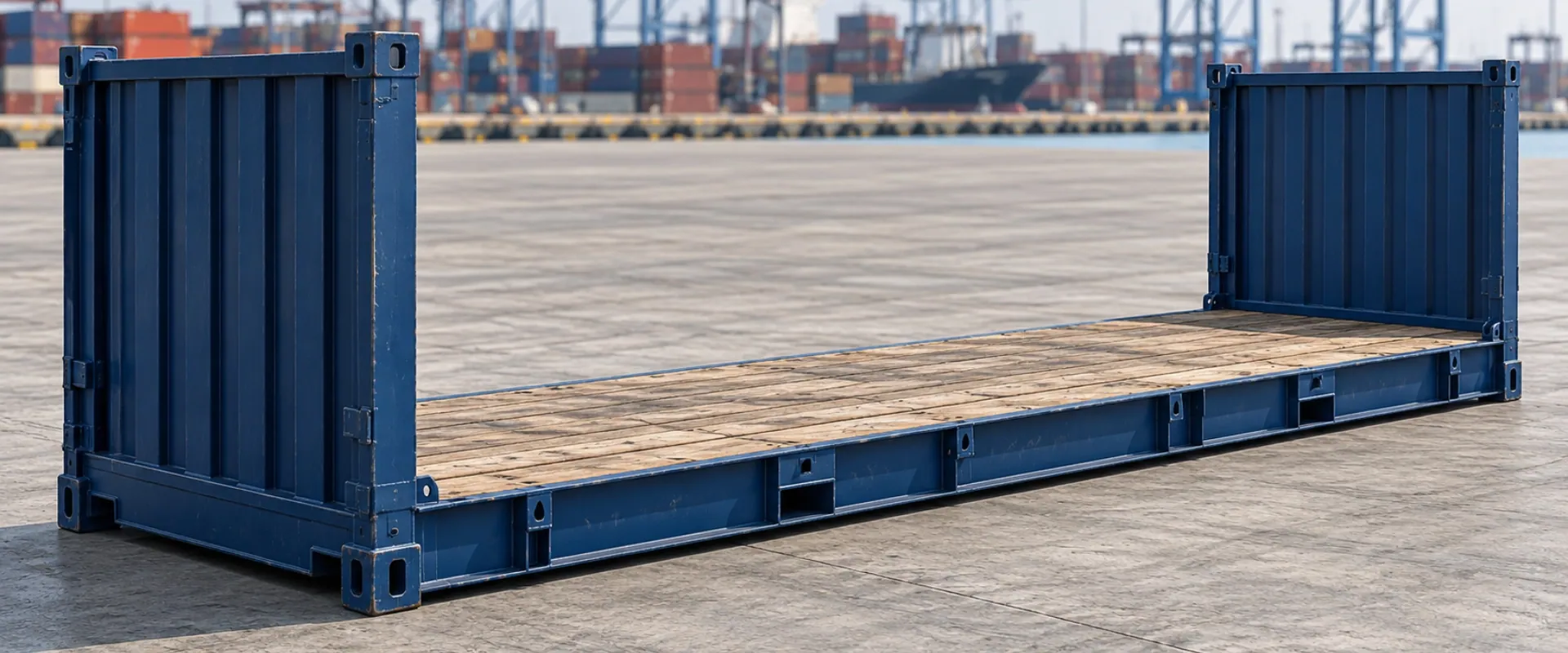
A flat rack container has a load-bearing base, corner fittings and usually two end walls, but no permanent side walls or roof. That open design allows cranes or suitable lifting equipment to place cargo from above or from the side. Cargo may extend beyond the usual container envelope, subject to carrier approval and a plan for out of gauge handling.
Unlike an ordinary dry container, the load is exposed to weather. Packing, corrosion protection, lashing and routing must therefore be planned around the actual goods. A flat rack shipping container is normally arranged as specialised freight equipment rather than chosen simply by cubic volume.
How Does a Flat Rack Container Work?
The shipper provides precise cargo dimensions, gross weight, centre of gravity information, lifting points and packing details. A freight forwarder or carrier then checks the proposed equipment, available sailing, route limitations and any out of gauge approval. The cargo is lifted onto the deck, positioned to distribute weight safely, restrained at approved points and inspected before terminal acceptance.
For flat rack container shipping, planning matters before the truck reaches the depot. An over width load may require special road permits or an approved route, shipping lines may also charge differently where adjacent vessel slots cannot be used. Never assume the permitted sea payload equals the permitted Australian road payload.
Types of Flat Rack Containers
Four variants cover almost all shipping container flat rack work.
| Type | Best for | Watch out for |
|---|---|---|
| Collapsible | General out of gauge cargo, best availability | Slightly higher tare weight than fixed end |
| Fixed-end | Very heavy loads needing solid end bracing | Lower availability; costlier repositioning |
| Platform | Over-length or very wide cargo | No end bracing lashing plan does everything |
| Specialised | Cable drums, coil, project cargo | Limited availability, book well ahead |
1. Collapsible flat rack
The most widely used type. The end walls fold down flat onto the deck when the unit is empty, which means several empties can be stacked into the space of a single container slot for repositioning. That makes them far cheaper for shipping lines to move around, and therefore more readily available to you.
2. Fixed-end flat rack
The end walls are permanent and do not fold. The structure is stronger and better suited to very heavy or awkwardly shaped cargo that needs solid bracing at the ends. The trade-off is that empties take up a full slot, so availability and repositioning cost are less favourable.
3. Platform container
A deck with no end walls at all, just the base and corner castings. It suits cargo that is longer than the container, or so wide that end walls would simply be in the way during loading. There is nothing to brace against, so the lashing arrangement does all the work.
4. High cube and specialised variants
Some lines offer flat racks with taller end frames or purpose-built units for specific cargo such as cable drums or steel coil. Availability varies considerably by trade lane, so check early rather than assuming.
Flat Rack Container Sizes and Dimensions
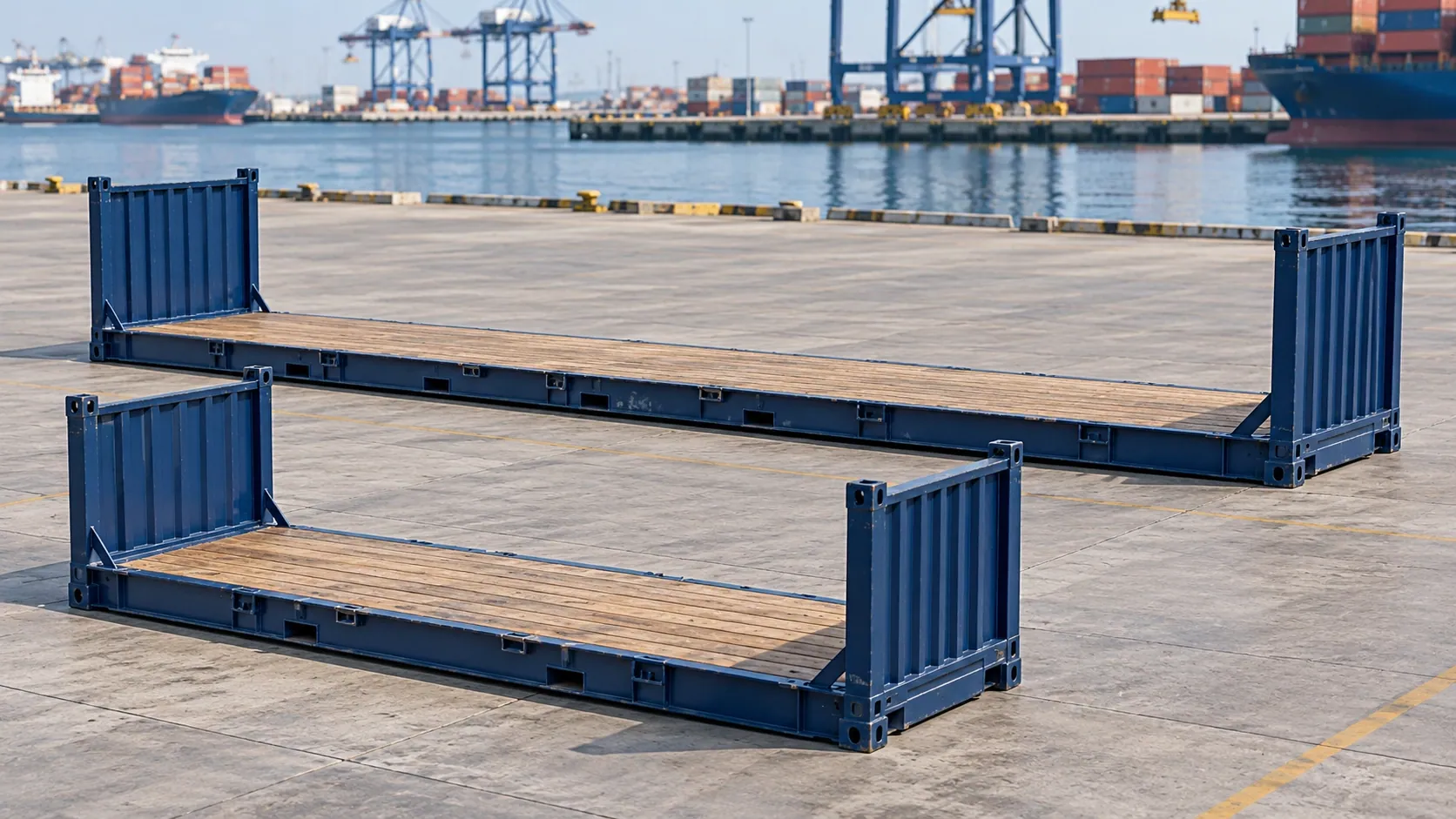
Specifications vary meaningfully between manufacturers and shipping lines, so treat these as indicative and confirm the actual unit before planning a load.
| Specification | 20ft flat rack | 40ft flat rack |
|---|---|---|
| External length | Around 6.06 m | Around 12.19 m |
| External width | Around 2.44 m | Around 2.44 m |
| Internal loading length | Around 5.6-5.9 m | Around 11.8-12.0 m |
| Usable deck width | Around 2.2-2.4 m | Around 2.2-2.4 m |
| End wall height | Around 2.2-2.3 m | Around 2.0-2.3 m |
| Tare weight | Around 2,500-2,900 kg | Around 5,000-5,800 kg |
| Maximum payload | Around 27,000-31,000 kg | Around 39,000-45,000 kg |
What Is a Flat Rack Container Used For?
Anything that will not fit through container doors can not be dismantled economically or is too heavy for a standard floor.
| Sector | Typical cargo |
|---|---|
| Mining and resources | Excavator attachments, crushers, conveyor sections, drill rigs, haul truck components |
| Construction | Bobcats, rollers, concrete pumps, scaffolding systems, formwork |
| Agriculture | Tractors, headers, seeders, irrigation equipment, silo sections |
| Energy and utilities | Transformers, generators, switchgear, wind turbine components, cable drums |
| Industrial and manufacturing | Production machinery, presses, compressors, tanks and vessels |
| Steel and building products | Steel plate, pipe, beams, coil, timber packs, precast panels |
| Marine and recreation | Boats, yachts, hulls, pontoons |
| Transport | Vehicles, buses, truck bodies, rail componentry |
| Project cargo | Prefabricated building sections, modular plant, oversized one-off items |
Key Benefits and Limitations of Flat Rack Containers
Flat rack containers solve a specific problem well and create a few of their own.
| Benefits | Limitations |
|---|---|
| Carries cargo that physically cannot fit in a standard container | No protection from weather, salt spray or handling damage |
| Very high payload often exceeding a 40ft standard container | Overhang triggers charges for adjacent slots, sometimes several |
| Top and side loading by crane or forklift | Requires a professional lashing and securing plan |
| Handles and stacks like a standard container using corner castings | Cargo is fully exposed to inspection, theft and tampering |
| Collapsible units are widely available and cheap to reposition | Lower availability than standard containers on some lanes |
| Suits concentrated point loads from tracks, skids and cradles | Usually needs oversize permits for the road leg once landed |
| Avoids the cost of dismantling and reassembling machinery | Loading and discharge take longer, increasing terminal time |
How Are Flat Rack Containers Loaded and Transported Safely?
Safe transport starts with the cargo and the transport chain, not the straps alone. A competent cargo-loading specialist should prepare a method suitable for the actual load and equipment. The Australian Maritime Safety Authority points shippers to the IMO/ILO/UNECE CTU Code and requires attention to container condition and safe packing.
- Inspect the flat rack, rating plate, lashing points and visible damage before use.
- Confirm actual loaded mass, axle loads, centre of gravity and floor-point loading.
- Use suitable cranes or lifting devices, verified lift points and exclusion zones.
- Apply engineered blocking, bracing and restraint to resist movement throughout the journey.
- Protect exposed surfaces and arrange weather-resistant packaging where needed.
- Check Australian heavy-vehicle route access, permits where applicable, port cut-offs and shipping-line acceptance.
How to Choose the Right Flat Rack Container for Your Cargo
Choose equipment by working backwards from the end-to-end movement. The best option is the one the shipping line, terminal, road carrier and receiver can all handle safely.
- Record exact cargo dimensions including attachments, protrusions and packaging.
- Obtain a verified gross weight and centre of gravity details.
- Check lifting and securing points and whether the load needs a pallet or skid.
- Compare 20 ft and 40 ft deck geometry against the actual carrier unit.
- Identify over-width, over-height and special-handling implications on Australian roads.
- Request a written, itemised quote covering loading, terminal handling, sea freight and local delivery.
Conclusion
A flat rack container can be a practical way to move machinery, fabricated steel and oversized equipment when an enclosed container cannot accommodate the cargo. The choice between fixed and collapsible ends or between 20 ft and 40 ft, depends on verified dimensions, payload, securing and the full route. Compare total logistics risk and handling needs, not just the base ocean freight rate.