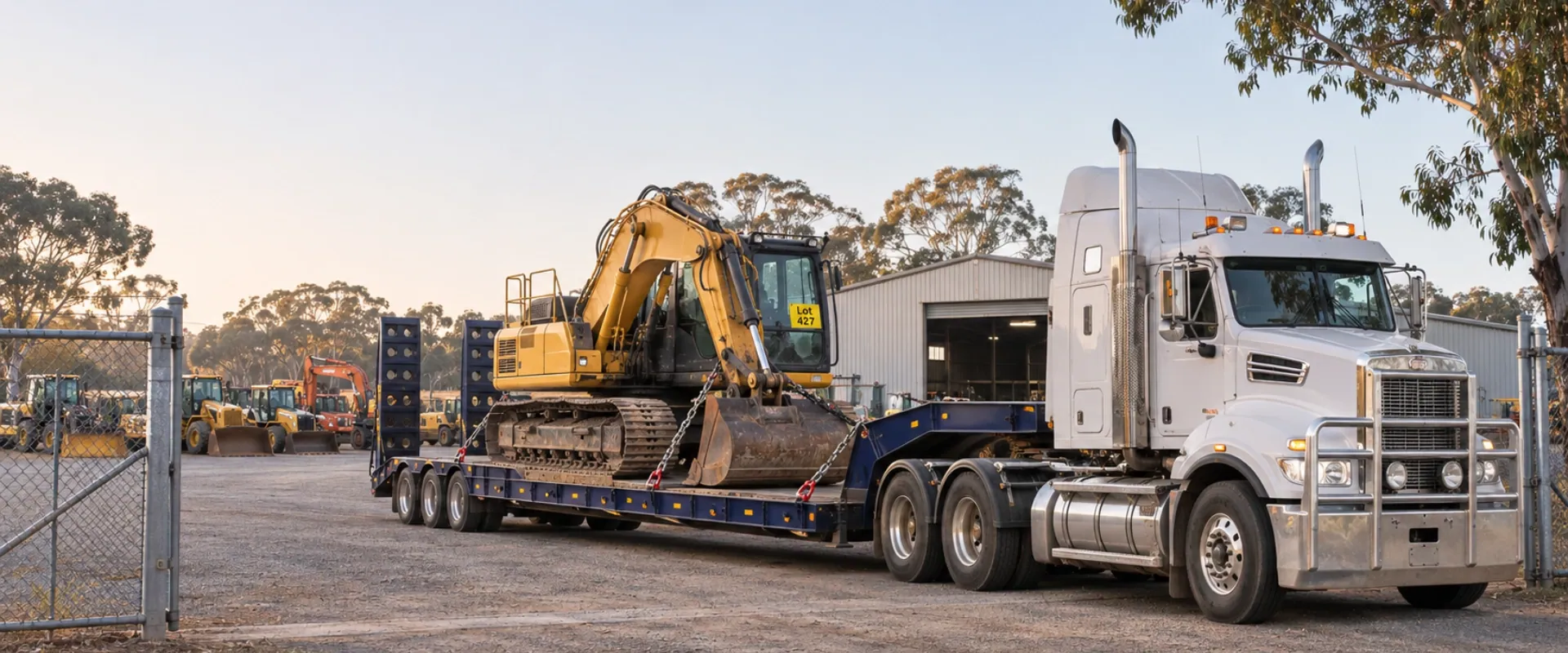
Quick Summary
Winning a machinery auction is only the first step. Before you send a truck, confirm payment clearance, collection authority, the yard’s pickup window and whether staff will help load the machine. Then obtain its actual weight and transport dimensions, including attachments. A suitable carrier will check trailer capacity, safe loading, restraint, road access and the receiving site. The cheapest quote is not necessarily the cheapest move if storage, cranes or permit changes are excluded.
Introduction
A good auction price can unravel quickly if a machine sits at the yard while its new owner tries to arrange a collection. Australian buyers source used excavators, loaders, forklifts and agricultural plants from online and onsite auctions, often hundreds of kilometres from the job site. Getting the transport right protects the savings made at purchase.
For scale, the Australian Bureau of Statistics reported $25.124 billion in seasonally adjusted private capital expenditure on equipment, plant and machinery in the June 2026 quarter. This measures new private investment not auction turnover but shows the significance of machinery in the Australian economy.
This guide explains what to check after the hammer falls, how to organise heavy machinery transport, which trailers suit different machines and what information a freight team needs to quote accurately.
What Happens After You Buy Heavy Machinery at Auction?
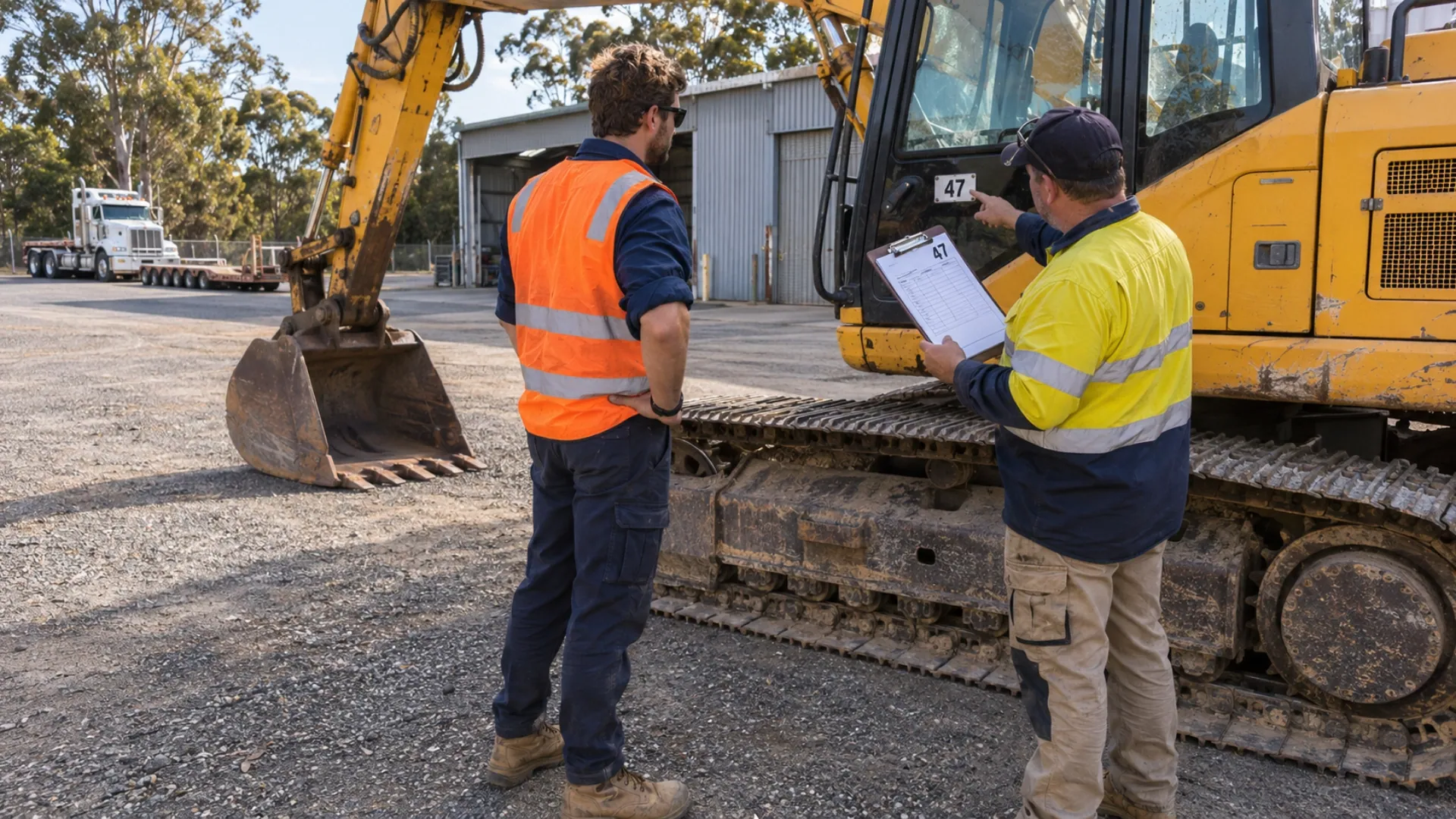
For transportation of heavy equipment, release paperwork is as important as vehicle availability. First, the auction house must confirm funds have cleared. You may need a paid invoice, release document, photo identification and written authority for the transport driver. Confirm these requirements with the exact auction platform and yard, not another branch or an older sale listing.
Next, check the pickup deadline. Some sites charge storage after a short collection period. Pickles’ post-auction guidance describes storage charges in certain circumstances, while Ritchie Bros’ Australian site terms specify separate release and removal rules. These are examples, not universal auction conditions.
Finally, establish the condition of the plant. Can it start, steer and travel up loading ramps? Is the battery flat? Are the tracks damaged? Is a bucket or boom already detached? A non-runner can need a winch, crane or additional handling. The loader must know this before arriving.
How to Arrange Heavy Equipment Transport After an Auction
Work through these in order. Steps one and two should ideally happen before you bid.
1. Confirm the release arrangements
Ask the seller for the lot number, cleared invoice, yard address, gate hours, contact person and the latest removal date. Confirm whether your carrier needs an appointment, induction or personal protective equipment and whether the yard assists with loading.
2. Send accurate machinery details
Provide make, model, serial or asset identification, overall length, width, height, operating mass, attachments and clear photos from all sides. Obtain manufacturer specifications where possible, but verify actual transport dimensions after attachments are positioned or removed.
3. Check whether the machine runs
Tell the carrier if the machine is driveable and safe for loading. If not, explain what is faulty and whether lifting points or a winch arrangement are available. Do not assume a forklift, crane or operator will be supplied by the auction house.
4. Select the right vehicle and route
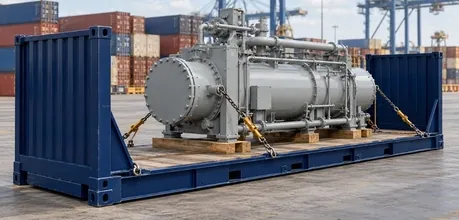
Heavy machinery transport requires more than allocating a truck. The transport provider checks deck height, axle loads, access to the yard and receiving site, and whether the combination meets ordinary road limits. Oversize freight moves can need an approved notice or permit, route assessments and escorts.
5. Confirm quote inclusions and delivery access
Agree on collection, loading, unloading, permits where applicable, waiting time, freight insurance and delivery timing in writing. At destination, check turning room, ground conditions, site hours and who is authorised to receive the machine. The transportation of heavy equipment works best when both ends are ready, not just the truck.
What Types of Heavy Equipment Can Be Transported?
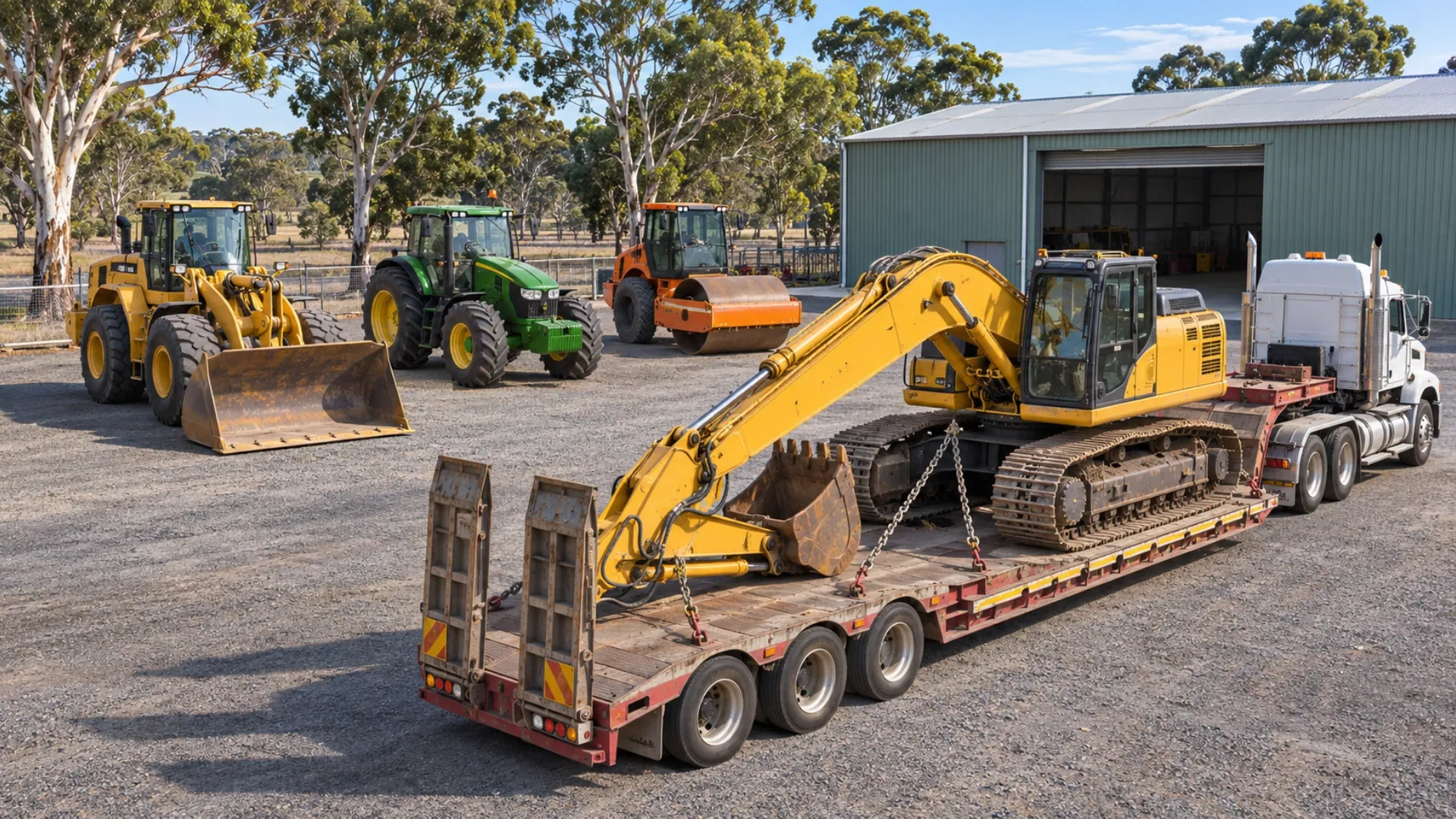
Almost anything that turns up at a plant auction can be moved. The question is which trailer and whether permits apply.
| Category | Typical examples | Transport considerations |
|---|---|---|
| Excavators | Mini 1.5t through to 50t+ tracked machines | Height is usually the constraint, boom and cab may need lowering |
| Loaders | Skid steers, wheel loaders, backhoes | Generally straightforward, larger wheel loaders may be oversize |
| Dozers and graders | Bulldozers, motor graders | Heavy and wide, blades often removed and carried separately |
| Compaction | Rollers, compactors, padfoot drums | Weight concentrated over a small footprint |
| Access equipment | Scissor lifts, boom lifts, telehandlers | Height is the usual issue confirm folded dimensions |
| Agricultural | Tractors, headers, seeders, sprayers | Frequently oversize, particularly headers and wide implements |
| Materials handling | Forklifts, container handlers | Mast height often exceeds limits may need lowering or removal |
| Crushing and screening | Crushers, screens, conveyors | Usually oversize in multiple dimensions |
| Support plant | Generators, compressors, lighting towers, pumps | Lighter and simpler, often moved on a flat top or tilt tray |
| Attachments | Buckets, hammers, grabs, rippers | Often transported separately from the host machine |
What Vehicles Are Used for Heavy Equipment Transport?
Trailer choice comes down to weight, height and whether the machine can drive itself on.
| Trailer | Indicative capacity | Best suited to | Key advantage |
|---|---|---|---|
| Tilt tray / tilt slide | Around 8-12 t | Mini excavators, skid steers, small plant | Deck tilts and winches ideal for non-runners |
| Flat top semi-trailer | Around 20-24 t | Generators, compressors, attachments, smaller plant | Widely available, lowest cost per tonne |
| Beavertail / ramp trailer | Around 20-25 t | Mid-size machines that can drive on | Built-in ramps, no separate loading gear needed |
| Drop deck (low deck) | Around 25-30 t | Taller machines within mass limits | Lower deck height gains vital overhead clearance |
| Low loader | Around 30-70 t | Excavators, dozers, large plant | Lowest deck, handles the tallest and heaviest loads |
| Extendable low loader | Varies | Over-length machinery | Deck extends for long items |
| Widener / float | Varies | Over-width plant | Deck widens to support wide tracks and bases |
| Platform or steerable | Very high | Project and ultra-heavy loads | Multi-axle, built for exceptional mass |
How Much Does Heavy Equipment Transport Cost in Australia?
Heavy machinery shipping is sometimes used as a broad term for road movements as well as overseas projects. There is no credible fixed national price per kilometre for every machine. The same excavator can cost very differently to collect from a metro depot compared with a regional property that needs a crane or a restricted road route. For heavy equipment transport, ask for an itemised quote rather than relying on a generic online rate.
| Cost factor | Why it changes the quote |
|---|---|
| Distance and route | Road kilometres, regional access, tolls and return positioning |
| Mass and dimensions | Trailer, axle configuration and oversize requirements |
| Machine condition | Driver loading versus winch or crane support |
| Pickup restrictions | Appointments, waits, site induction and storage deadlines |
| Permits and escorts | Route-specific access and traffic-management needs |
| Delivery conditions | Site access, unloading machinery and ground stability |
| Insurance arrangements | Declared value, limits, exclusions and responsibilities |
Common Mistakes to Avoid When Transporting Auction Machinery
1. Bidding before checking transport costs
The most expensive mistake on this list. A machine in another state with oversize dimensions can carry freight costs that erase the savings entirely. Price the move before the hammer falls.
2. Leaving the booking until storage is nearly up
Low loader capacity is finite, permits take lead time, and the best carriers are booked out. Waiting until day four of a five day free storage window leaves you paying yard fees while you wait for an available truck.
3. Trusting the auction listing dimensions
Listings are frequently approximate or copied from a generic spec. Check the manufacturer’s data for the specific model and configuration. A height figure that is 200 millimetres wrong can be the difference between a standard load and an oversize permit.
4. Assuming the machine runs
Sold as where it means exactly that. If the listing does not confirm it starts and tracks, plan for winching. Telling your carrier on arrival is a futile pickup charge waiting to happen.
5. Forgetting attachments and loose items
Buckets, hammers, grabs and rippers add weight and often need separate handling. Loose items in the cab become projectiles if not secured.
6. Not checking access at the destination
A low loader needs room to manoeuvre, firm ground and clearance to unload. A rural property with a narrow gate and a soft paddock is a genuine problem, and discovering it on delivery day is expensive.
7. Overlooking insurance
Standard carrier liability under conditions of carriage is usually well below the value of a piece of plant. Confirm what is covered and arrange separate cover if the gap matters.
8. Ignoring biosecurity on machinery from interstate
Soil and plant material on tracks and in cavities can carry restrictions between states and regions. If the machine has worked in an area with known weed or pest controls, check the requirements before it moves.
9. Treating Chain of Responsibility as the carrier’s problem
Under the Heavy Vehicle National Law, consignors and loaders share legal duties for load restraint, mass and dimension compliance. Buying the machine makes you part of that chain.
Heavy Equipment Transport Solutions with Alpha Trucking
Alpha Trucking works with Australian businesses arranging freight and specialised machinery movements. If you have purchased a plant at auction, our team can review the collection and delivery information, discuss suitable transport arrangements and provide a quote based on the actual shipment requirements.
A useful enquiry includes the auction release paperwork, machinery details, photographs and the requested pickup date. For heavy machinery shipping that involves port movements or interstate legs, clarify which service stages are needed so the scope is transparent. Availability, specialised equipment and any required permits must be confirmed for the individual move.
We support commercial customers across Australia with freight planning and transport enquiries. We do not assume every machine is transport-ready or that a quoted departure can be guaranteed before the site and compliance checks are complete.
Conclusion
Whether the booking involves interstate freight delivery or heavy machinery shipping through a port, the practical checks remain essential. Once you win an auction, the priority is to turn the lot description into a safe, practical collection plan. Confirm the release rules, inspect the condition of the plant, get real dimensions and use a carrier that can assess loading, restraint and route requirements. Done early, those steps reduce avoidable delays and unexpected costs.