
Quick Summary
Choosing the right type of container can make or break your freight budget, delivery timeline and cargo safety. This guide breaks down 20+ types of containers used across Australia's shipping, storage and logistics industries, with real-world sizes, dimensions and best-use cases for each.
- Standard 20ft and 40ft dry containers remain the most widely used option for general cargo across Australia.
- High cube containers add roughly 30cm of extra height for bulkier, lighter loads.
- Specialised types like reefers, tanks, flat racks, open tops and bulk containers exist for cargo that a standard box can't safely carry.
- Container dimensions mostly follow the ISO 668 standard, so sizing is consistent Australia-wide, though internal measurements vary slightly by manufacturer.
- Matching cargo to the correct container type helps avoid overloading fines, damaged goods and unnecessary freight costs.
Quick Comparison Table: Container Types, Sizes, and Best Uses
Use this table as a quick reference for Australia's most common shipping container types, their approximate external dimensions, and the cargo each one suits best.
|
Container Type |
Length |
External Dimensions (L×W×H) |
Best Use |
|
Standard (Dry) Container |
20ft/40ft |
6.06m/12.19m × 2.44m × 2.59m |
General cargo, palletised freight |
|
High Cube Container |
20ft/40ft |
6.06m/12.19m × 2.44m × 2.90m |
Bulky light cargo, container homes |
|
Refrigerated Container (Reefer / ISO Reefer) |
20ft/40ft |
Same footprint, insulated + unit |
Perishables, pharma, frozen goods |
|
NOR (Non-Operating Reefer) Container |
20ft/40ft |
Same as reefer, unit not powered |
Dry cargo needing extra insulation |
|
Insulated / Thermal Container |
20ft/40ft |
Same footprint, insulated walls |
Temp-sensitive cargo, short transits |
|
Tank Container (ISO Tank) |
20ft |
6.06m frame, ~26,000L tank |
Liquids, chemicals, wine, fuel |
|
Flat Rack Container |
20ft/40ft |
Collapsible ends, no walls/roof |
Oversized machinery, vehicles, boats |
|
Platform (Flatbed) Container |
20ft/40ft |
Base platform only |
Extreme oversize cargo (pipes, girders) |
|
Open Top Container |
20ft/40ft |
Same as standard, removable tarp roof |
Top-loaded machinery, timber, scrap |
|
Open Side / Side-Door Container |
20ft/40ft |
Same footprint, full side access |
Wide/long cargo, machinery |
|
Half-Height Container |
20ft |
6.06m × 2.44m × ~1.30m |
Dense cargo: coal, ore, stone |
|
Double Door (Tunnel) Container |
20ft/40ft |
Doors at both ends |
Fast drive-through loading |
|
Hard Top Container |
20ft/40ft |
Removable steel roof |
Crane-loaded heavy/tall cargo |
|
Bulk Container |
20ft |
6.06m × 2.44m × 2.59m, roof hatches |
Grain, sugar, powders |
|
Ventilated Container |
20ft/40ft |
Same footprint, side air vents |
Coffee, cocoa, onions, produce |
|
Special Purpose Container |
10ft–40ft |
Custom-modified shell |
Workshops, generator/site housings |
|
Dangerous Goods (DG) Container |
20ft/40ft |
Standard/tank footprint, certified |
Chemicals, flammables, corrosives |
|
Car Carrier Container |
20ft/40ft |
Collapsible sides, tie-down rails |
Vehicles, motorcycles |
|
10ft Mini Container |
10ft |
2.99m × 2.44m × 2.59m |
Onsite storage, tight urban spaces |
|
45ft/48ft/53ft High Cube |
45–53ft |
13.7–16.15m × 2.44m × 2.90m |
High-volume freight & storage |
Introduction: What Is a Container?
A container is a standardised, reusable steel (or occasionally aluminium) box built to carry goods safely by sea, rail and road without the cargo being repacked at every stage of the journey. The dimensions are set by ISO 668, which is why a container loaded in Shanghai stacks cleanly onto a ship, a train and an Australian truck without modification. That standardisation is exactly why understanding the different types of containers that matter the box you choose affects handling cost, delivery access, compliance and how much of your cargo actually fits.
Container freight is a genuinely large part of the Australian economy. More recently, the Port of Melbourne alone handled a record 3.39 million TEU in FY2024–25, up 3.7% on the prior year. With that volume of freight moving in and out of the country every year, knowing which type of container suits your cargo isn't just industry trivia, It directly affects how efficiently your freight moves.
Why Container Types Matter in Freight and Logistics
The different types of shipping containers exist because cargo varies enormously in weight, shape, temperature sensitivity and value, and the wrong match creates problems that usually surface after the container has already left the depot.
- Cost efficiency: an oversized or overpowered container (like a reefer for dry goods) adds unnecessary hire and power costs.
- Damage prevention: dense cargo in a standard box can exceed weight limits, while fragile goods in the wrong container risk shifting and breakage.
- Compliance and safety: dangerous goods, oversized machinery and temperature-controlled freight all have specific container and permit requirements under Australian transport law.
- Delivery access: high cube and 45ft containers may hit height or length restrictions at metropolitan sites, so the container needs to match the delivery location, not just the cargo.
- Speed and efficiency: choosing the right container type from the outset avoids re-handling, re-packing and demurrage charges at the port.

Types of Shipping Container
Below is a complete breakdown of the different types of containers used across Australian freight, storage and modification projects. Each entry covers a short introduction, key features, sizes and dimensions, and the best-fit use case, so you can quickly find the container type for your cargo.
1. Standard Dry Container (General Purpose)
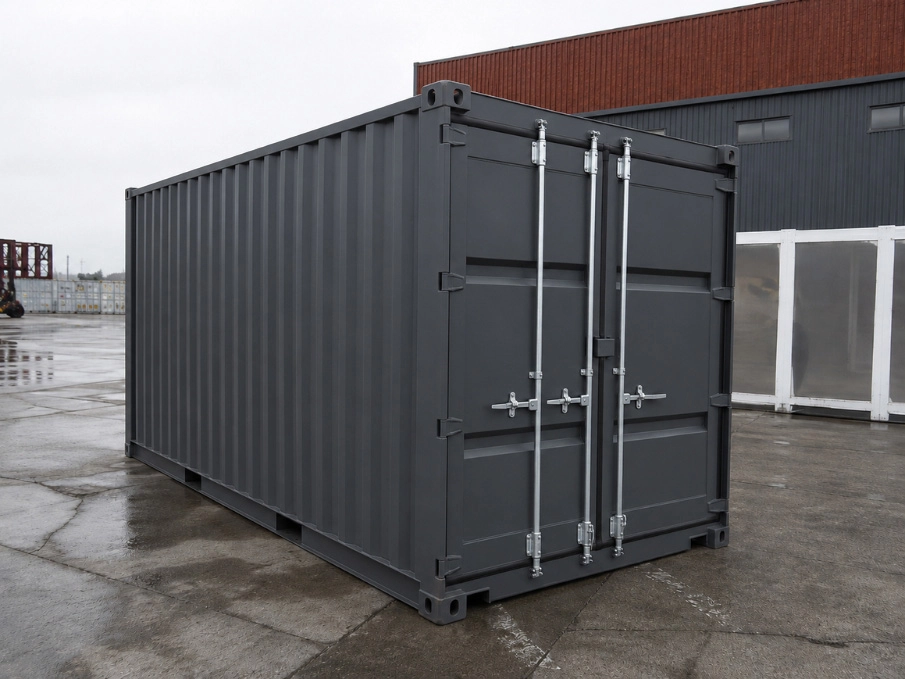
The standard dry container is the workhorse of global freight and the most recognisable of all container types. Fully enclosed and weatherproof, it's built for general cargo that doesn't need temperature control or special handling.
Sizes & Dimensions: 20ft: 6.06m × 2.44m × 2.59m (~33m³) | 40ft: 12.19m × 2.44m × 2.59m (~67m³)
Best Uses: General cargo, boxed and palletised goods, retail stock, dry freight
Features:
- Fully enclosed steel box with lockable rear doors
- Weatherproof and stackable up to nine units high
- Compatible with road, rail and sea transport
2. High Cube Container
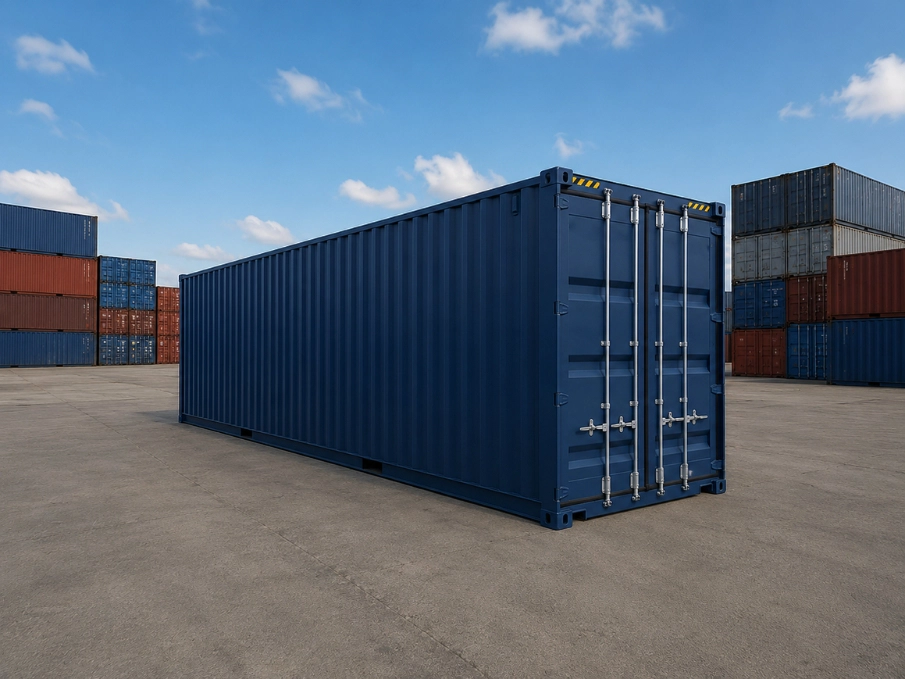
A high cube container shares the same footprint as a standard box but adds roughly 30cm of extra height, giving you noticeably more cubic capacity without needing a longer unit.
Sizes & Dimensions: 20ft HC: 6.06m × 2.44m × 2.90m | 40ft HC: 12.19m × 2.44m × 2.90m (~76m³)
Best Uses: Bulky but light cargo, furniture, textiles, container homes and offices
Features:
- Same length and width as standard containers
- Extra internal height improves airflow and stacking room
- Popular for conversions into homes, offices and site sheds
3. Refrigerated Container (Reefer)
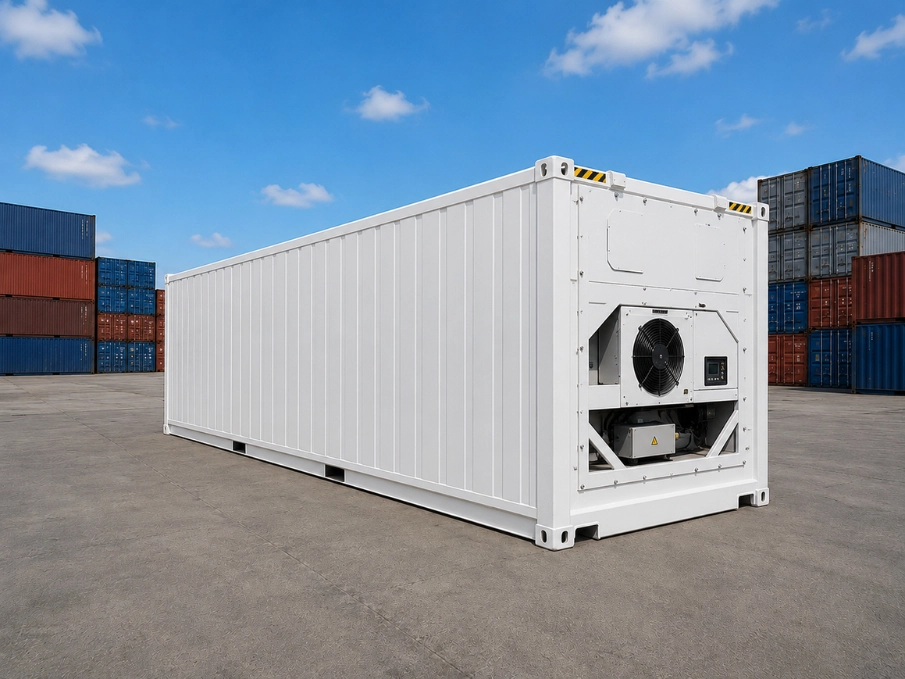
Reefer containers are fitted with an integrated refrigeration unit, keeping cargo at a precise temperature throughout the journey essential for anything that spoils. Industry sources sometimes call this an ISO reefer, referring to its ISO-standard frame.
Sizes & Dimensions: 20ft and 40ft, matching standard container footprints
Best Uses: Perishable food, frozen goods, pharmaceuticals and flowers
Features:
- Built-in refrigeration unit powered by genset or mains
- Maintains temperatures from around -35°C to +30°C
- Requires continuous power connection while in transit
4. NOR (Non-Operating Reefer) Container
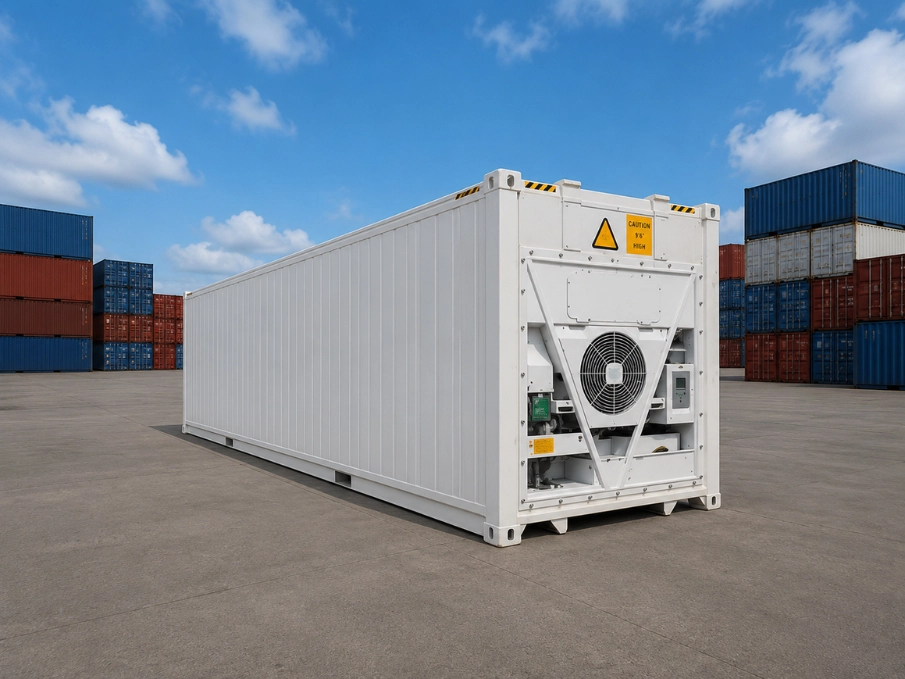
A NOR container is a reefer unit used to carry ordinary dry cargo without switching on the refrigeration system, taking advantage of its extra insulation and airtight build rather than its cooling power.
Sizes & Dimensions: Same footprint as standard 20ft/40ft reefer units
Best Uses: Dry cargo needing extra insulation or security, or empty reefer repositioning
Features:
- Refrigeration unit present but not powered or operating
- Heavier insulation and a more airtight build than a standard dry box
- Often used when a reefer is available for repositioning but cooling isn't needed
5. Insulated / Thermal Container
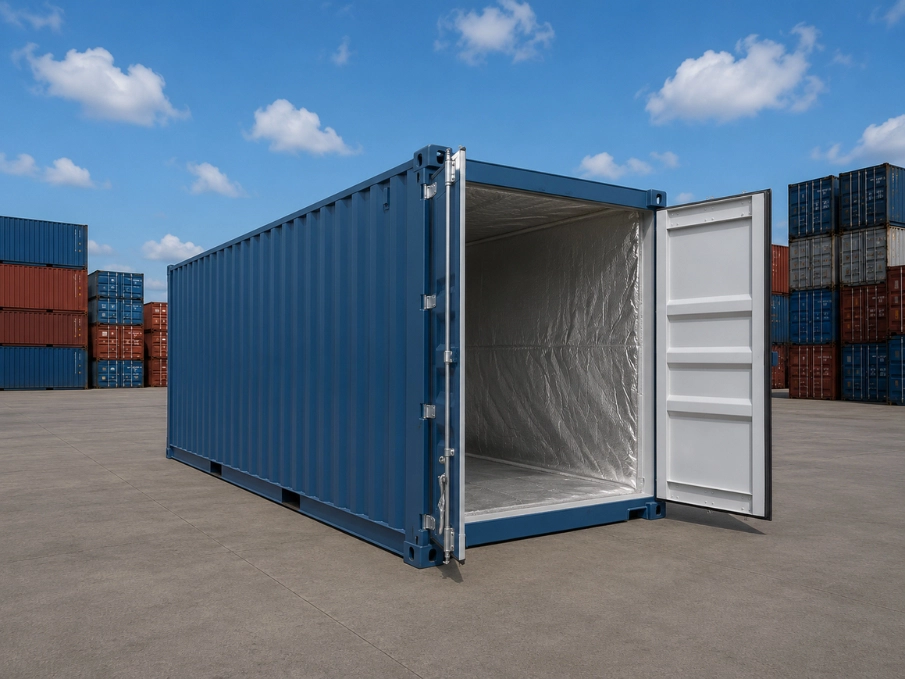
Insulated containers use thick panel walls to slow temperature change without an active cooling unit, offering a lower-cost alternative for short trips with moderate temperature needs.
Sizes & Dimensions: Same footprint as standard 20ft/40ft containers
Best Uses: Temperature-sensitive goods that don't need active cooling
Features:
- Foam-insulated walls, floor, roof and doors
- No mechanical refrigeration unit fitted
- Better suited to short-haul or domestic transport
6. Tank Container
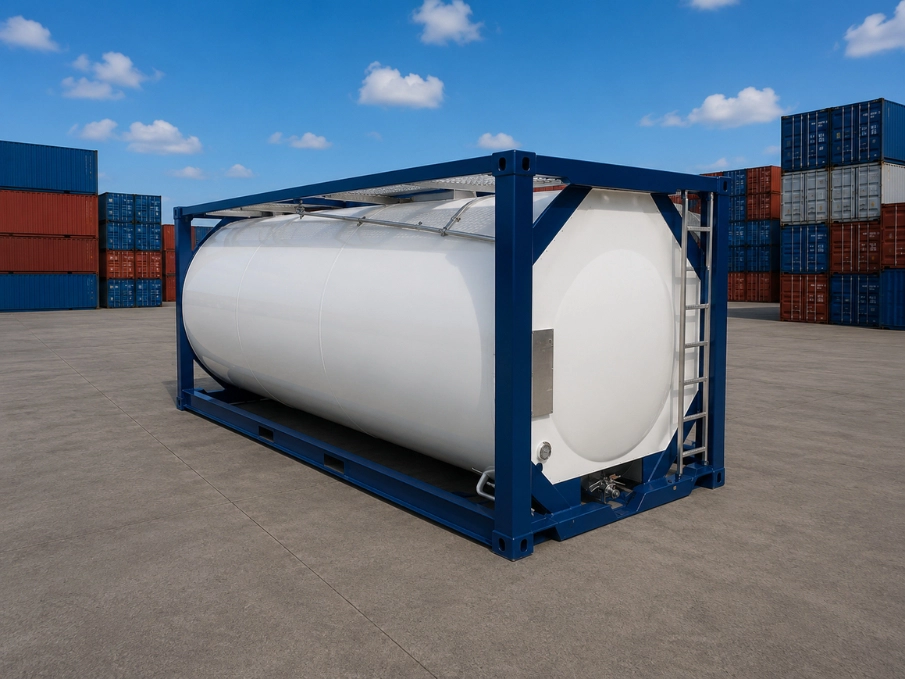
A tank container houses a cylindrical stainless-steel tank inside a standard ISO steel frame, purpose-built to carry liquids that would damage a conventional box. This is what the industry means by an ISO tank.
Sizes & Dimensions: 20ft frame, roughly 26,000-litre tank capacity
Best Uses: Chemicals, fuel, wine and other bulk liquids
Features:
- Stainless-steel tank cradled in a 20ft ISO frame
- Fitted with valves, manholes and safety relief devices
- Can carry hazardous and food-grade liquids depending on build
7. Flat Rack Container
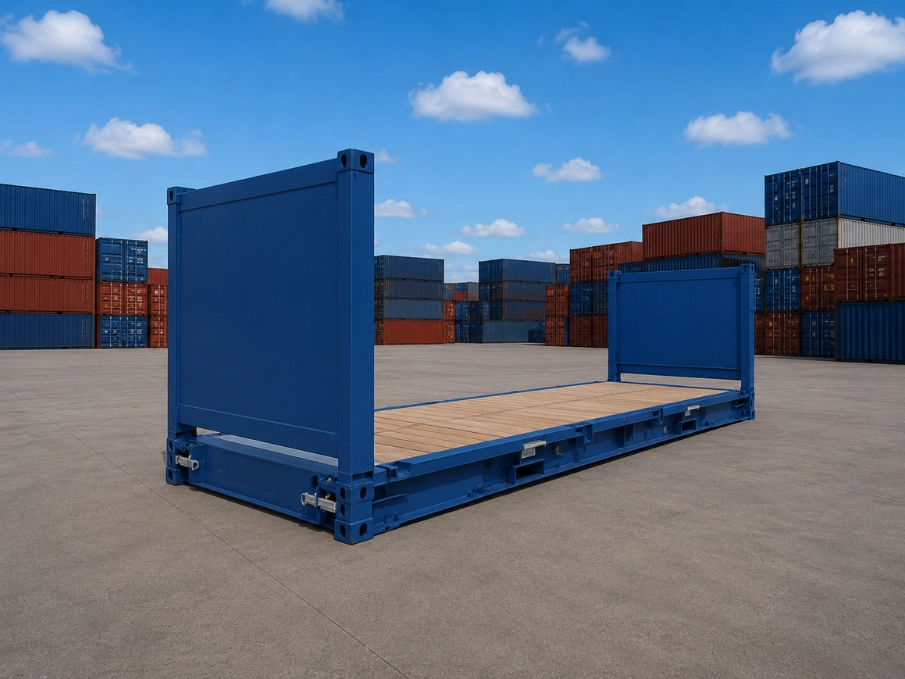
A flat rack has no side walls or roof, just a strong steel base with collapsible end walls making it ideal for cargo that's too wide, too heavy, or an awkward shape for a box container.
Sizes & Dimensions: 20ft: ~5.9m × 2.4m base | 40ft: ~12.0m × 2.4m base
Best Uses: Heavy machinery, vehicles, boats and out-of-gauge freight
Features:
- Collapsible end walls fold flat when empty
- High weight capacity thanks to reinforced base
- Loaded and unloaded from the top or sides
8. Platform (Flatbed) Container
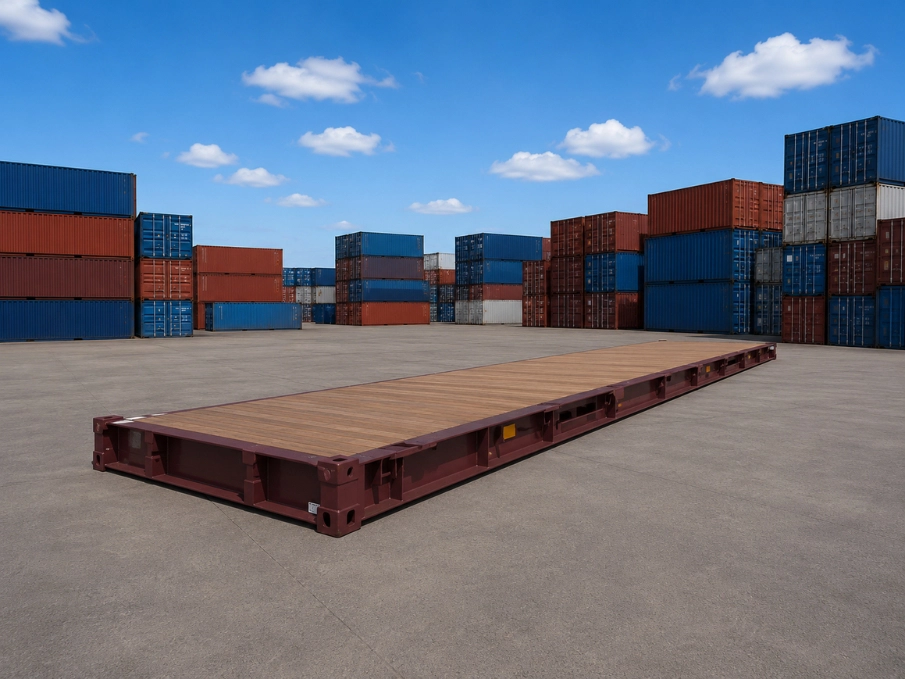
The platform or flatbed container strips things back even further than a flat rack, offering just a flat base with no end walls at all for genuinely oversized cargo.
Sizes & Dimensions: Base dimensions match 20ft/40ft container platforms
Best Uses: Transformers, pipes, steel girders and other super-heavy loads
Features:
- No walls, doors or roof a load-bearing platform only
- Extremely high payload capacity
- Cargo is lashed and secured directly to the deck
9. Open Top Container
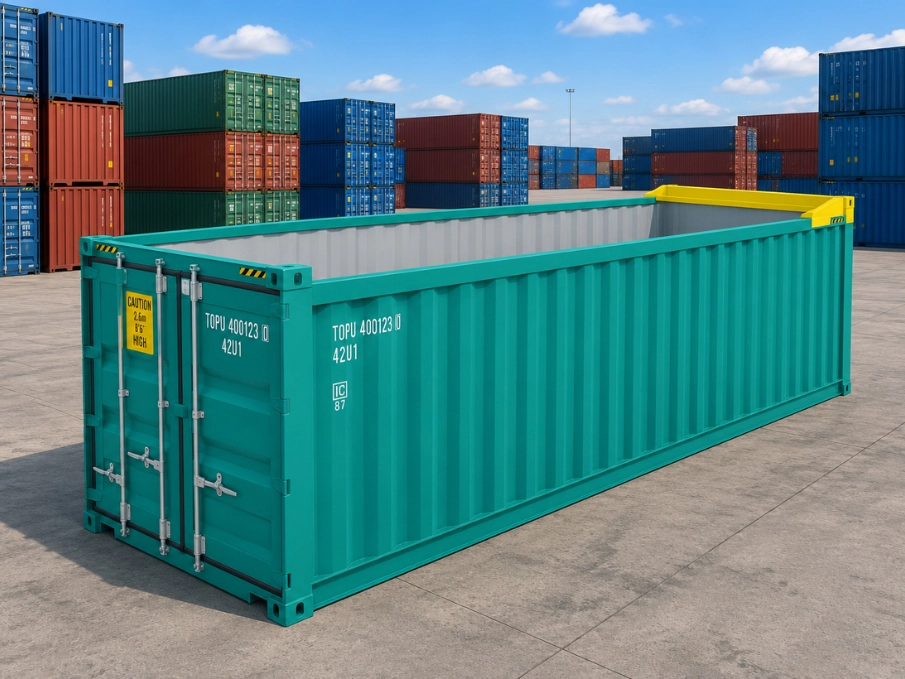
Open top containers replace the solid roof with a removable tarpaulin or bow, so cargo that's too tall for a standard box can be loaded straight from above with a crane.
Sizes & Dimensions: Same external footprint as standard 20ft/40ft containers
Best Uses: Machinery, timber, scrap metal, and other over-height cargo
Features:
- Removable tarpaulin roof for top-loading
- Reinforced corner posts to support the flexible cover
- Available in 20ft and 40ft lengths
10. Open Side Container (Side-Door Container)
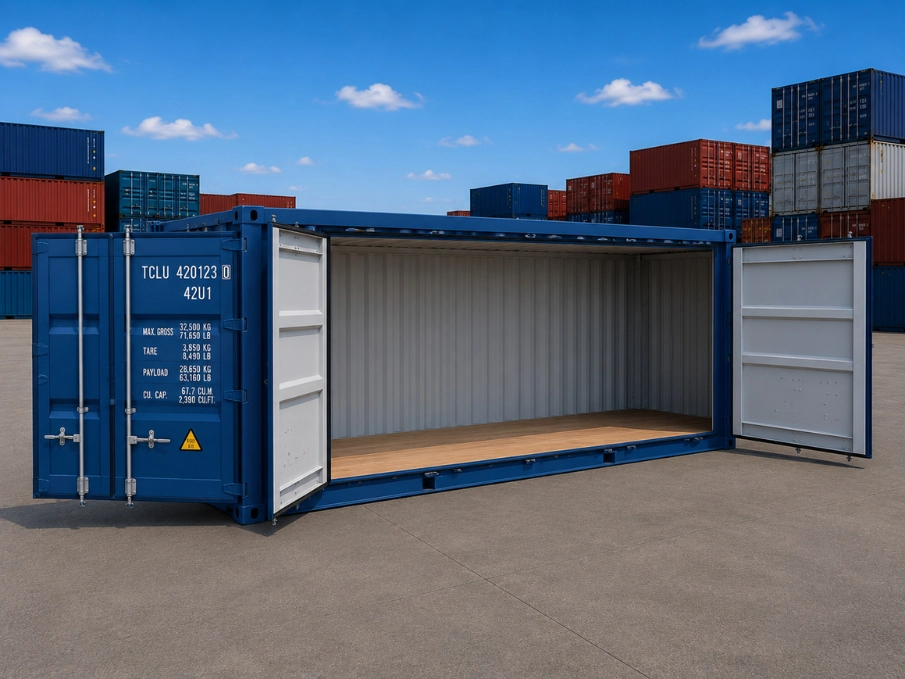
Open side containers add full-length doors down one or both sides, on top of the standard rear doors, so wide or long cargo can be loaded without needing a crane. You'll also see this type marketed as a side-door container, It's the same design.
Sizes & Dimensions: Same footprint as standard 20ft/40ft containers
Best Uses: Wide or long cargo such as timber, machinery and building materials
Features:
- Full-length side doors in addition to end doors
- Easier forklift access for wide pallets
- Often paired with high cube height for extra volume
11. Half-Height Container
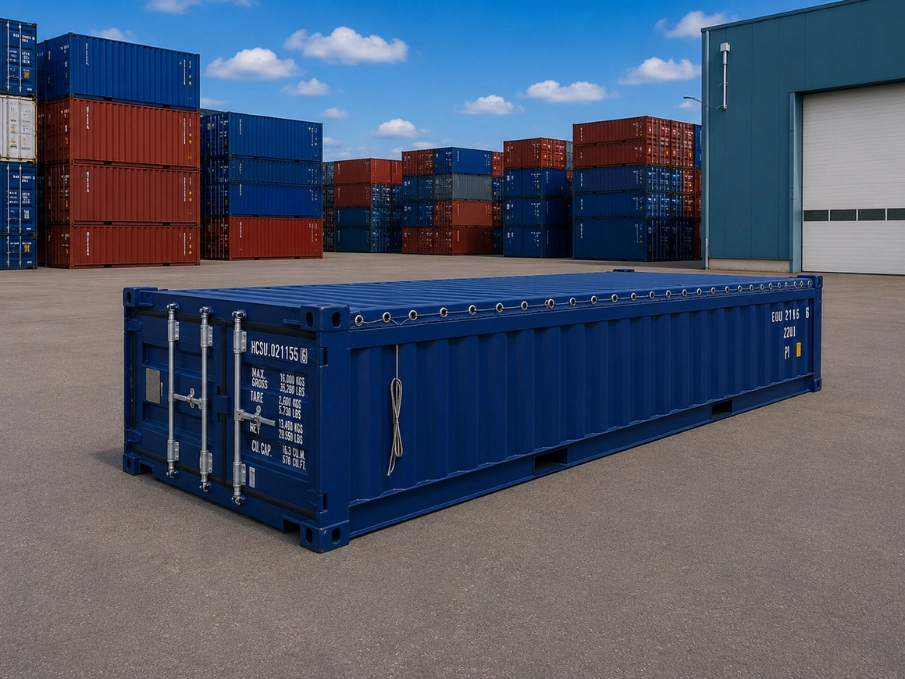
Built to roughly half the height of a standard box, half-height containers have a reinforced floor designed to carry very dense, heavy cargo without exceeding weight limits.
Sizes & Dimensions: 20ft: 6.06m × 2.44m × ~1.30m
Best Uses: Coal, ore, stone and other dense bulk materials
Features:
- Open top for easy loading by crane or grab
- Reinforced steel floor for high-density loads
- Lower centre of gravity improves stability
12. Double Door (Tunnel) Container
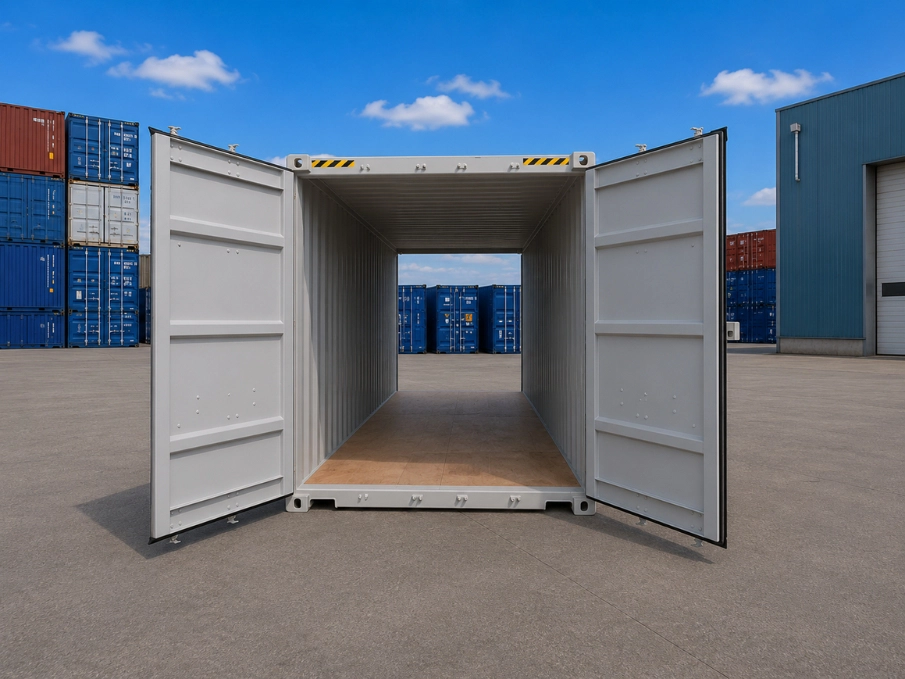
Also known as a tunnel container, this variant has doors at both ends, letting cargo be driven or loaded straight through rather than reversed in and out.
Sizes & Dimensions: Same footprint as standard 20ft/40ft containers
Best Uses: Long cargo needing drive-through access, such as pipes or timber
Features:
- Full opening doors at both ends
- Faster loading and unloading for long items
- Improves airflow when both doors are open
13. Hard Top Container
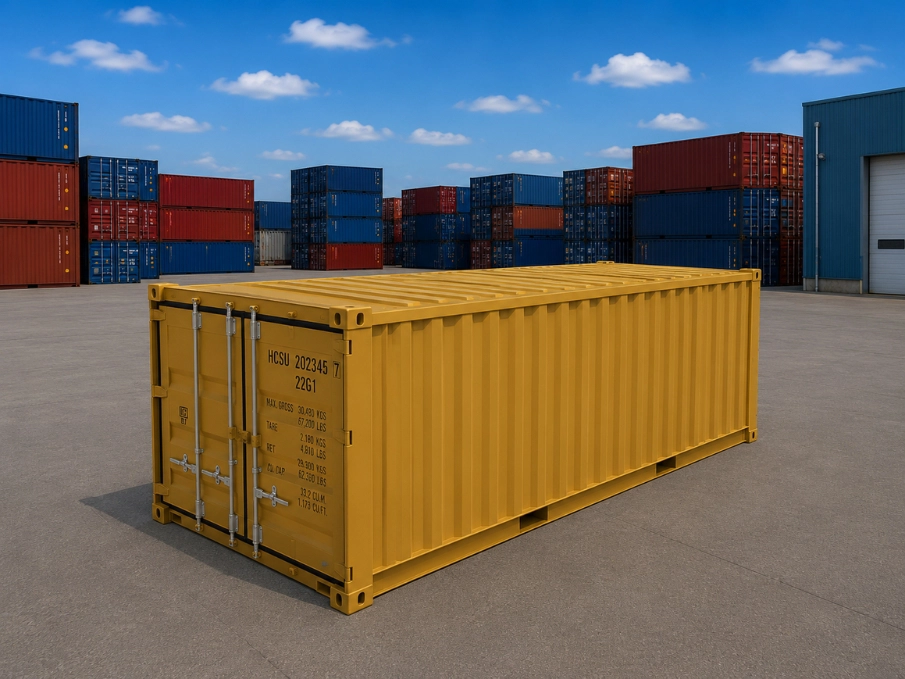
Hard top containers swap the fixed roof for a removable steel lid, combining the weatherproofing of a standard box with the top-loading convenience of an open top.
Sizes & Dimensions: Same footprint as standard 20ft/40ft containers
Best Uses: Heavy or tall cargo that needs crane loading and weather protection
Features:
- Fully removable solid steel roof
- Fully weatherproof when the roof is fitted
- Ideal for cargo loaded by overhead crane
14. Bulk Container
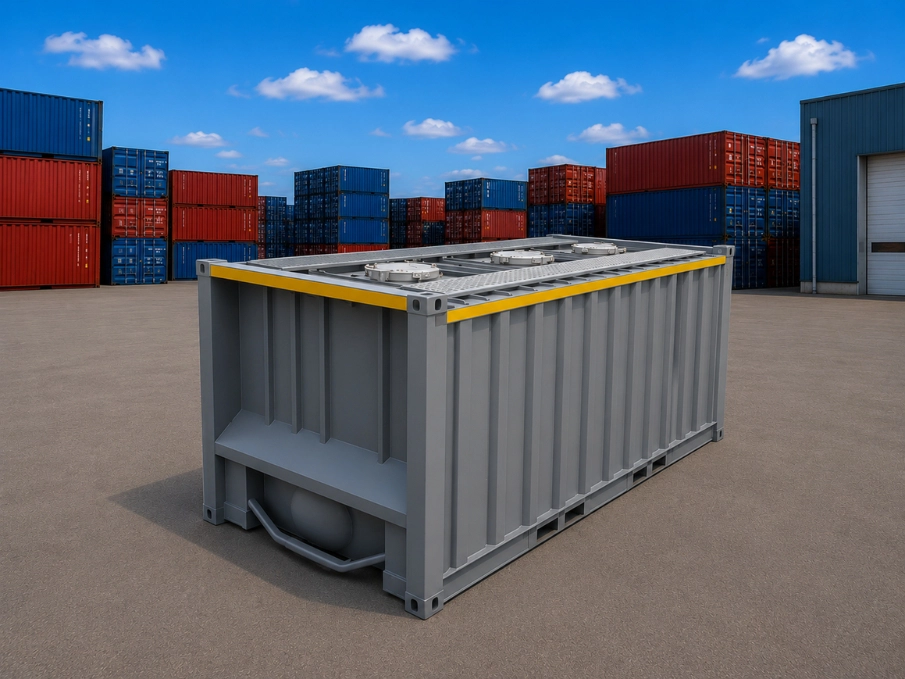
Bulk containers are designed to carry free flowing dry goods, loaded through hatches on the roof and discharged through doors or bottom outlets, avoiding the need for bagging.
Sizes & Dimensions: 20ft standard footprint
Best Uses: Grain, sugar, malt, powders and other free-flowing dry bulk cargo
Features:
- Loading hatches on the roof
- Discharge hatches at the base or door end
- Smooth interior lining to aid full discharge
15. Ventilated Container
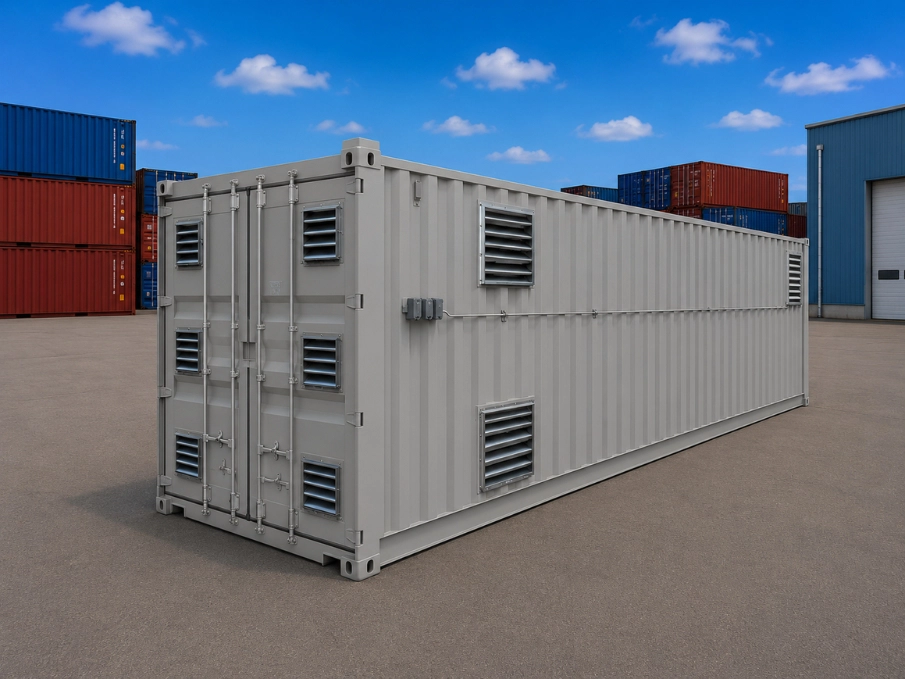
Ventilated containers include vents along the upper side rails so air can circulate, preventing condensation from building up on cargo that naturally releases moisture.
Sizes & Dimensions: 20ft and 40ft standard footprints
Best Uses: Coffee beans, cocoa, onions and other moisture-releasing produce
Features:
- Louvred vents at the top of the side walls
- Natural airflow reduces condensation and mould risk
- No power or mechanical parts required
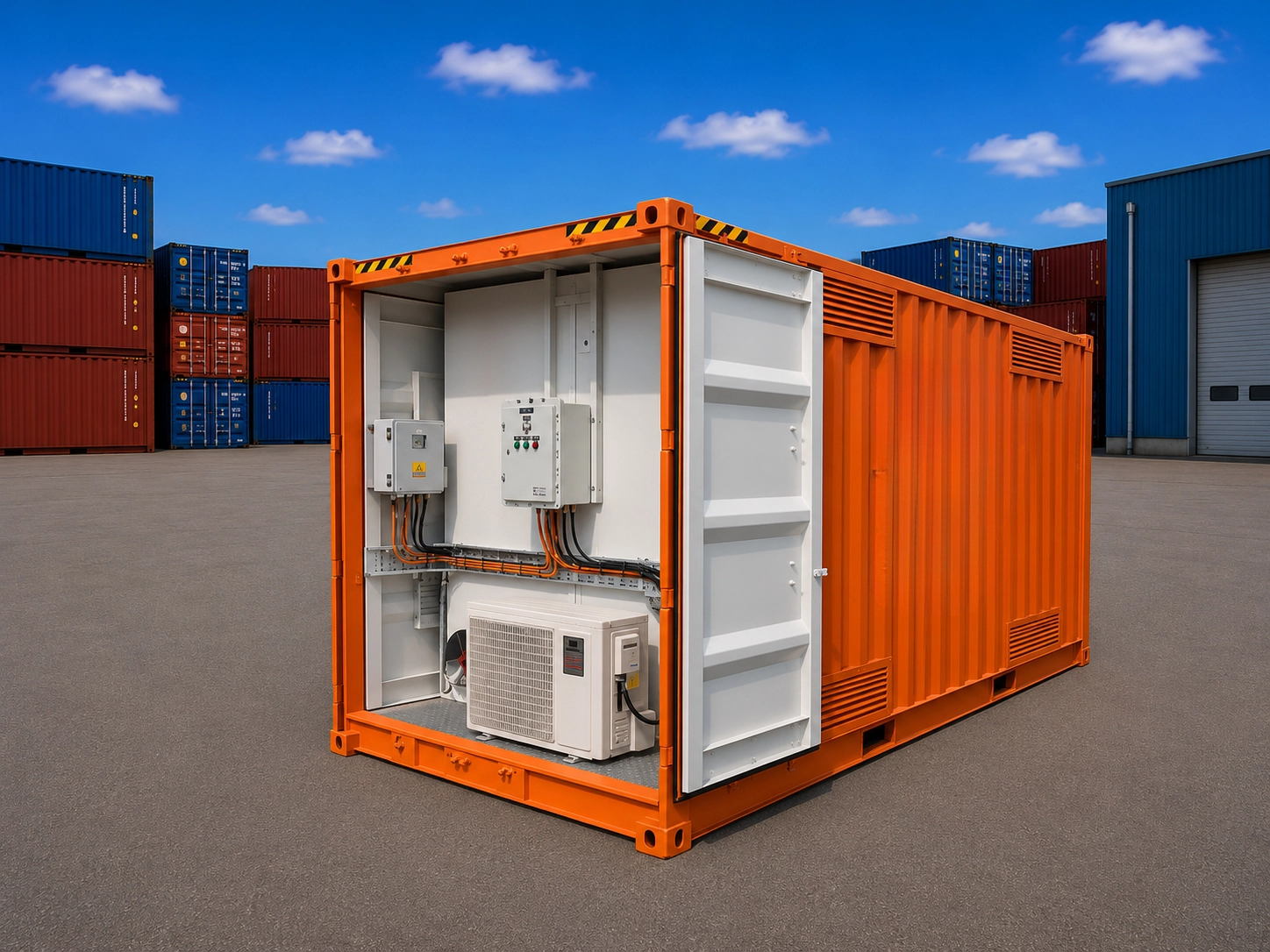
16. Special Purpose Container
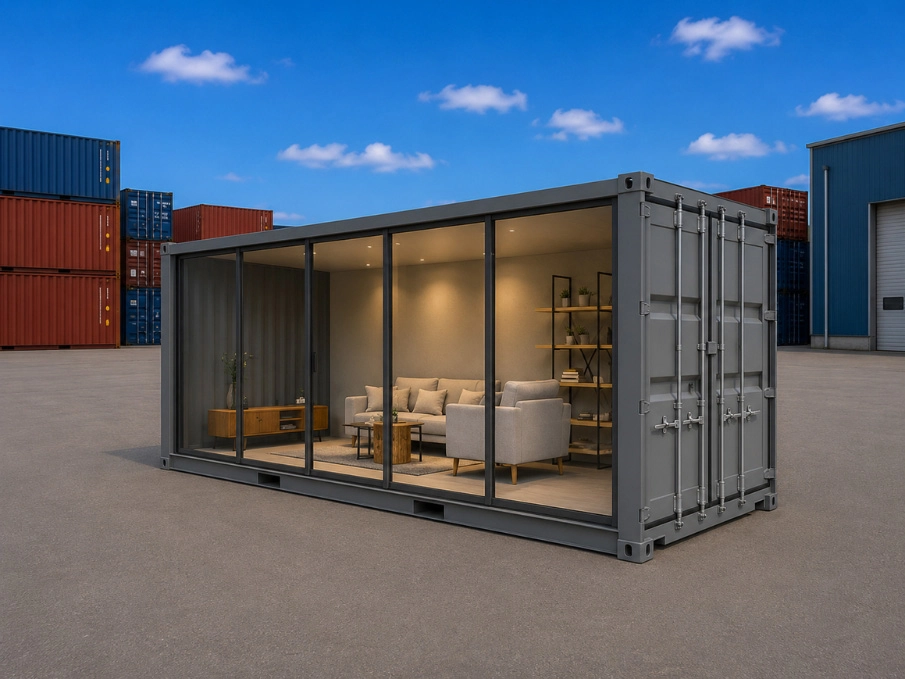
Special purpose containers are custom-engineered units built for a specific job that doesn't fit neatly into a standard, high cube or other named category from generator housings to mobile plant rooms.
Sizes & Dimensions: Based on 10ft–40ft shells, modified to suit the application
Best Uses: Mobile workshops, generator or equipment housings, site amenities, one-off industrial builds
Features:
- Purpose-built internal fit-out for a single application
- Can combine features from several standard container types
- Usually built to a client's exact specification
17. Dangerous Goods (DG) Container
Dangerous goods containers are standard, tank or specialised units certified to carry hazardous cargo under strict international and Australian regulations, with placarding, venting and containment features built in.
Sizes & Dimensions: Typically 20ft/40ft standard or tank container footprints
Best Uses: Chemicals, flammable liquids, corrosives and other classified hazardous cargo
Features:
- Certified under the IMDG Code and the Australian Dangerous Goods (ADG) Code
- Fitted with placards, venting or spill containment depending on cargo class
- Regularly inspected and re-certified for ongoing compliance
18. Pallet Wide Container
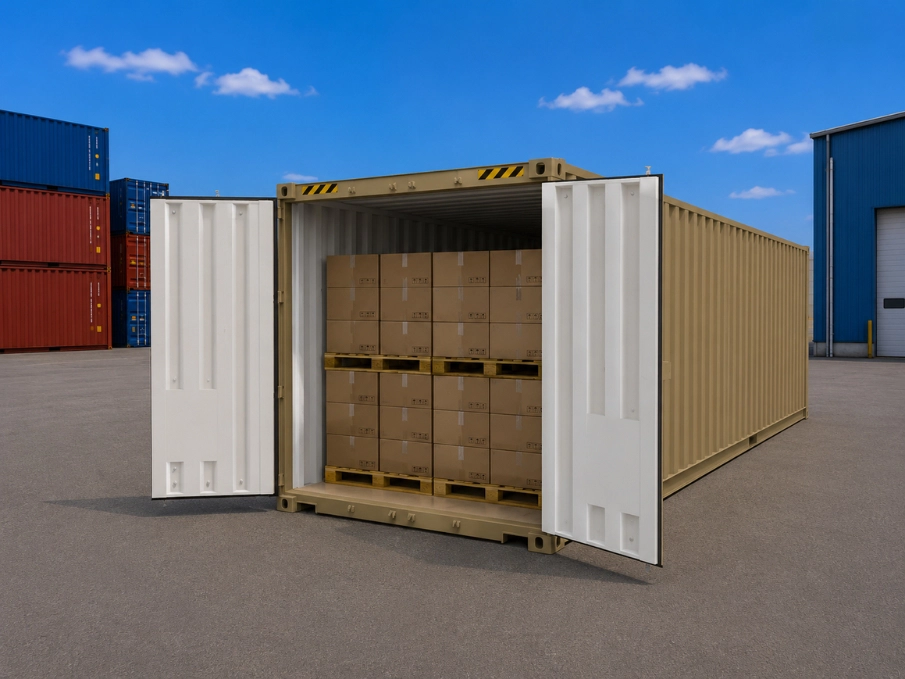
Pallet wide containers are built a little wider internally than a standard box, specifically so two Australian CHEP pallets fit side by side without wasted space.
Sizes & Dimensions: 20ft, 40ft and 48ft pallet wide variants
Best Uses: Palletised road freight across Australia
Features:
- Wider internal body than standard containers
- Optional vertical load bars for safe double-stacking
- Maximises pallet count per container
19. 10ft Mini Container
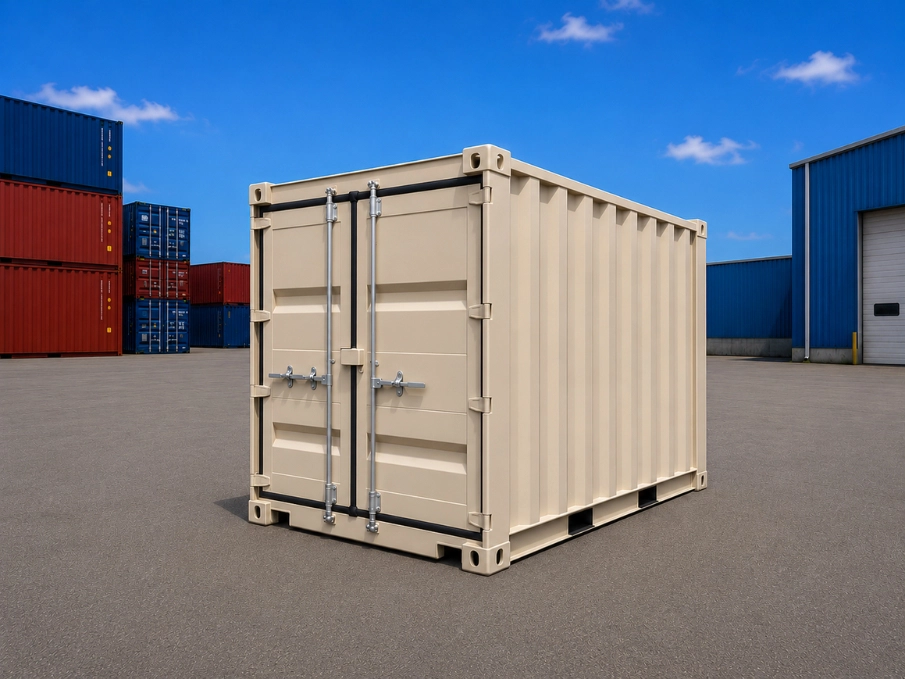
The 10ft mini container is the smallest commonly available size, offering a compact footprint that still provides genuine lockable storage for tools and equipment.
Sizes & Dimensions: 10ft: approximately 2.99m × 2.44m × 2.59m
Best Uses: Site storage, tools, equipment and small business use
Features:
- Compact footprint suited to tight sites
- Fully lockable and weatherproof
- Easy to transport with a standard truck or trailer
20. 45ft / 48ft / 53ft High Cube Containers
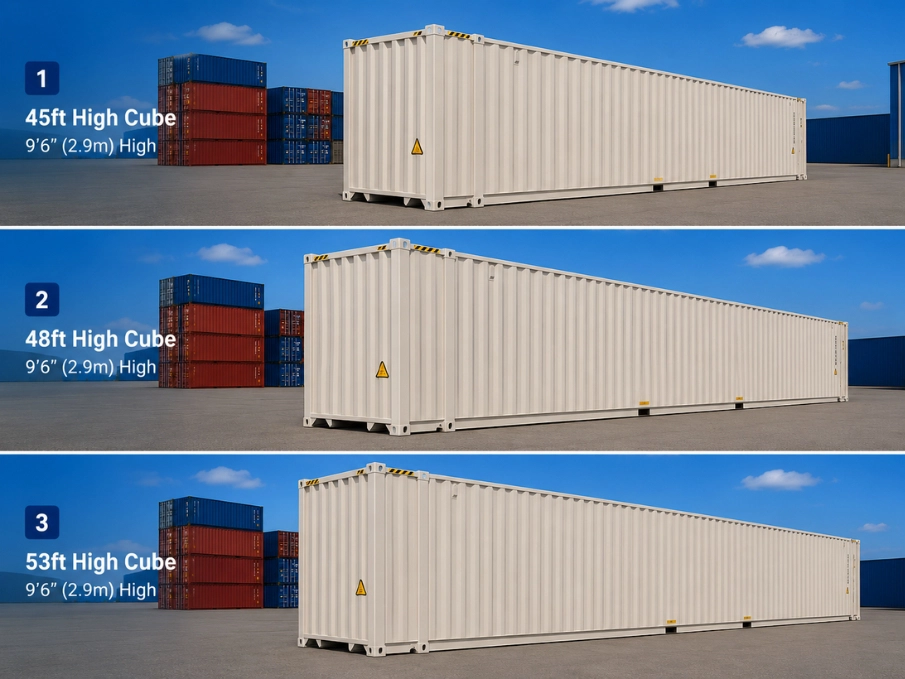
These extra-length high cube variants extend well beyond the standard 40ft box, giving high-volume shippers and storage users significantly more capacity per unit.
Sizes & Dimensions: 45ft–53ft in length, 2.44m wide, 2.90m high
Best Uses: High-volume freight, warehousing and large modular builds
Features:
- Extended length beyond standard ISO sizing
- High cube height as standard
- Popular for domestic freight and large-scale storage
21. Side-Opening High Cube Container
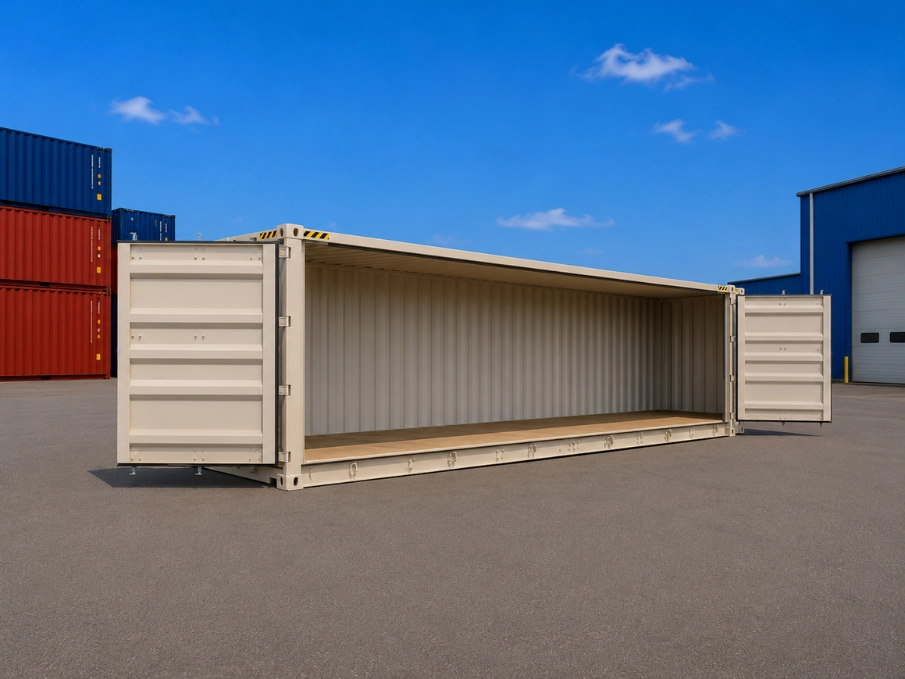
A Side-Opening High Cube Container combines the extra height of a high cube container with full-length side doors, providing faster and more flexible access to cargo.
Sizes & Dimensions: 20ft and 40ft high cube footprints
Best Uses: Retail pop-ups, workshops and frequently accessed storage
Features:
- Full-length side doors plus high cube height
- Easier day-to-day access than end-door-only units
- Popular for retail, workshop and pop-up conversions
22. Modified / Custom Containers
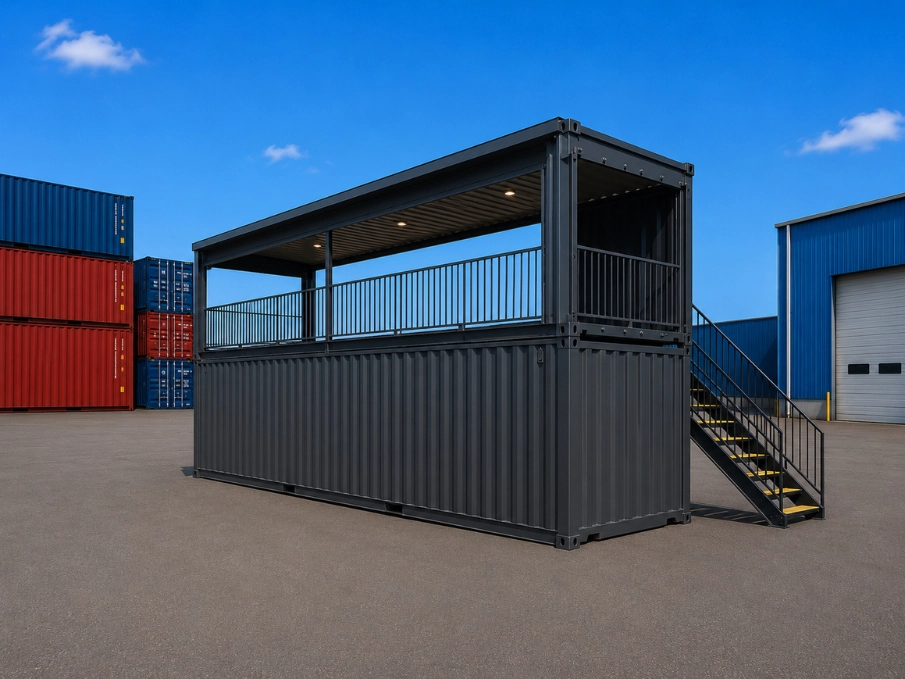
Standard and high cube containers are increasingly modified with insulation, windows, doors, plumbing and electrics to become site offices, container homes and mobile cool rooms.
Sizes & Dimensions: Based on 10ft–40ft standard or high cube shells
Best Uses: Container homes, portable offices, mobile cool rooms and workshops
Features:
- Custom cut-outs for doors, windows and vents
- Insulation, lining and electrical fit-outs available
- Can be combined into multi-container structures
Factors That Impact Container Costs
Prices vary widely across container types, and several factors influence what you'll pay to buy, hire or transport one in Australia:
- Container type and size: specialised builds like reefers, tanks and flat racks cost more than standard dry boxes due to their equipment and materials.
- Condition: new ('one-trip'), cargo-worthy, and wind-and-watertight containers are priced differently depending on intended use.
- Modification level: insulation, windows, doors, plumbing and electrical fit-outs add to the base container cost.
- Distance and route: longer hauls, regional deliveries and limited site access all affect freight pricing.
- Crane or hiab requirements: oversized or heavy container types often need special lifting equipment on delivery.
- Demurrage and detention: holding a container at port or site beyond the free period adds daily charges.
- Market demand and availability: container shortages or peak shipping seasons can push prices up quickly.

How to Choose the Right Container Type
When comparing types of containers for your next shipment or storage project, work through these questions:
- What is your cargo? – General goods suit a standard or high cube box; liquids need a tank container; oversized machinery needs a flat rack or platform.
- How much volume or weight? – Match container length and payload rating to your actual load, not just what's available.
- Does it need temperature or airflow control? – Perishables need a reefer; produce that sweats needs ventilation.
- How will it be transported? – Consider whether your container transport solutions involve road, rail, or sea, as each mode has different loading, lifting, and access requirements.
- Is this for storage or shipping? – Wind-and-watertight or modified units are often more cost-effective for storage-only use.
- What compliance applies? – Confirm the container's CSC plate, Australian standards compliance, and any road weight limits on your route.
Conclusion
From dry vans and high cubes to reefers, flat racks and tank containers, Australia's many types of containers each solve a different freight or storage challenge. Getting the choice right protects your cargo, keeps you compliant, and avoids paying for space or features you don't need. If you need help matching the right types of shipping containers to your next shipment, Alpha Trucking's experienced team can guide you through container delivery cost, sizing and transport logistics from start to finish.