
Introduction: Why Choosing the Right Freight Mode Matters
Australia’s vast distances and complex supply chains make freight transport a critical factor in business success. The choice between road and rail affects delivery speed, costs, reliability, and operational efficiency. Businesses that make the right decision can reduce expenses, minimise delays, and improve customer satisfaction.
At Alpha Trucking, we provide tailored freight solutions across Australia, helping businesses optimise their logistics and make informed decisions about whether road or rail transport is best for their general freight needs. This guide explores the key differences, advantages, and considerations, giving you the insight needed to streamline your supply chain.
Road Freight: Flexibility and Speed for Your Deliveries
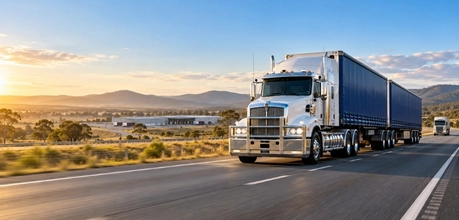
Why Road Freight Works
- Door-to-Door Access: Road freight provides unmatched flexibility, delivering goods directly to your warehouse, retail store, or distribution center.
- Faster for Short Distances: For regional and interstate shipments, road transport can be quicker than rail due to direct routes.
- Versatility: Trucks can carry a wide variety of cargo—from perishable goods to machinery—without specialised infrastructure.
Considerations
- Cost Over Long Distances: Fuel, labor, and toll costs can make long-distance road freight more expensive.
- Environmental Impact: Trucks produce higher carbon emissions compared to rail, which may affect sustainability goals.
Alpha Trucking Advantage: Our road freight services across Australia are optimised for speed and reliability, offering solutions like pallet delivery service and flexible scheduling to suit your business needs.
Rail Freight: Economical and Efficient for Bulk Transport
Why Rail Freight Works
- Cost-Effective for Large Loads: Rail can be cheaper than trucks for moving bulk goods over long distances. Businesses often ask, “is rail freight cheaper than truck?”for heavy, non-urgent shipments, the answer is yes.
- High Capacity: Rail can move large volumes in a single trip, reducing the number of individual shipments.
- Eco-Friendly: Rail transport generates fewer carbon emissions per tonne-kilometer than road transport, helping businesses meet sustainability goals.
Considerations
- Network Limitations: Rail only reaches areas connected to the rail infrastructure, often requiring complementary road transport for the first and last mile.
- Slower for Short Distances: Rail may take longer than trucks for regional deliveries or time-sensitive shipments.
Alpha Trucking Advantage: With our integrated services, we combine rail freight and road transport for seamless deliveries, maximising efficiency while reducing costs.
Key Comparison: Road vs Rail Freight
|
Feature |
Road Freight |
Rail Freight |
|
Cost |
Higher for long distances |
Lower for bulk, long-distance shipments |
|
Flexibility |
High (door-to-door) |
Limited by rail network |
|
Speed |
Faster for short distances |
Slower but reliable over long distances |
|
Environmental Impact |
Higher emissions |
Lower emissions |
|
Capacity |
Limited by truck size |
High volume per trip |
|
Integration Needs |
Minimal |
Often requires road for first/last mile |
Australian Freight Landscape

Australia’s freight system relies heavily on road transport due to flexibility, but rail plays a crucial role for bulk shipments across major corridors. The choice between road or rail transport depends on your cargo type, delivery timelines, and cost considerations. Understanding Australian freight rail roads and infrastructure helps businesses plan efficient and cost-effective transport strategies.
Practical Tips for Choosing the Right Freight Mode
- Assess Your Cargo: Heavy or bulk items over long distances may be more economical via rail.
- Consider Delivery Speed: Road is ideal for urgent, short-distance shipments.
- Factor in Cost vs Efficiency: Evaluate rail freight costs vs road freight Australia for your specific routes.
- Look for Integrated Solutions: Companies like Alpha Trucking offer combined rail and road services for maximum efficiency.
- Check Additional Services: Complementary services such as sea freight can help optimise multi-modal supply chains.
Conclusion
Both road and rail have unique advantages depending on distance, cargo type, cost, and delivery urgency. Businesses that leverage the strengths of each mode—or combine them through integrated solutions, can reduce costs, improve reliability, and increase customer satisfaction.
Ready to optimise your general freight transport? Contact Alpha Trucking today to discover customised road and rail solutions for your business.