
Instant Overview in 1 Minute!
There are 9 dangerous goods classes under the Australian Dangerous Goods (ADG) Code: explosives, gases, flammable liquids, flammable solids, oxidising substances and organic peroxides, toxic and infectious substances, radioactive material, corrosive substances, and miscellaneous dangerous goods. Every class of dangerous goods has its own labels, packaging rules and handling requirements. Before you ship, you need the correct class, division, UN number and packing group for your product, plus the right diamond label, placard and documentation. Get any one of these wrong and your freight can be delayed, refused or fined at the depot.
Introduction
Australia’s freight network transports significant volumes of dangerous goods, including fuels, chemicals, gases and batteries. The National Transport Commission estimates that around 6% of all goods transported by tonnes are dangerous goods.
Australian Dangerous Goods (ADG) Code, dangerous goods are grouped into 9 classes based on their hazards. Correct classification is essential because it affects packaging, labelling, documentation and transport requirements.
In this guide, we explain all 9 dangerous goods classes, common examples, labels and key shipping requirements for businesses.
What Are Dangerous Goods Classes?
Dangerous goods classes are the nine official hazard categories used to group substances and articles that pose a risk to people, property or the environment during transport. Each dangerous goods class is defined by the Australian Code for the Transport of Dangerous Goods by Road & Rail (ADG Code), which is maintained by the National Transport Commission and aligned with the United Nations Model Regulations used around the world.
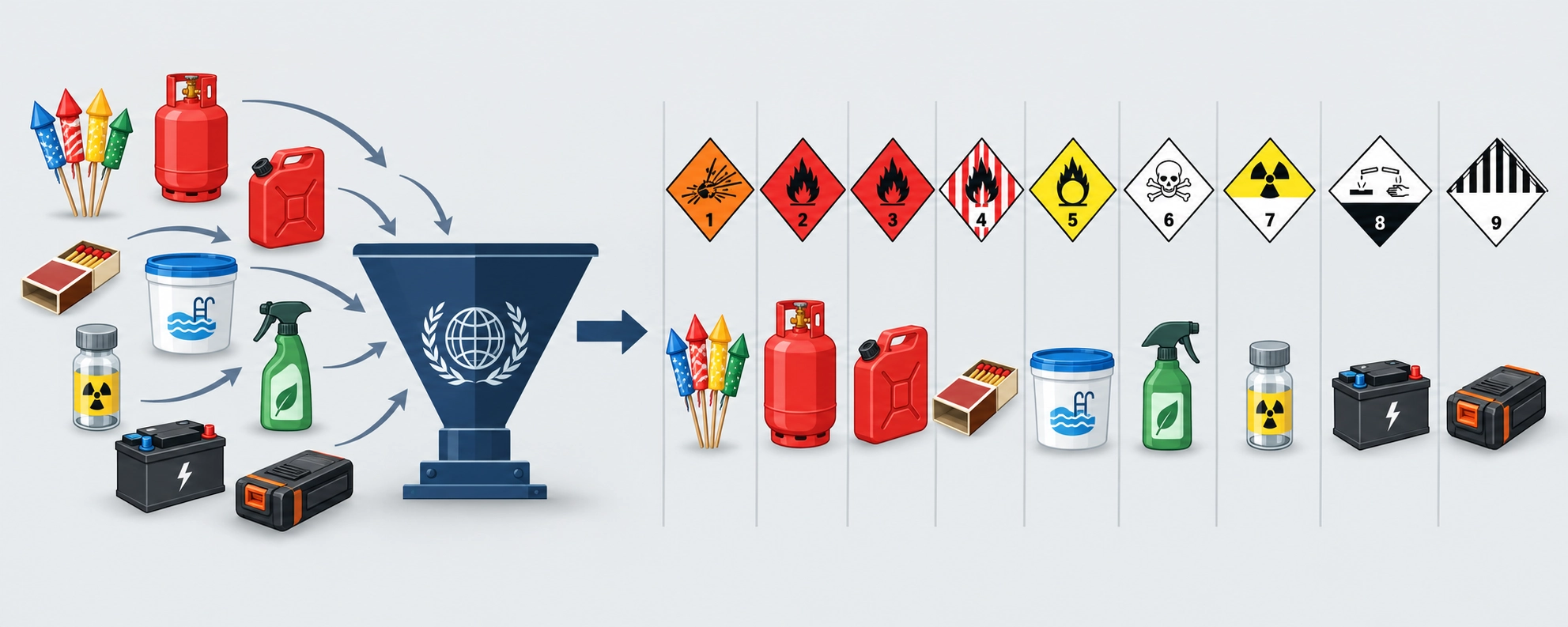
What dangerous goods classification means
Classification is the process of matching a product to the class (and, where relevant, the division and packing group) that reflects its predominant hazard. A product might be flammable, corrosive, toxic, or all three classification identifies the single most significant risk so the correct label, packaging and documentation can be applied.
Why classification matters before shipping
Everything downstream depends on it. The class of dangerous goods you assign determines:
- Which packaging is approved, and to what performance standard
- Which labels go on the package and which placards go on the vehicle
- What can and cannot travel alongside it, under the segregation rules
- Whether the driver needs a dangerous goods licence and the vehicle needs a DG vehicle licence
- What emergency information must travel with the load
- How much you can carry before the consignment becomes a placard load
What Are the 9 Classes of Dangerous Goods?
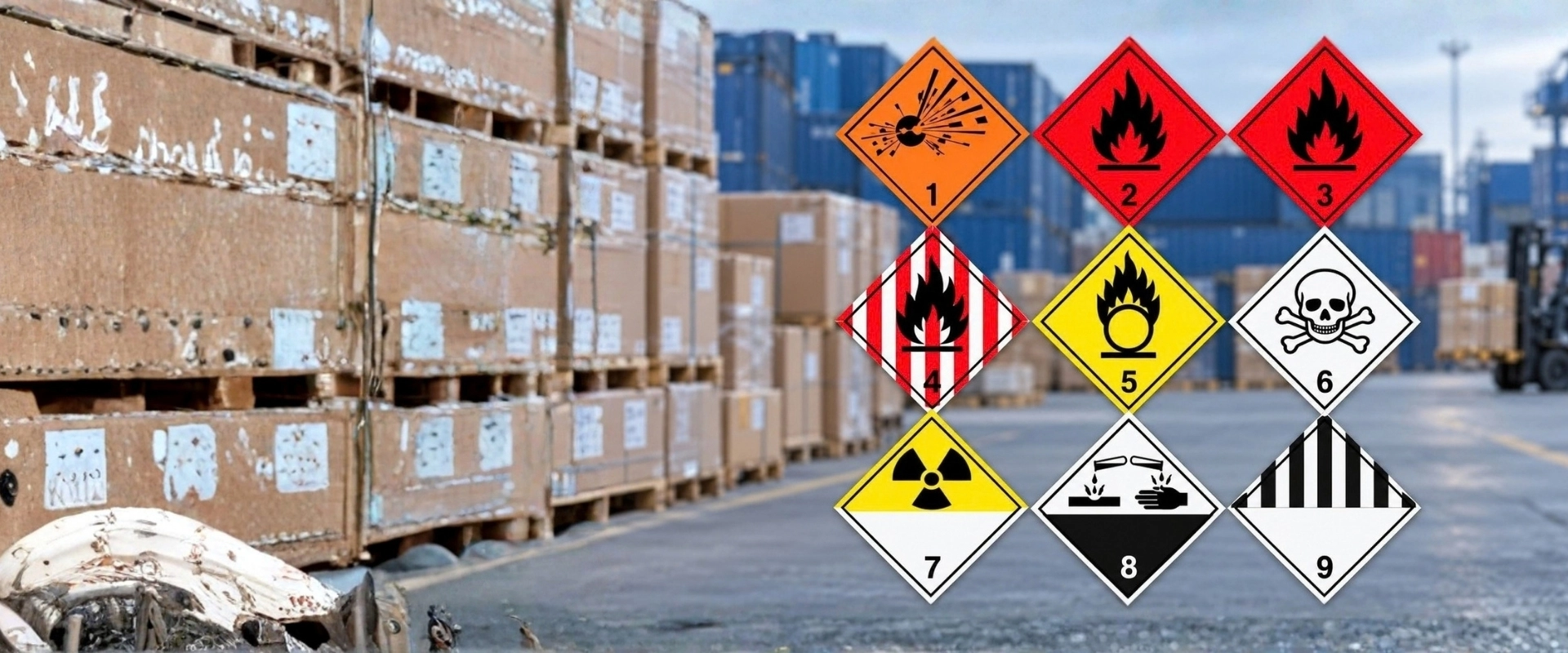
Substances and articles covered by the ADG Code are assigned to one of nine dangerous goods classes according to their primary hazard. Some people call these DG classes for short; the two terms mean the same thing. Here's the quick overview, followed by a closer look at each one.
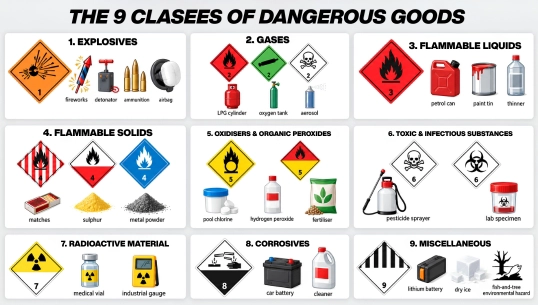
Quick overview table of all 9 classes
|
Class |
Name |
Common Australian examples |
Label appearance |
|
1 |
Explosives |
Mining explosives, detonators, fireworks, ammunition, airbag inflators |
Orange diamond |
|
2 |
Gases |
LPG cylinders, oxygen, refrigerant gas, aerosols, compressed nitrogen |
Red, green or white diamond by division |
|
3 |
Flammable Liquids |
Petrol, diesel additives, solvent-based paints, thinners, ethanol, adhesives |
Red diamond |
|
4 |
Flammable Solids |
Matches, sulphur, metal powders, calcium carbide, some fertiliser components |
Red-striped, red/white or blue diamond by division |
|
5 |
Oxidising Substances & Organic Peroxides |
Pool chlorine, hydrogen peroxide, ammonium nitrate, fibreglass hardeners |
Yellow diamond |
|
6 |
Toxic & Infectious Substances |
Pesticides, agricultural chemicals, cyanides, clinical and diagnostic specimens |
White diamond with skull or biohazard symbol |
|
7 |
Radioactive Material |
Medical isotopes, industrial gauges, non-destructive testing sources |
Yellow and white with trefoil |
|
8 |
Corrosive Substances |
Battery acid, caustic soda, hydrochloric acid, drain and industrial cleaners |
Black and white diamond |
|
9 |
Miscellaneous Dangerous Goods |
Lithium batteries, dry ice, asbestos, environmentally hazardous substances |
Black and white vertical striped diamond |
Class 1 – Explosives
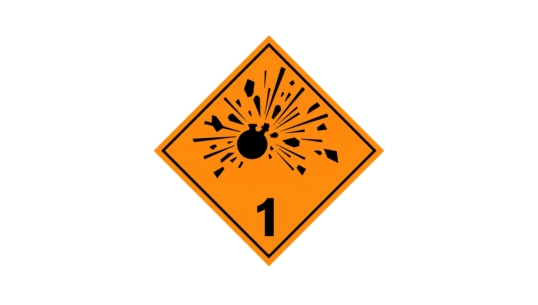
Class 1 covers substances and articles capable of mass explosion, projection or fire hazard, think fireworks, ammunition, detonators and blasting agents. This class is split into six divisions (1.1 to 1.6) based on the type and scale of hazard, from mass-explosion risk down to items with minimal hazard. Explosives carry some of the strictest handling, storage and transport licensing requirements of any dangerous goods class.
Class 2 – Gases
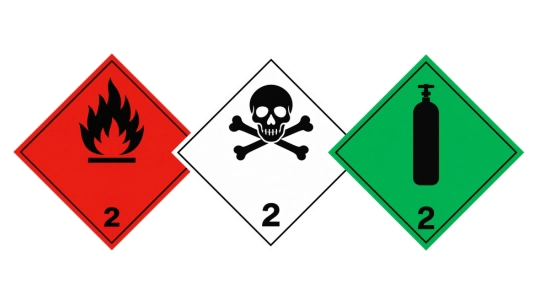
Class 2 covers compressed, liquefied, dissolved or refrigerated gases, split into three divisions: 2.1 flammable gases (LPG, acetylene), 2.2 non-flammable, non-toxic gases (nitrogen, oxygen) and 2.3 toxic gases. Aerosols and gas cylinders are among the most commonly shipped Class 2 items in Australian businesses.
Class 3 – Flammable Liquids
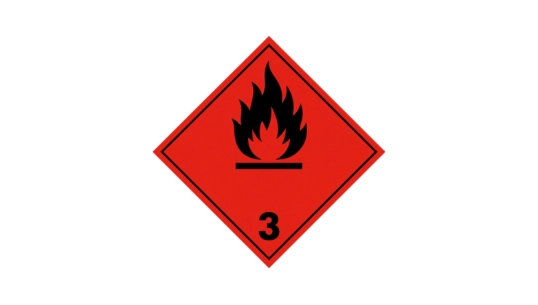
Flammable liquids give off vapour that can ignite at relatively low temperatures. Petrol, diesel additives, paints, solvents and many industrial cleaning products fall into Class 3. It's one of the most frequently shipped classes across Australian road freight, which is why AS 1940 governs how these liquids must be stored on-site.
Class 4 – Flammable Solids
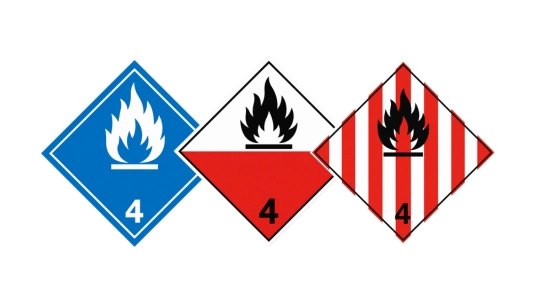
Class 4 is split into three divisions: 4.1 flammable solids (matches, sulphur), 4.2 substances liable to spontaneous combustion (oily rags, certain metal powders) and 4.3 substances that emit flammable gas when wet. Division 4.3 goods are placarded "Dangerous When Wet" and must be kept away from moisture at every stage of transport.
Class 5 – Oxidising Substances & Organic Peroxides
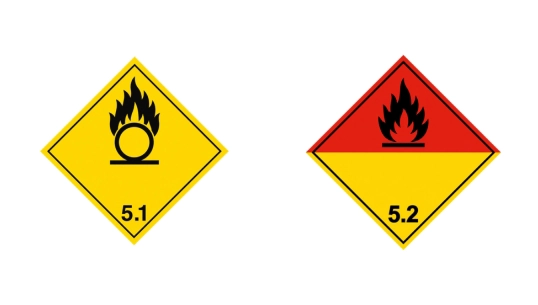
Division 5.1 oxidising agents (pool chlorine, ammonium nitrate) don't burn themselves but intensify a fire by releasing oxygen. Division 5.2 organic peroxides are both oxidisers and flammable, and many require temperature-controlled transport to stay stable.
Class 6 – Toxic & Infectious Substances
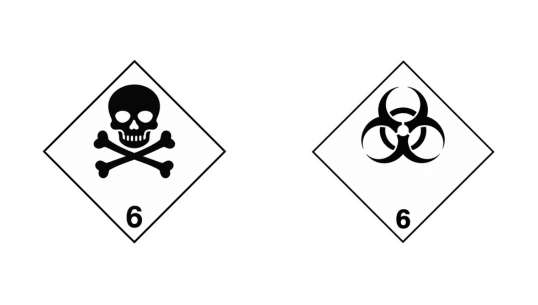
Division 6.1 covers substances that can cause serious injury or death if swallowed, inhaled or absorbed through skin pesticides and certain industrial chemicals are common examples. Division 6.2 covers infectious substances such as clinical or medical waste and diagnostic specimens, which carry their own strict packaging standard (P620/P650 packaging types).
Class 7 – Radioactive Material
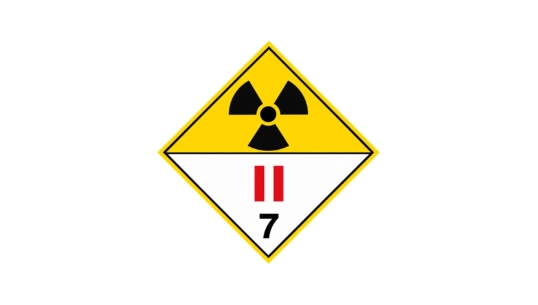
Class 7 covers materials that emit ionising radiation above set thresholds, such as medical isotopes and certain industrial testing equipment. Transport of radioactive material in Australia is tightly regulated by the ARPANSA framework in addition to the ADG Code, and packages are labelled Category I, II or III depending on their radiation level.
Class 8 – Corrosive Substances
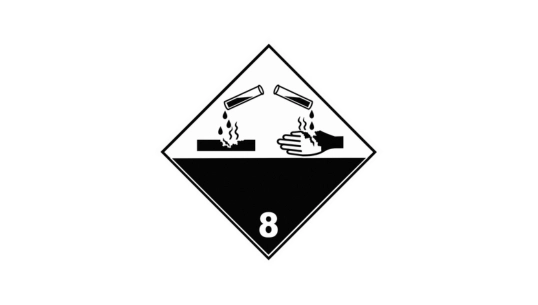
Corrosives cause visible destruction of skin or can severely corrode metal on contact. Battery acid, caustic soda and many industrial cleaning agents fall here. Because corrosives can eat through inadequate packaging over time, packing group and container compatibility both matter far more than with most other classes.
Class 9 – Miscellaneous Dangerous Goods
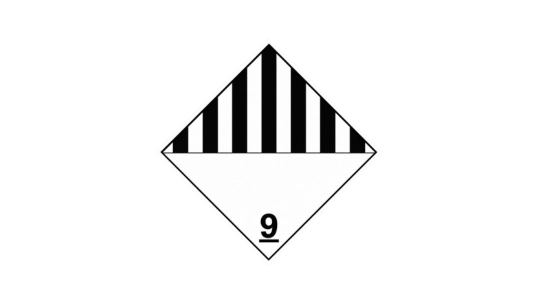
Class 9 is the catch all for goods that present a transport hazard but don't fit the other eight classes lithium-ion batteries, dry ice, environmentally hazardous substances and genetically modified organisms are the most common examples for Australian businesses today, particularly with the rise of e-scooters, power tools and consumer electronics that rely on lithium batteries.
What Are Dangerous Goods Divisions?
A division is a subdivision within a class that describes a more specific hazard. Not every class has them Classes 3, 7, 8 and 9 do not, but where divisions exist, they change the handling rules substantially.
|
Class |
Divisions |
What the division tells you |
|
1 |
1.1 to 1.6, plus compatibility groups A–S |
The type of explosive effect mass explosion, projection, fire and what may be loaded together |
|
2 |
2.1 flammable, 2.2 non-flammable non-toxic, 2.3 toxic |
Whether the gas will burn, is inert under pressure, or is poisonous |
|
4 |
4.1 flammable solid, 4.2 spontaneously combustible, 4.3 dangerous when wet |
How ignition occurs external source, self-heating, or contact with water |
|
5 |
5.1 oxidising, 5.2 organic peroxide |
Whether it feeds a fire or is itself thermally unstable |
|
6 |
6.1 toxic, 6.2 infectious |
Chemical toxicity versus biological pathogen risk |
How Are Dangerous Goods Classified for Shipping?
Classification is the consignor’s legal responsibility in Australia, not the carrier’s. The carrier must transport correctly declared goods correctly, but the declaration starts with you. The process runs roughly like this:
- Checking the current SDS for the UN number, proper shipping name, class and packing group
- Confirming the quantity against the placard load and reportable quantity thresholds for that class
- Selecting UN-certified packaging rated for that class and packing group
- Applying the correct diamond label to each package
- Completing a dangerous goods declaration or consignment note that lists the classification details
- Segregating the load from incompatible classes of dangerous goods on the same vehicle
Dangerous Goods Labels, Marks & Placards Explained
Three different things get confused constantly, so it is worth separating them.
Labels
Diamond-shaped hazard labels go on individual packages, generally at least 100 mm by 100 mm. A package with more than one hazard carries a primary label plus subsidiary risk labels, which show the class symbol without a class number in the bottom corner.
Marks
Marks are text or symbols rather than hazard diamonds. They include the UN number and proper shipping name, orientation arrows on liquids, the limited quantity mark, the lithium battery mark, and the environmentally hazardous substance mark the dead fish and tree symbol which appears far more often than most shippers expect.
Placards
Placards are the enlarged versions displayed on the vehicle itself, typically 250 mm by 250 mm, showing what is on board to anyone approaching it.
The Emergency Information Panel
This is distinctly Australian and worth understanding if you have only worked to international rules. Placard loads of a single dangerous goods in bulk must display an Emergency Information Panel carrying the UN number, proper shipping name, HAZCHEM emergency action code and a 24-hour specialist advice telephone number. The HAZCHEM code is what tells a responding fire crew which extinguishing media to use and whether to contain runoff, which is why an incorrect panel is treated seriously.
What Businesses Must Check Before Shipping Dangerous Goods
- Current safety data sheets. An SDS must be no more than five years old. Expired sheets are one of the most common findings during a load check.
- Correct UN-approved packaging. Rated for the packing group, in date, and not reused beyond what its approval allows.
- Accurate quantity declarations. Aggregate quantity determines the placard load threshold, and understating it removes controls that should have been in place.
- Segregation compatibility. Check what else is going on the vehicle. Class 8 acids next to Class 4.3 water-reactive goods is the textbook example of what not to do.
- Driver and vehicle licensing. Placard loads require a driver with a dangerous goods licence and a licensed vehicle. Confirm your carrier actually holds both.
- Emergency information. The right emergency procedure guides or Initial Emergency Response Guide information must travel with the load, accessible from the cab.
- Chain of Responsibility duties. Under the Heavy Vehicle National Law, consignors, packers and loaders share legal responsibility. You cannot contract out of it by handing the freight to someone else.
- Insurance position. Many standard transit policies exclude or limit dangerous goods. Confirm in writing rather than assuming.
Dangerous Goods Shipping Checklist
Use this as a final pre-dispatch check for any shipment carrying dangerous goods: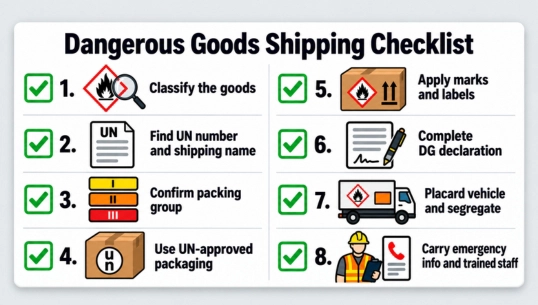
Before packing
- SDS confirmed and less than five years old
- UN number, class, division and packing group identified
Packing and labelling
- UN-certified packaging used and undamaged
- Correct diamond label and UN number mark applied
- Orientation arrows added for liquids that must stay upright
Documentation
- Dangerous goods declaration or consignment note completed
- Quantities match the declared load
- Emergency contact details included
Loading and dispatch
- Segregation from incompatible classes checked
- Placards applied if the load exceeds the placard threshold
- Driver licensing confirmed for the class and quantity
How to Choose a Dangerous Goods Transport Provider
Not every freight carrier is set up to move hazardous cargo, and the wrong choice can leave you exposed under Chain of Responsibility laws. Look for a provider that can demonstrate:
- Which classes do you actually carry? Most general freight networks accept Classes 3, 8 and 9 within limits, and decline 1, 6.2 and 7 entirely. Get the list in writing.
- Are your vehicles DG-licensed and your drivers DG-endorsed? Ask to see current licences, not a reassurance.
- How do you handle segregation on shared loads? A vague answer here is the strongest warning sign you will get.
- What are your quantity limits per consignment and per vehicle? Some carriers stay deliberately below placard load thresholds. That is legitimate, but you need to know before you book.
- How is emergency information carried and kept current? Ask what happens at 2am on the Hume.
- What is your incident and spill response process? And who notifies the regulator?
- What does your insurance actually cover for DG freight? Including consequential damage to other freight on the vehicle.
- Can you support us on classification questions? A provider that helps you classify correctly is worth more than one that simply accepts whatever you declare.
Conclusion
Understanding the dangerous goods classes isn't just a compliance exercise, It's what keeps your staff, your freight and everyone who handles it along the way safe. Once you know which of the nine classes your product sits under, the right packaging, labelling and paperwork follow naturally. Get it right and your shipment moves cleanly through every checkpoint. Get it wrong, and you risk delays, fines or a load turned away at the dock.