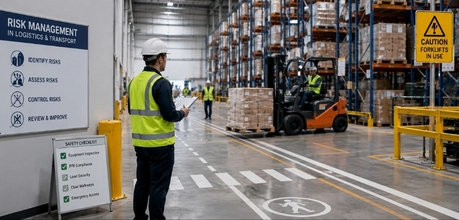


In the dynamic field of freight logistics, managing risks effectively is crucial for maintaining the integrity and reliability of supply chains.
Logistics risk management and freight risk management are essential disciplines that help companies anticipate, mitigate, and respond to potential threats.
This blog will outline best practices and provide practical risk management tips and risk management guidance to safeguard operations.
What Is Freight Risk Management?
Freight risk management is the process of identifying, assessing, and minimising risks across logistics operations to ensure freight moves safely, on time, and within budget. It encompasses driver safety, cargo handling, insurance, and regulatory compliance all vital for Australia’s interstate freight sector.
At Alpha Trucking, our experts apply structured risk management practices across every service, from general road transport to specialised sea freight forwarding, 3PL warehouse & distribution solutions, International shipping ensuring full compliance and operational security.
Understanding the Risks in Freight Logistics
Comprehending the specific hurdles within logistics and freight forwarding is the foundational step in building a resilient supply chain. These risks are multifaceted and require a proactive mindset to ensure minor issues do not turn into major shutdowns.
- Diverse Risk Profiles: Threats range from local route disruptions and shifting NHVR regulations to global sea freight forwarding complexities and sudden technological failures.
- Strategic Prioritisation: Categorising these threats allows businesses to navigate standard problems faced by freight forwarders and prioritise resources where they are needed most.
- Tailored Solutions: This awareness enables the implementation of robust freight management solutions that target high-risk areas specifically.
By anticipating disruptions before they occur, businesses can overcome the common challenges faced by freight forwarders, preventing financial losses and ensuring consistent service delivery across Australia.
Ensuring Expertise and Compliance
At Alpha Trucking, we prioritize partnering with experienced agents and freight forwarders to manage the complexities of interstate container transport.
This approach ensures that all our logistics operations adhere to the highest safety standards and regulatory requirements.
Our partners undergo continuous training and are well-versed in the latest safety protocols, allowing them to proactively identify and manage potential risks.
This emphasis on expertise ensures swift and effective responses to emergencies, preventing minor issues from escalating and maintaining operational efficiency in freight logistics.
Developing Robust Contingency Plans
Resilient operations depend on well-defined contingency plans that address the common challenges faced by freight forwarders. Your logistics risk management plan should include:
- Alternate delivery routes
- Emergency driver rosters
- Backup suppliers and inventory buffers
During such events, contingency plans allow freight companies to reroute trucks and maintain delivery continuity without halting operations.
Having such adaptive measures ensures that your business continues running even under unpredictable conditions.
Strengthening Supplier and Partner Relationships
Building strong, transparent relationships with freight partners and suppliers is essential for shared risk mitigation. Collaboration helps improve:
- Communication and transparency across the supply chain
- Operational reliability through aligned goals
- Joint crisis management during disruptions
At Alpha Trucking, our supplier partnerships are based on trust and performance consistency, strengthening the overall logistics network across Australia.
Conducting Regular Risk Assessments
Performing regular risk assessments is a vital risk management tip that directly addresses the unique challenges faced by freight forwarders today. These evaluations allow businesses to identify emerging vulnerabilities, from infrastructure bottlenecks to shifting labor laws, and evaluate the efficacy of existing freight management solutions. By updating plans based on real-world data, companies ensure their safety protocols evolve alongside the rapidly changing marketplace.
Beyond basic safety checks, these assessments are essential for solving recurring problems faced by freight forwarders, such as inconsistent transit times or cargo damage. Taking a proactive rather than reactive stance ensures that both land-based operations and sea freight forwarding activities remain resilient. This holistic approach is fundamental to modern logistics and freight forwarding, fostering a culture of accountability where stakeholders at every level are engaged in maintaining operational integrity.
Many Australian logistics companies conduct quarterly risk audits covering factors like:
- Driver fatigue management and NHVR compliance.
- Fuel cost volatility and its impact on pricing stability.
- Port congestion and vessel delays affecting international transit.
- Cybersecurity protocols for digital freight tracking systems.
Utilizing Insurance Insurance Wisely
Even with strong systems in place, unforeseen events can still occur. That is why adequate insurance coverage is a cornerstone of logistics risk management. Businesses should ensure that insurance is:
- Comprehensive (covering transit, marine, and public liability)
- Tailored to their specific freight type
- Reviewed annually to match operational changes

A Proactive Approach to Freight Safety
Effective risk management in freight logistics requires a structured, forward-looking approach.By identifying vulnerabilities, investing in compliance, and preparing contingency plans, freight companies in Australia can maintain operational stability even in challenging conditions.
Alpha Trucking leads by example, combining safety expertise, regulatory compliance, and smart freight management solutions to deliver reliable results across every shipment.