
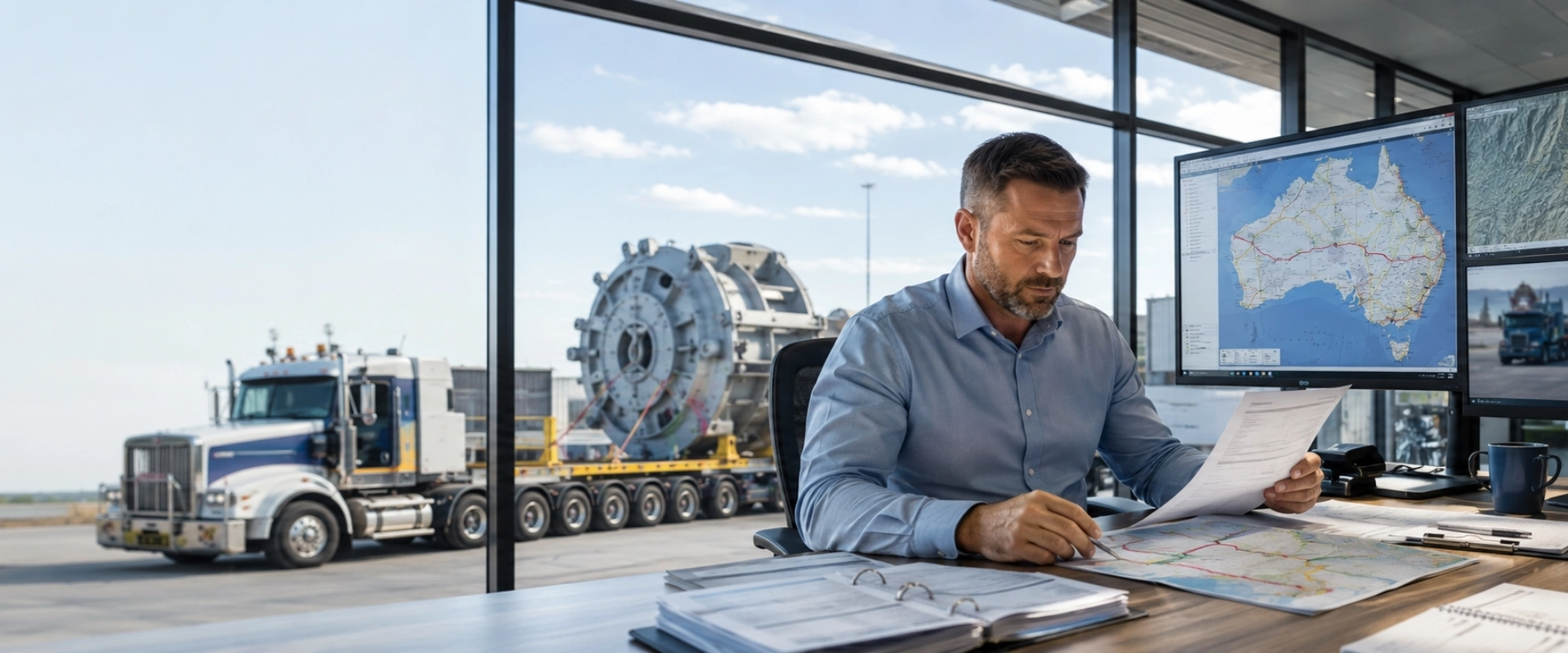
Heavy haul transportation is a demanding niche within the logistics industry in Australia. It is the practice of moving cargo that is significantly oversized, often including industrial equipment or massive infrastructure components.
It is a complex, data-driven strategy that ensures compliance, safety, and economic viability across all modes of transportation.
This blog explores why advanced route optimisation is essential for Australian transport companies handling heavy haulage and specialised freight services.
1. Compliance and Precision
The most critical function of heavy haul transportation route optimisation is following the law. A failure to comply can result in massive fines and legal liabilities
Mapping Restrictions
The size and weight of the load determine whether a route can be used. Route planning uses detailed location data that includes:
- Bridge Load Limits: Every bridge, overpass, and culvert has a weight limit. The route planning system must calculate if the heavy load is safe for every single crossing. Wrongly routed trucks can damage public infrastructure.
- Height and Width Clearances: For oversized loads, clearances are the single biggest hurdle. The system must check the height of every traffic light, power line, and tunnel to make sure the load fits.
- Permitting and Regulatory Hours: Many areas only allow oversized loads to move during certain hours. The planning system works around these restrictions, making sure the journey happens within the allowed windows, whether you are planning freight transport in NSW or handling Victoria freight services.
By using the most current transport data, carriers show they completely understand the rules. This compliance is the foundation of any Australian company specialising in moving heavy and dangerous goods transportation.
2. The Financial Benefit: Turning Distance into Profit
For companies running a heavy haul fleet, the operating costs are enormous. Fuel, specialised drivers, maintenance, and permits all make overhead very high. Route planning is the main tool used to control these costs and make sure the company stays profitable.
1. Smart Fuel Use and Efficiency
Simply reducing the distance is the easiest way to save money, but true optimisation is focusing on the most efficient path for the engine rather than just the shortest route:
- Grade Analysis: The planning may include a route that is slightly longer in distance but has gentler slopes, This results in significant savings on fuel and less wear-and-tear on the trucks.
- Speed Consistency: An optimised route prioritises paths that allow the vehicle to maintain a consistent and efficient speed, maximising fuel economy.
2. Lowering Daily Operating Costs
- Minimising Wear and Tear: By avoiding rough roads, the system extends the lifespan of expensive specialised components. This is a direct saving on maintenance, a crucial factor for trucking services in Melbourne and other metro operators.
- Accurate Labor Planning: Optimised routes create extremely reliable ETAs. This allows the company to precisely schedule drivers, reducing expensive overtime and ensuring that interstate freight follows strict working-hour rules. This efficiency is also why they can offer reliable services like next-day delivery.
3. Advanced Planning

Modern route planning is driven by sophisticated technology, going far beyond basic maps. The use of Artificial Intelligence (AI), and large amounts of data is what sets the top logistics companies apart.
1. Dynamic and Predictive Re-routing
A plan made last week can become useless just an hour before the trip starts. Modern systems rely on real-time data feeds:
- Live Traffic and Incidents: The system adjusts instantly to accidents and road closures, immediately calculating the next best legal route. This is vital when moving freight between major cities.
- Weather Integration: Real-time weather data is included to safely steer the vehicle around anticipated bad conditions, reducing major risks.
2. Detailed Mapping
The most advanced planning uses complex models of the road network:
- "Curve" Analysis: This feature simulates the entire movement of the vehicle (truck, trailer, and load) as it goes around corners and through intersections. This is crucial for extremely long units where turning space is minimal.
- Multimodal Integration: With clever planning, the whole transfer process is well thought out, and the best route is calculated to and from ports for sea freight or to rail depots for transport by train.
4. Improving the Full Range of Services
While advanced planning is critical for heavy haul transportation in Australia, its principles help the entire supply chain, ensuring high quality across all logistics services.
- General Freight Efficiency: The same data-driven approach significantly improves efficiency for all general cargo and pallet freight. Whether you are transporting freight from Melbourne to Adelaide, optimisation cuts costs and improves reliability.
- Express Delivery Reliability: Precision routing makes time-sensitive services more predictable. This is essential for delivering on promises of next-day or even same-day delivery.
- Pallet and Container Services: Planning maximises how much a vehicle can carry and reduces costs for services like container transport, giving the company a competitive edge.
Conclusion
In the field of heavy haulage in Australia, the margin for error is zero. A single mistake can wipe out the profitability of an entire project.
Route optimisation is more than just planning, it is a business that covers following the law, controlling costs, managing risk, and offering excellent customer service. For companies in this specialised and challenging sector, using advanced route planning is not just a competitive advantage; it is the fundamental requirement for long-term success.
To guarantee your next oversized load move is safe contact the most reliable and trusted experts who make advanced route optimisation their standard.