
Quick Summary
FCL (Full Container Load) gives you a whole container to yourself, which suits larger, heavier, fragile or deadline-driven imports. LCL (Less than Container Load) lets you share a container and pay only for the space you use, which suits smaller orders. The tipping point for most Australian importers sits at around 12–15 CBM, so compare LCL and FCL quotes all in, delivered to your door, before you commit.
Introduction
Australian container ports move millions of TEU between them each year, and the costs importers pay at the terminal gate have been climbing steadily, a trend the ACCC tracks in its annual Container Stevedoring Monitoring Report. Terminal access charges, landside infrastructure fees and storage costs now make up a meaningful share of what it actually costs to get a box from a ship to a warehouse in Sydney, Melbourne or Brisbane.
That matters because the FCL vs LCL decision is not just an ocean freight question. It determines how many times your goods are handled, how exposed you are to detention and demurrage, how quickly biosecurity issues get resolved and how much working capital sits tied up in stock on the water.
Most importers make this call once, early on, and then never revisit it, which is how businesses end up paying for LCL long after their volumes justify full containers, or paying detention on a 40ft box they only half filled. This guide walks through the real trade-offs, with the Australian specifics that generic international comparisons leave out.
What are FCL and LCL Shipping?
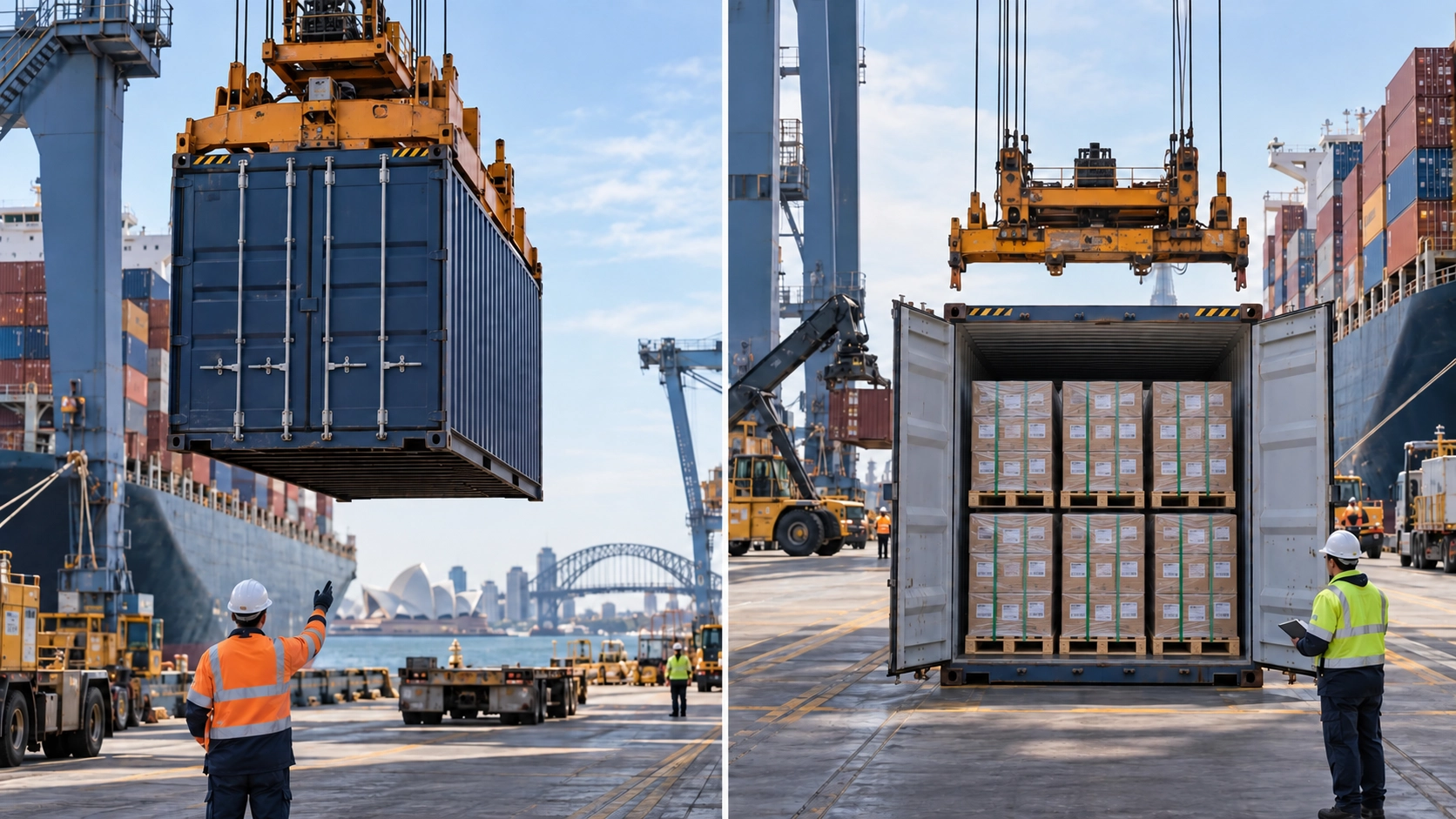
Both are ways of booking sea freight to Australia in a standard shipping container. What separates them is who shares the box, how you are charged and how many hands touch your cargo between the factory and your dock.
What is FCL (Full Container Load)?
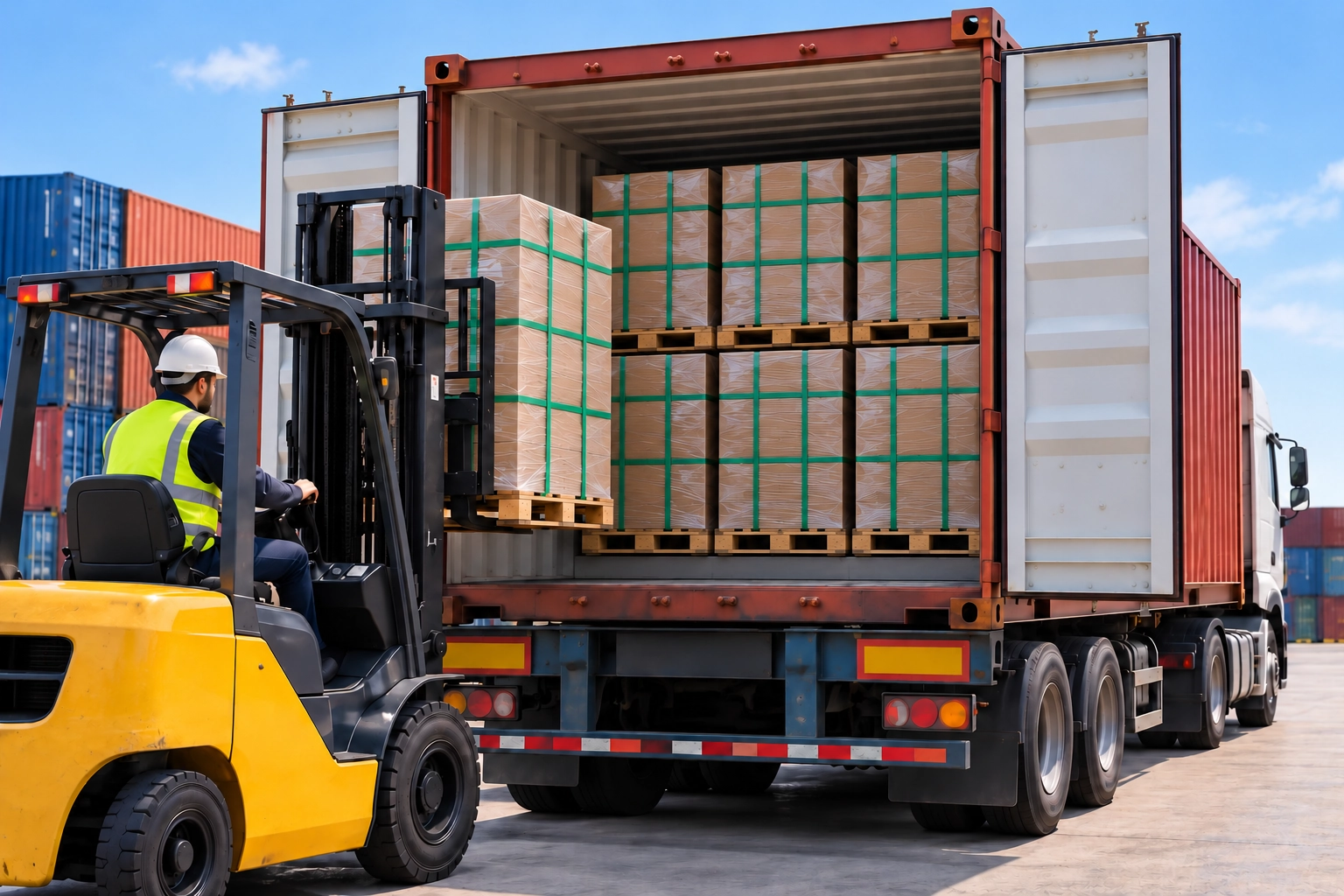
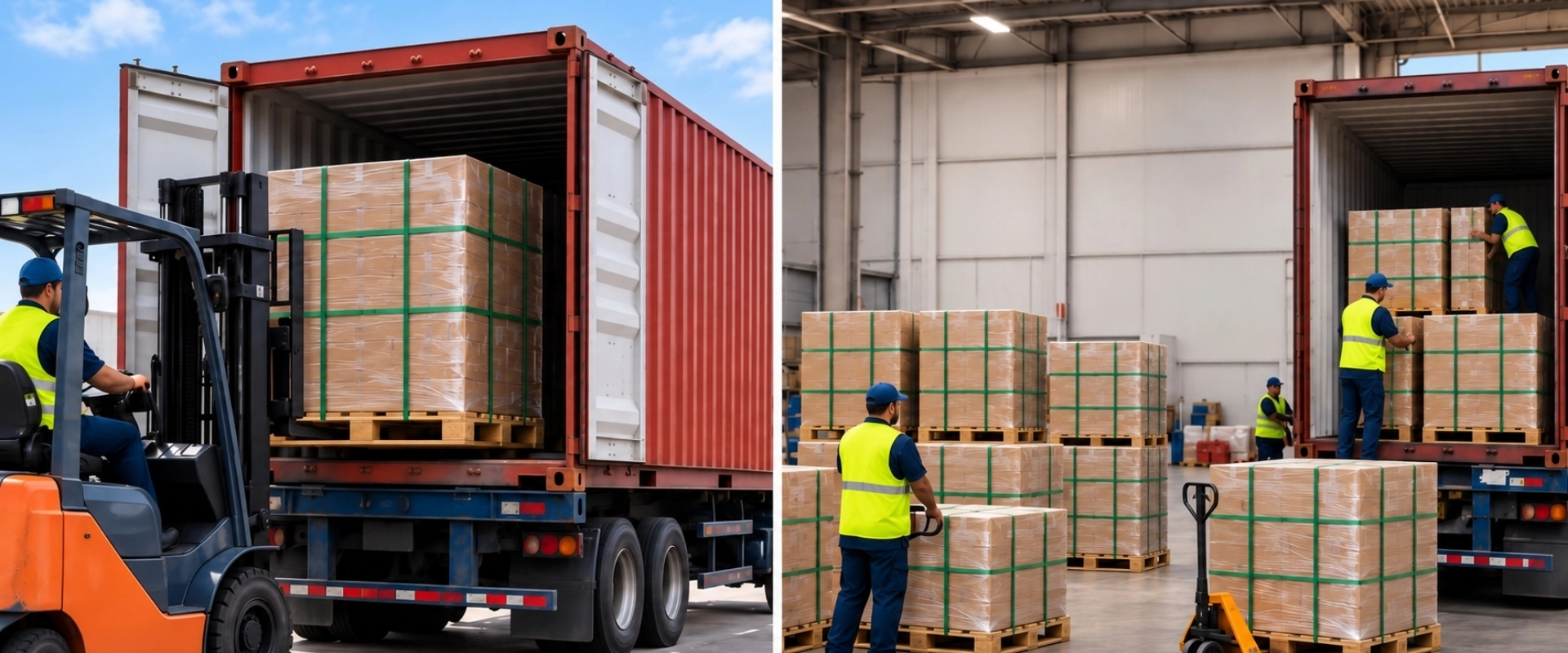
FCL means one shipper has exclusive use of an entire container. Your supplier loads it, seals it, and it normally stays sealed until it reaches your consignee in Australia. You pay a flat rate for the container, so it makes no difference to the ocean freight whether it is packed to the doors or only two-thirds full. The Australian Border Force uses the same logic for one consignor's goods, for one consignee, in the container.
The two sizes most importers book are the 20 foot, which offers roughly 28-33 cubic metres (CBM) of usable space, and the 40 foot, at roughly 58-67 CBM. Dense cargo such as tiles, stone or machinery often hits the weight limit long before it fills the space, which is why a half-empty 20-foot can still be the smart choice.
What is LCL (Less than Container Load)?>
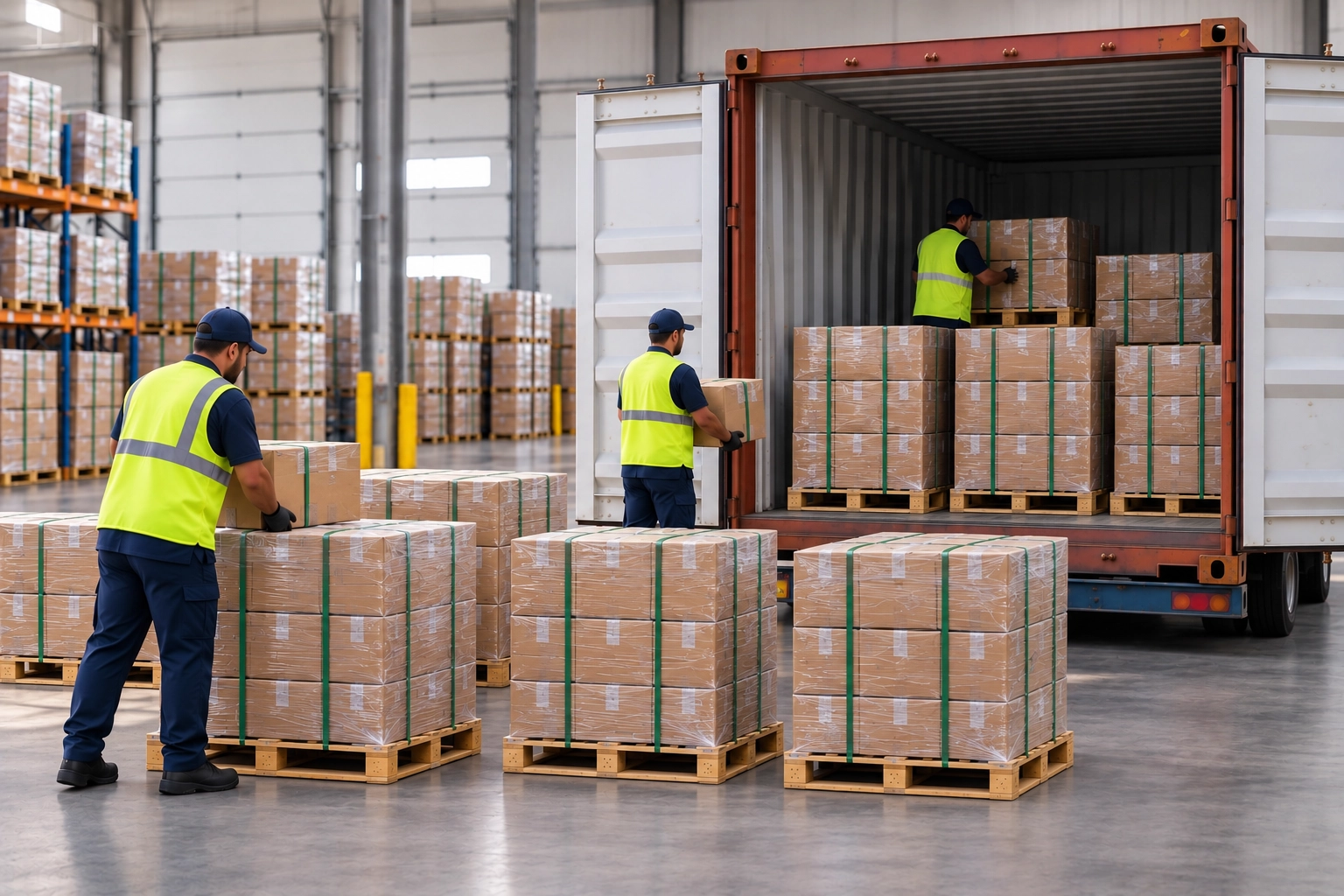
LCL means your goods share a container with cargo from other importers heading to the same port. You are charged on whichever is greater, the volume in CBM or the weight in tonnes, then topped up with handling fees at both ends. Your cartons or pallets are consolidated at a container freight station (CFS) overseas, shipped together, and unpacked at a licensed CFS in Australia before you collect them or arrange delivery. That makes LCL shipping to Australia the practical choice when an order is too small to justify a full box.
How FCL and LCL shipments work
The two journeys look identical on the water and very different on land.
The FCL journey
- Your supplier packs and seals a container at their factory or warehouse.
- It is trucked to the port of origin and loaded onto the vessel.
- On arrival at Sydney, Melbourne, Brisbane or Adelaide, the container goes through customs and biosecurity checks.
- Wharf cartage takes it to your 3PL warehouse, where you unpack it within the free time allowed and return the empty.
The LCL journey
- Your supplier delivers your cartons or pallets to a CFS at origin.
- They are consolidated with other importers' cargo into one container and shipped.
- In Australia the container goes to a licensed CFS instead of straight to you.
- The cargo is deconsolidated, matched to its paperwork, cleared and released.
- You collect it, or a carrier delivers it, as a separate consignment.
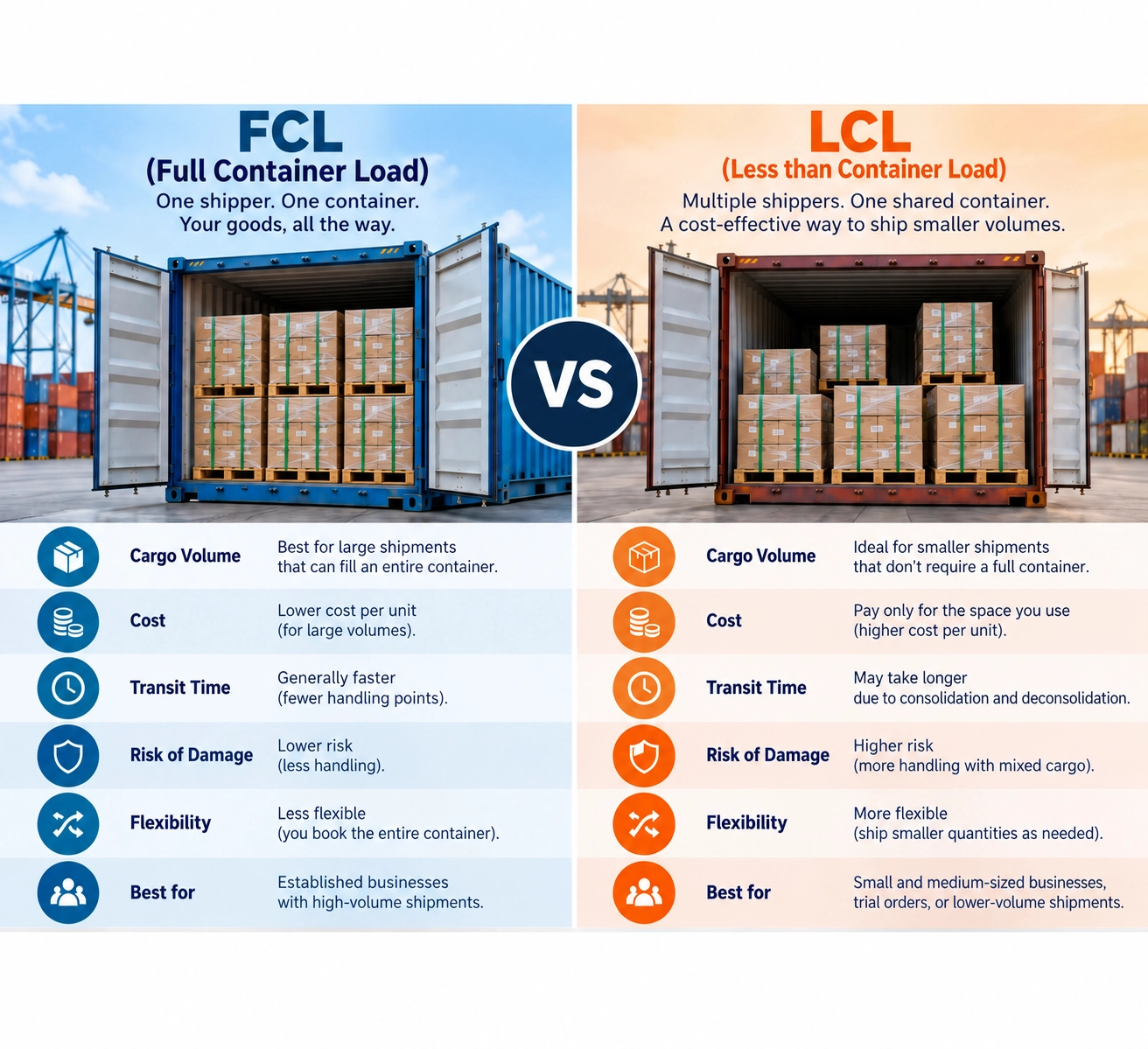
FCL vs LCL: Quick Comparison
Here is how the two stack up across the factors that matter most when cargo is landing in Australia.
|
Factor |
FCL |
LCL |
|
Container use |
Exclusive to you |
Shared with other importers |
|
Pricing |
Flat rate per container (20ft, 40ft or 40ft HC) |
Per CBM or tonne, whichever is greater, plus CFS handling fees |
|
Typical volume |
Around 12–15 CBM and above, or dense, heavy cargo |
Under roughly 12 CBM |
|
Transit time |
Faster door to door, no consolidation wait |
Slower; consolidation at origin and deconsolidation in Australia add days |
|
Handling |
Loaded once, unloaded once |
Handled at two CFS depots as well as loading and unloading |
|
Damage and theft risk |
Lower, sealed from the factory to your dock |
Higher; more touchpoints and shared space |
|
Australian destination charges |
Terminal handling, wharf delivery, possible detention or demurrage |
Terminal handling share, deconsolidation, CFS fees and delivery, largely fixed per shipment |
|
Customs and biosecurity |
One consignor, one consignee, one container |
Your consignment sits inside a shared container, so a co-loader can affect release |
|
Flexibility |
Commitment to a full container booking |
Ship what you need, when you need it |
|
Best for |
Bulk orders, fragile or high-value stock, fixed deadlines, regular imports |
New products, samples, small top-ups, tight cash flow |
FCL vs LCL Transit Time: Which Is Faster?
FCL is faster, and the gap is bigger than most importers expect because the difference is not on the water at all. The vessel takes the same time either way.
The delay sits at both ends. At origin, your LCL cargo waits at the consolidation warehouse until enough other freight arrives to fill the container. On a busy lane out of Shanghai or Ningbo that might be two or three days. On a thinner lane it can be a fortnight. At destination, the container goes to a CFS to be unpacked and sorted before your goods are released, which adds several more days.
Across both ends, LCL commonly adds five to ten days compared with an equivalent FCL booking. On seasonal stock or anything with a promotional deadline, that is the difference between landing in time and landing late.
One caveat worth knowing, FCL is only faster if you can take delivery promptly. A container sitting on the wharf accruing storage because your warehouse cannot receive it is not fast, and it is expensive.
FCL and LCL: Risk, Damage and Handling
Every time cargo is lifted, moved or repacked, something can go wrong. That is the heart of the risk difference.
- Handling touchpoints: An FCL container is packed once and opened once, at your end. LCL cargo is loaded at a CFS, consolidated, unpacked, sorted and reloaded onto a truck. Every step adds a small chance of crushing, moisture or missing cartons.
- Shared-container exposure: In LCL your cargo is only as safe as your co-loaders' packing. Poorly secured heavy freight next to your fragile stock is a real problem, and it is hard to prove who caused the damage.
- Biosecurity holds: The 2026–27 brown marmorated stink bug season runs from 1 September 2026 to 30 April 2027, and DAFF's seasonal measures apply to target risk goods shipped in containers and LCL consignments. Goods that are not targeted can still be caught if they share a container or consignment with goods that are.
- Timber packaging: Timber pallets and crates must be treated and marked to ISPM 15 whichever way you ship. Untreated wood can mean inspection, treatment at your cost or re-export.
- FCL is not risk-free: Containers can still be selected for X-ray or physical examination, and a badly loaded or overweight box can shift in transit. The difference is that the fallout stays with your cargo alone.
When FCL Is the Right Choice
Book a full container when one or more of these apply:
- Your shipment is around 13–15 cubic metres or more, or is dense enough to hit weight limits early
- You import the same product regularly and can forecast volume
- Goods are fragile, high-value or easily contaminated
- You have a firm deadline seasonal stock, a promotion, a project delivery
- Your site can receive a container, or you have an unpack facility arranged
- You import from a country subject to seasonal biosecurity measures and want to control your own compliance
- You want sealed-container security from factory to door
When LCL Is the Right Choice
LCL earns its place when flexibility and cash flow matter more than speed:
- Your shipment sits comfortably below roughly 13 cubic metres
- You are trialling a new product line and do not want to commit to full container quantities
- Cash flow matters more than transit time smaller orders, faster stock turns, less capital on the water
- Your ordering is irregular and you cannot reliably fill a box
- You have no dock or forklift, and receiving palletised freight suits you better than a container
- You want to avoid detention and demurrage exposure altogether
- Your goods are dense and low-volume, so the per-cubic-metre rate works in your favour
Common Mistakes Australian Importers Make
1. Comparing ocean freight rates instead of landed cost
An LCL rate per cubic metre and an FCL rate per container are not comparable figures. You need the full landed cost on both ocean freight, terminal handling, wharf and CFS charges, customs clearance, transport, unpack and any storage. Importers regularly choose LCL on a headline rate and pay more once destination charges land.
2. Underestimating LCL destination charges
LCL destination costs in Australia are where margins quietly disappear. CFS unpack fees, documentation charges, handling and storage are billed per shipment and can be substantial relative to a small consignment. Ask for the full destination charge schedule in writing before booking.
3. Ignoring container detention and demurrage on FCL
Demurrage accrues while the container sits at the terminal; detention accrues once you have it but have not returned the empty. Free time is limited and daily rates escalate. Have your transport and unpack booked before the vessel arrives, not after.
4. Sticking with LCL long after volumes justified FCL
This is the most expensive habit on the list. Businesses set up LCL when they were small and never recalculated. Review it every six months against actual shipped volumes.
5. Treating the breakeven figure as a rule
The 13 to 15 cubic metre guide moves with lane, season and freight density. During peak periods when container rates spike, the breakeven can shift upward considerably. Recalculate rather than assume.
6. Not planning for how the goods will be received
A 40ft container needs space to manoeuvre and either a loading dock, a side-loader or a forklift and labour. Importers who have not arranged this discover it on delivery day, with a truck waiting and demurrage running.
7. Assuming GST and duty differ between the two
They do not, in principle but the calculation base does. GST on a taxable importation is worked out on the customs value plus duty plus international transport and insurance, so a higher freight component increases the GST payable. Your customs broker should walk you through it.
FCL vs LCL: Which Option Is Right for Your Business?
- Measure accurately. Get real cubic metres and gross weight, not estimates from a supplier’s spec sheet.
- Price both properly. Ask for full landed cost, including all destination charges, on each option.
- Apply your deadline. If the delivery date is firm, weight the transit difference heavily.
- Assess the cargo. Fragile, high-value or contamination-sensitive goods push you toward FCL regardless of volume.
- Check your receiving capability. No dock and no forklift is a real constraint, not a detail.
- Consider origin consolidation. Multiple suppliers in one region may let you reach FCL economics sooner than you think.
- Diarise a review. Set a reminder to recalculate in six months.
Final Word
There is no universally correct answer to FCL vs LCL. There is only the right answer for a particular shipment, at a particular volume, on a particular lane, at a particular time of year.
What separates importers who manage this well from those who do not is simply that they recalculate. They know their real cubic metres, they price both options on landed cost rather than freight rate, and they revisit the decision as volumes grow. Do that, and you will avoid the two expensive defaults paying LCL rates on FCL volumes, or paying detention on a container you were not ready to receive.