
Quick Summary
Western Australia is moving to strengthen the state's ability to manage a liquid fuel supply disruption, with new emergency powers flagged to take effect from 2027. For road transport operators, the detail that matters is not the legislative machinery but the consequence. In a declared fuel emergency, the government gains the ability to influence who gets fuel, how much of it, and in what order. Fleets that have already mapped their fuel dependencies will absorb that far more comfortably than those that have not.
Why Western Australia Is a Fuel Security Outlier
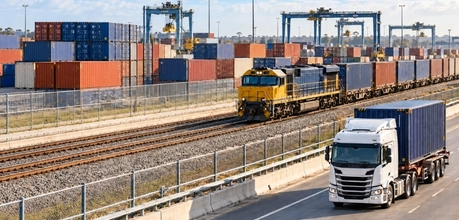
Western Australia carries a fuel security profile unlike anywhere else in the country. The state covers roughly a third of Australia's land mass, and much of its freight task runs on long single-corridor routes where there is no practical alternative road. Mine sites, pastoral stations and remote communities sit at the end of supply chains measured in days rather than hours, and almost every one of them depends on diesel arriving on schedule.
The supply picture has also narrowed. The Kwinana refinery converted to an import terminal in 2021, leaving the state reliant on imported refined products rather than locally refined crude. Nationally, only two operating refineries remain. That shift has made the whole fuel system more efficient in normal conditions and more exposed when something goes wrong, whether the cause is a shipping disruption, a terminal outage, a cyclone closing a port, or a geopolitical shock offshore.
What Fuel Emergency Powers Generally Cover
Liquid fuel emergency frameworks in Australia generally work along similar lines. Once an emergency is declared, the government can restrict retail sales, set purchase limits, direct how suppliers allocate stock, and prioritise certain users ahead of the public.
Emergency services, hospitals, water and power utilities, food distribution and essential freight typically sit near the front of that queue. The Commonwealth has held reserve powers under the Liquid Fuel Emergency Act since 1984, and state-level regimes sit alongside them for disruptions that do not reach national scale.
The practical question for an operator is not whether such powers exist, but whether your fleet will be recognized as essential when they are used, and whether you can prove it quickly.
Priority Access Is Not Automatic
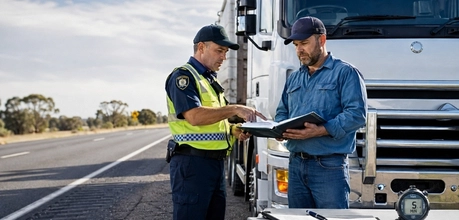
That recognition is rarely automatic. Operators carrying food, medical supplies, fuel itself, or inputs critical to utilities and mining are usually well placed, but the evidence must be available on short notice. Contracts, customer classifications and delivery manifests establish the claim. A fleet that cannot demonstrate what it carries, and for whom is a fleet arguing in its case at the worst possible moment.
The Bulk Storage Trap
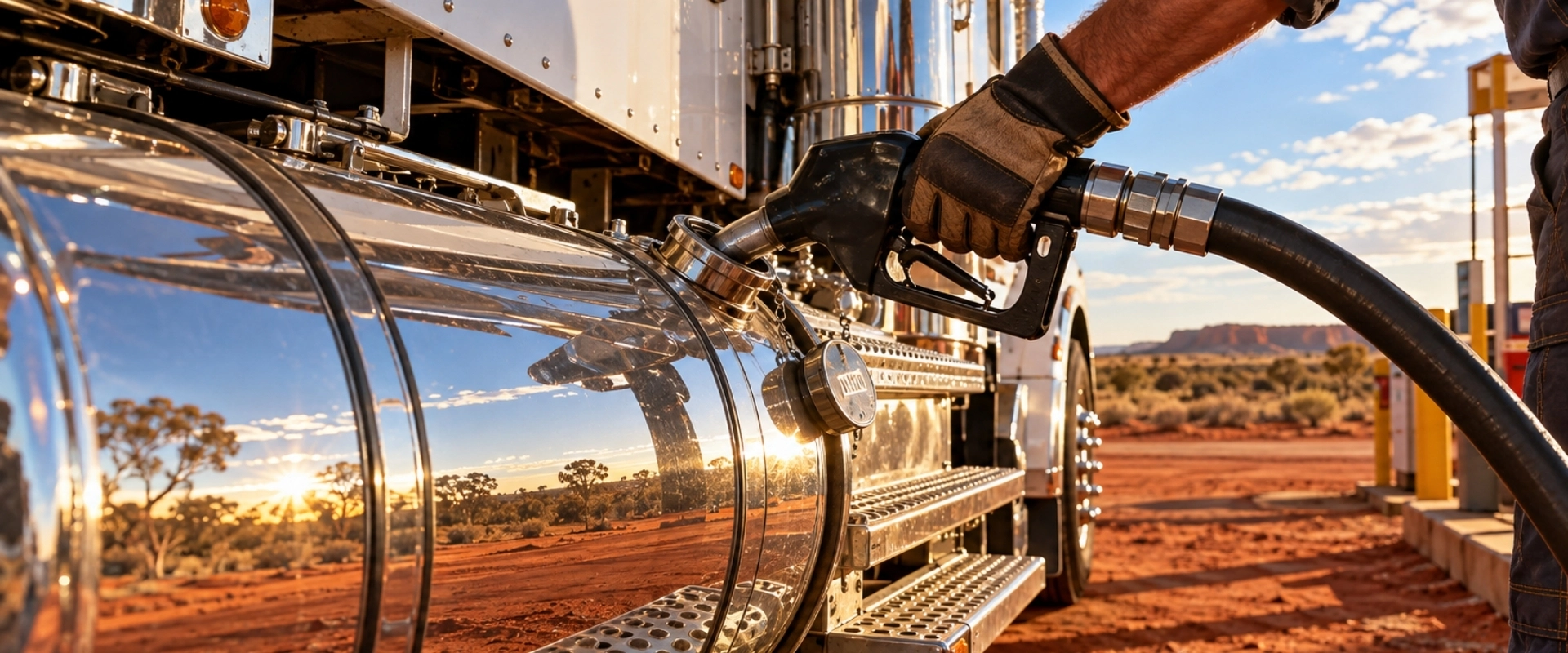
Rationing has a second-order effect that operators often underestimate. Purchase limits at retail sites push more fleets toward bulk on-site storage, and bulk diesel storage brings its own regulatory load. Depot tanks may trigger dangerous goods for storage of licensing, bunding requirements, separation distances and emergency plans under WA's dangerous goods regime.
Businesses that already run Dangerous goods transport services will find the compliance framework familiar. Those adding storage for the first time should not assume a tank can simply be installed and filled.
Check Your Contracts Before, Not During
There is a commercial angle as well. Fuel surcharge mechanisms, force majeure clauses and delivery window commitments were mostly written with price movements in mind, not supply restrictions.
If a customer contract obliges next-day delivery, and rationing makes that impossible, the question of who wears the cost is decided by wording that was probably drafted years ago. It is worth reading those clauses before 2027 rather than during a declared emergency.
What to Do Before 2027
Preparation does not need to be elaborate. Know your weekly diesel consumption by depot and by route. Identify which suppliers and which terminals you actually depend on, including the ones you reach through an intermediary. Establish whether any of your work would qualify as essential and assemble the documentation that proves it. Review your contracts.
Where storage makes sense, get the dangerous goods of compliance right first. And keep the same discipline you already apply to fatigue records and maintenance logs, because documentation is what turns a claim into an entitlement.
Operators such as Alpha Trucking treat this as ordinary planning rather than crisis management, building fuel contingency into the same framework that supports route planning, compliance and reliable freight transport solutions across long-distance Australian corridors.
The Takeaway
None of this is a prediction of shortage. The value of emergency powers is that they exist unused. But the regimes are written on the assumption that industry has done its own preparation, and the operators who fare best in any supply disruption are invariably the ones who worked out their exposure while the fuel was still flowing normally. Fleets running in Western Australia have a clear runway before 2027 to do exactly that, and the work costs little beyond attention.