
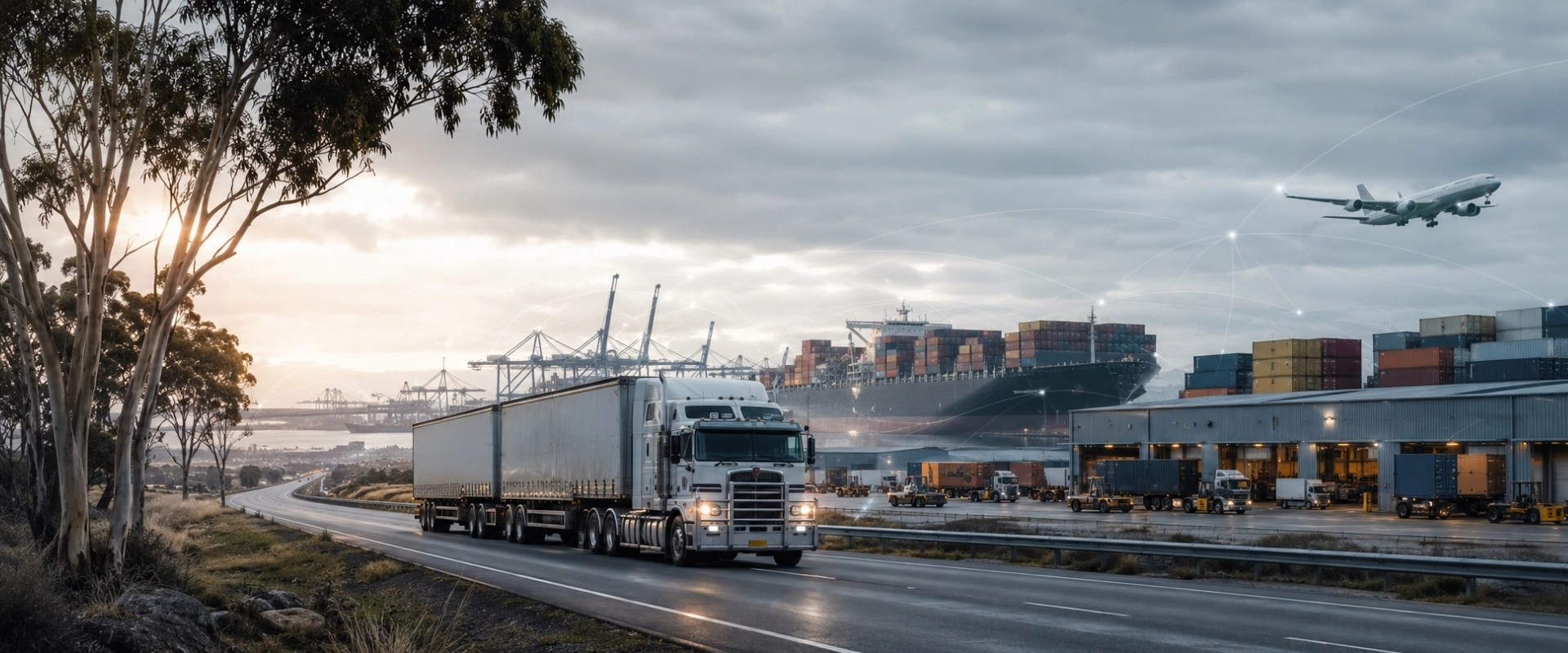
Freight prices are influenced by two major factors: distance and fuel prices. A sharp rise in fuel prices can put pressure on transport operators across regional pickups, linehaul routes, and last-mile deliveries.
For businesses that depend directly on road freight in Australia, even a slight increase in pricing can have a significant impact. Because road transport moves most freight across the country, fluctuations in gas prices directly affect how carriers calculate rates, fuel surcharges, and route efficiency. A stable delivery quote today depends on how accurately fuel trends are read tomorrow.
Where do Australia's fuel prices sit globally?
Australia often feels expensive at the pump, but globally it sits in the middle range rather than at the top end. According to recent fuel-tracking data cited by SBS, Australia ranked 61st among 100 countries for petrol pricing, with average petrol at around $2.07 per litre in March 2026. That means Australian motorists and transport operators still pay less than in many European economies, though more than in countries such as the United States, where fuel remains significantly cheaper.
Australia's geography is already a driver of increased fuel consumption, and with fuel price hikes, the challenge is even tougher for road freight. A country may have moderate international fuel rates, but long domestic distances mean fuel consumption per shipment remains high. This is a major factor in a large surge in the logistics expenses in Australia.
Australia imports about 90% of its refined fuels from Singapore, Japan, South Korea, and Malaysia. Hence, local freight operators are heavily affected by overseas disruptions. When shipping lanes tighten, or crude markets react to geopolitical events, gas costs in Australia can rise quickly, even before local supply pressure becomes visible.
For logistics providers, international ranking matters less than volatility. Freight businesses can manage high fuel costs if they are predictable. Rapid movement makes delivery quoting difficult.
Why Gas Prices Across the Country Vary
One of the biggest frustrations for Australian businesses is that fuel prices do not rise equally across cities. The Australian Competition and Consumer Commission recently highlighted that fuel prices moved very differently between capital cities, even when wholesale benchmarks increased at similar rates.
For example, Perth recorded one of the largest retail petrol increases during a recent monitoring period, while Canberra remained comparatively lower. Sydney showed the sharpest increase in diesel prices of any capital. These differences happen because several local layers influence fuel pricing:
- Distance from import terminals
- Local retail competition
- Freight movement from the port to the inland storage
- State pricing cycles
- Regional supply constraints
In many cases, wholesale prices rise first, but retail pump prices can react almost immediately. The ACCC noted that in recent weeks, fuel retailers increased prices much faster than normal, often before cheaper stored fuel had been fully sold.
For freight companies, this means the diesel price in Australia can differ sharply depending on where trucks refuel. Suppose a carrier operates between Brisbane and Queensland, they need to face a different fuel price than the operators in the Melbourne corridors. This is because the regional market receives diesel after it has travelled a long way.
Fuel Price Check to Predict Your Logistics Spend
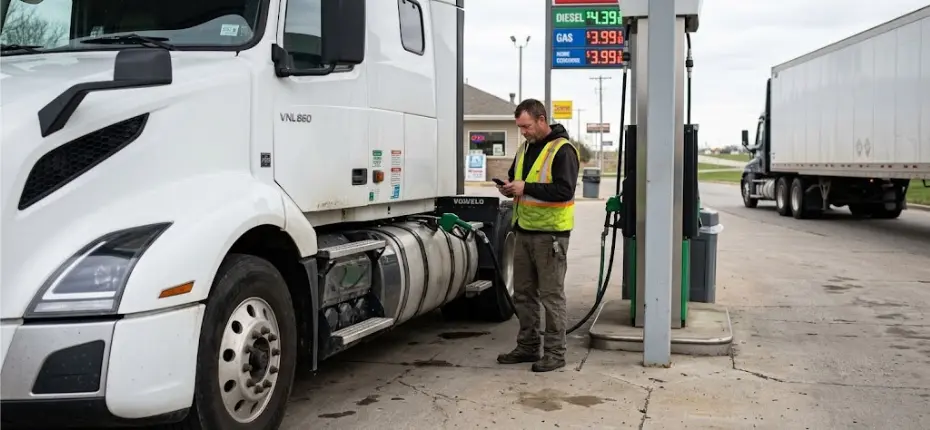
A proper fuel price check is now a routine financial tool for logistics planning. Recent Australian pricing data shows fuel climbed from around $1.57 per litre to approximately $2.08 per litre within about eight weeks during the recent global supply disruption. That is a 50-cent-per-litre increase.For heavy freight operators, that shift is substantial.
A prime mover can consume 1.5 to 2 litres of diesel per kilometre depending on load, route, and terrain. For interstate freight volumes, even a small increase, like 10%, in prices affects margins. At about 50%, there is no other way to manage everything except making a few pricing fluctuations.
This is why transport businesses increasingly build dynamic fuel surcharges into quotes. So, in place of fixed, long-term assumptions, freight companies now use a fuel-linked review mechanism. For customers, this means delivery quotes may change even when shipment volume remains unchanged.
The practical logistics effect includes:
- Higher interstate freight rates
- Revised contract pricing
- Route consolidation to reduce empty kilometres
- Increased delivery scheduling around efficient fuel corridors
When businesses ignore fuel movement, freight budgets often fail by quarter-end.
Why Stability in Logistics Matters
Stability matters because freight is not simply transport, it supports retail supply, food movement, industrial production, and export readiness across Australia.
When fuel becomes unpredictable, transport scheduling becomes harder. Operators hesitate to commit to fixed pricing, fleet utilisation becomes less efficient, and customers lose cost certainty.
Australia’s logistics system is trying to manage this through smarter planning rather than simply passing every increase forward.
Current industry responses include:
- Route optimisation software
- Backload matching
- Tighter depot scheduling
- Fuel-efficient fleet upgrades
- Better driver behaviour monitoring
Large freight operators are also carefully reviewing refuelling geography. Measurable savings can be made by filling the lower-cost zones in place of the high-cost metro areas. Because Australia has long-haul distances and limited domestic refining, resilience depends heavily on planning rather than on price controls.
Navigating Australia’s Fuel Volatility with Alpha Trucking
Alpha Trucking believes the fuel volatility as an operational variable and not just as an external cost.Instead of reacting only after pump prices rise, Alpha Trucking monitors fuel movement across major freight corridors and adjusts fleet decisions early.
Key measures include:
- Selecting efficient linehaul combinations
- Reducing idle fleet time
- Consolidating loads wherever possible
- Scheduling around fuel-efficient routes
- Reviewing surcharge exposure regularly
For customers, this creates more predictable freight billing even during periods of market instability.The company also focuses on maintaining vehicle efficiency because fuel cost is not only about pump price. Tyre pressure, maintenance quality, engine condition, and route discipline all influence diesel burn. Hence, if the vehicle is not in good condition, the consumption of fuel increases in Australia leading to higher fuel prices.
In periods of strong increase in gas price across the country, operators that control internal efficiency usually outperform those that rely solely on price increases.
Another important practice is communication. Freight customers increasingly expect transparency around why delivery quotes change. Alpha Trucking explains fuel-linked cost movement clearly so businesses understand how broader market conditions affect transport pricing.
In today’s freight environment, the smartest delivery quote is not simply the cheapest one, but it is the one built on realistic fuel forecasting, route intelligence, and supply chain consistency.