
Transporting general parcels requires several steps to ensure the goods' security. Transporting dangerous goods requires even stricter security measures. There are many risks associated with transporting hazardous products, but when the rules are strictly followed, those risks are minimised.
This blog is a guide to the transportation of dangerous goods. Read the complete blog to understand the requirements of a freight of hazardous goods.
What is Considered Dangerous Goods Freight in Australia?
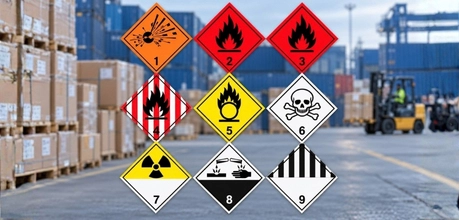
The substances that pose a risk to health, safety, property, and the environment are classified as dangerous goods under the Australian Dangerous Goods Code. The hazardous goods are further classified into the following categories:
CLASS 1: Explosives
CLASS 2: Gases
CLASS 3: Flammable Liquids
CLASS 4: Flammable Solids
CLASS 5: Oxidising Substances and Organic Peroxides
CLASS 6: Toxic and Infectious Substances
CLASS 7: Radioactive Materials
CLASS 8: Corrosives
CLASS 9: Miscellaneous Dangerous Goods
Now, to identify these classes of goods, they are marked in different color codes, symbols, and hazard pictograms.
The ADG (Australian Dangerous Goods) are the mandatory, consistent technical requirements that must be followed to transport dangerous goods by road and rail. This is done to ensure safety by imposing strict rules on classification, packaging, and marking.
Why Proper Labelling Matters for Dangerous Goods Transport?
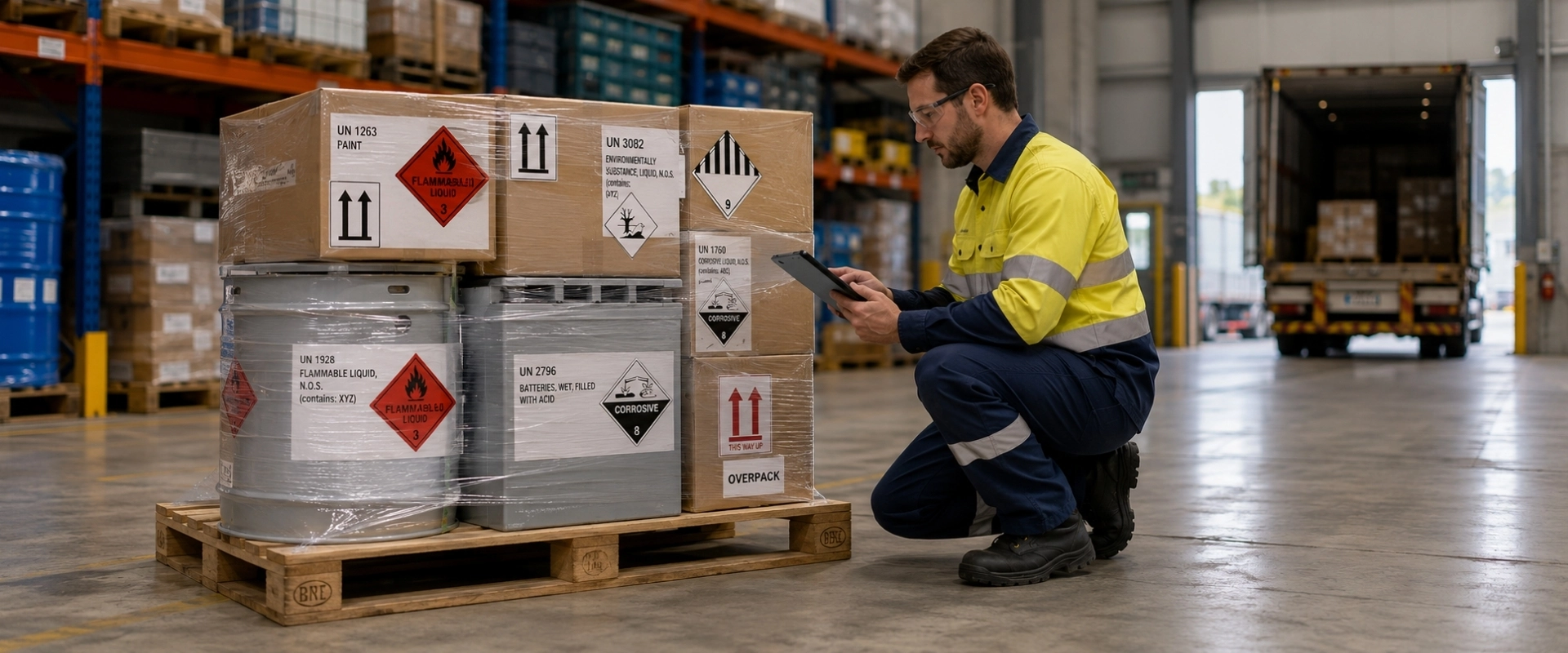
Dangerous goods freight requires proper labelling before transportation begins. Correct labelling is the most crucial step because it protects people, goods, and cargo while the freight starts moving in and across Australia. Proper labelling for each class is necessary. Here are a few steps that are followed to label the dangerous goods:
- Identify what the product is.
- Then check its Safety Data Sheet(SDS).
- Assign the appropriate DG class and label.
- Stick the labels on the visible sides of the goods.
As mentioned above, for the different types of dangerous goods, proper markings must be applied so others can identify them as hazardous and handle them accordingly. Here are the reasons why you should label the perilous goods:
- The label informs drivers and warehouse staff about the dangerous goods.
- Dangerous goods require specialised storage and handling. Hence, people first need to know whether the parcel contains dangerous goods so they can handle it accordingly.
- Dangerous goods can be extremely harmful when mixed with other goods. So the delivery partner needs to know that the goods are dangerous and should not be combined with other incompatible goods.
- If the labels are missing or misplaced on goods, the consequences are listed below:
- The goods can be rejected for delivery at the depots
- The goods will be held till further inspection is done.
- Delayed delivery or returned to the sender.
Hazardous freight carriers look only at the labels because they make quick, on-the-spot decisions. The freight carriers need clear labelling for the following reasons:
- To choose the correct position of the freight for its safety.
- To add the correct load restraints to the freight.
- Whenever conditions change, emergency procedures must be followed, and therefore, proper labelling is required to identify the type of dangerous goods.
Mandatory Information Required on Dangerous Goods Labels
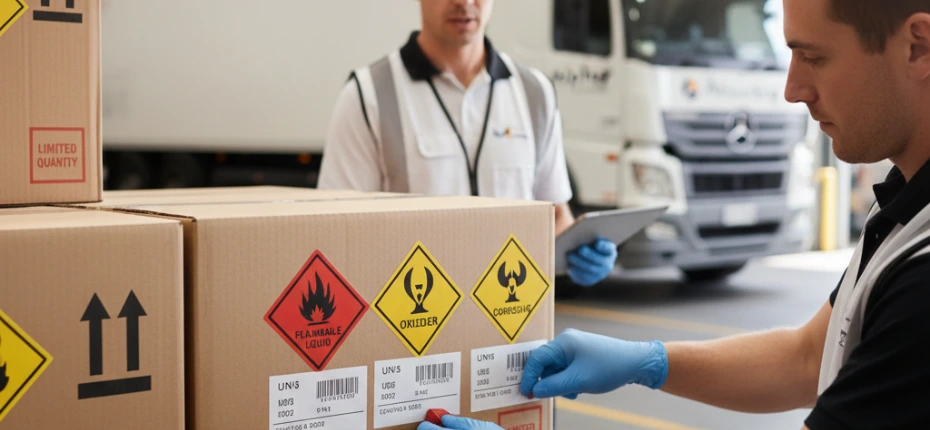
Mandatory information is the information that must be present on dangerous goods. These details will help people identify the goods instantly. They are:
- There is a UN number. It is a 4-digit international identification number. The official name of the dangerous goods must be mentioned appropriately. This is very important because, during an emergency, freight carriers can identify hazardous goods using this information.
- The mandatory information includes the name of the hazard class and the subsidiary risk, which is the secondary danger. Sometimes the goods can have multiple levels of risk. Mentioning these will adequately warn carriers about the dangers.
- There are 3 packing group types. Group 1 indicates great danger, group 2 indicates medium danger, and group 3 means low risk. This step is mandatory, so packers know how strictly the goods need to be packed.
- Consignor, the sender's details, and consignee, the receiver's details, need to be mentioned correctly.
Placards vs Labels: What's the Difference?
Placards and labels are both mandatory. Commonly, there is confusion about both of these. Let's understand them in detail:
Package Labels
- These labels are mentioned on the individual packages, cartons, and drums.
- The labels are smaller in size.
- Contains the product-related hazard information.
- Labels should never be hidden, faded, or damaged.
Vehicle Placards
- The placards are displayed on the vehicle or containers.
- These are larger and can be understood from a distance.
- This represents that dangerous goods are being transported.
- Placards should be large enough to be visible from all sides at a distance.
How to Label Dangerous Goods Freight Correctly?
The dangerous goods need to be transported very carefully, and the following steps need to be followed to transport the goods safely:
- Check the UN number, hazard class, and packing group in the SDS sheet to identify the correct DG(dangerous goods) group.
- Choose the correct label and placard for the dangerous goods. Make sure you clearly mention the hazard class and risks.
- Apply labels and placards to plain surfaces, and ensure they do not peel off.
- After you apply the labels, check that they comply with the documentation. The information should match the documents and the dangerous goods declaration.
- A final check of all the documents, labels, and placards is the last step of the process. Review every detail properly.
Common Dangerous Goods Labelling Mistakes to Avoid
Although the steps are directly above, there are still some places where you can go wrong, as mentioned below:
- Missing or incorrect labels or their placement are serious issues.
- Faded labels that do not convey information properly.
- Torn labels that represent only half of the information.
- The information on the label should match the information on the documentation.
- Check if there are any updates in the symbols. If there are any changes, make sure you have represented the latest symbols used. Never use the symbols that are no longer in use in Australia.
Labelling Requirements for Interstate Dangerous Goods Transport
To transport dangerous goods across state lines, you must meet specific labelling requirements. Here are a few labelling requirements you need to follow:
- When travelling long distances, ensure the labels and placards remain visible throughout the journey without any issues.
- The Melbourne to Brisbane transport route for goods is high-risk so that extra checks will be conducted. So, the drivers carrying the dangerous goods need to be informed about this. There will be different rules and regulations in every state, and to meet the requirements of every state, you must follow the laws of the state you are travelling in.
Choosing the Right Dangerous Goods Freight Company in Australia
To transport hazardous goods, you must select the right dangerous goods freight companies so that your goods reach their destination safely and on time. Here are a few pointers you need to know to find the right company:
- A licensed company with trained staff is significant, as they can handle dangerous goods well on their end until delivery.
- Suppose the company has good experience with interstate dangerous goods transportation, it's much better, as they don't have to research the process on their end. So, there is a lower probability of mistakes.
- A company with a proven track record in transporting dangerous goods is preferable to one new to the rules and regulations governing such transport.
- Working with a reputable dangerous goods carrier will reduce risks and errors and streamline procedures. Hence, it is advisable to proceed with a company that has a good track record in transporting dangerous goods.
By following these strict protocols, you can transport dangerous goods with the peace of mind that every safety standard is met. Navigating the complexities of dangerous goods transport in Australia requires precision and care, but with the right knowledge and a reliable partner, you can ensure a secure journey for your cargo and the community